06
Writing:
Finalising the Dissertation
~ 23.02.2025
Diagrams
As I am mostly focused on finalising my dissertation this week, the entry will be short. First, I would like to mention the diagrams that I have added in my dissertation. These diagrams will be a good starting point on how to present my data in the future for presenting my work to visitors of open studio, etc.
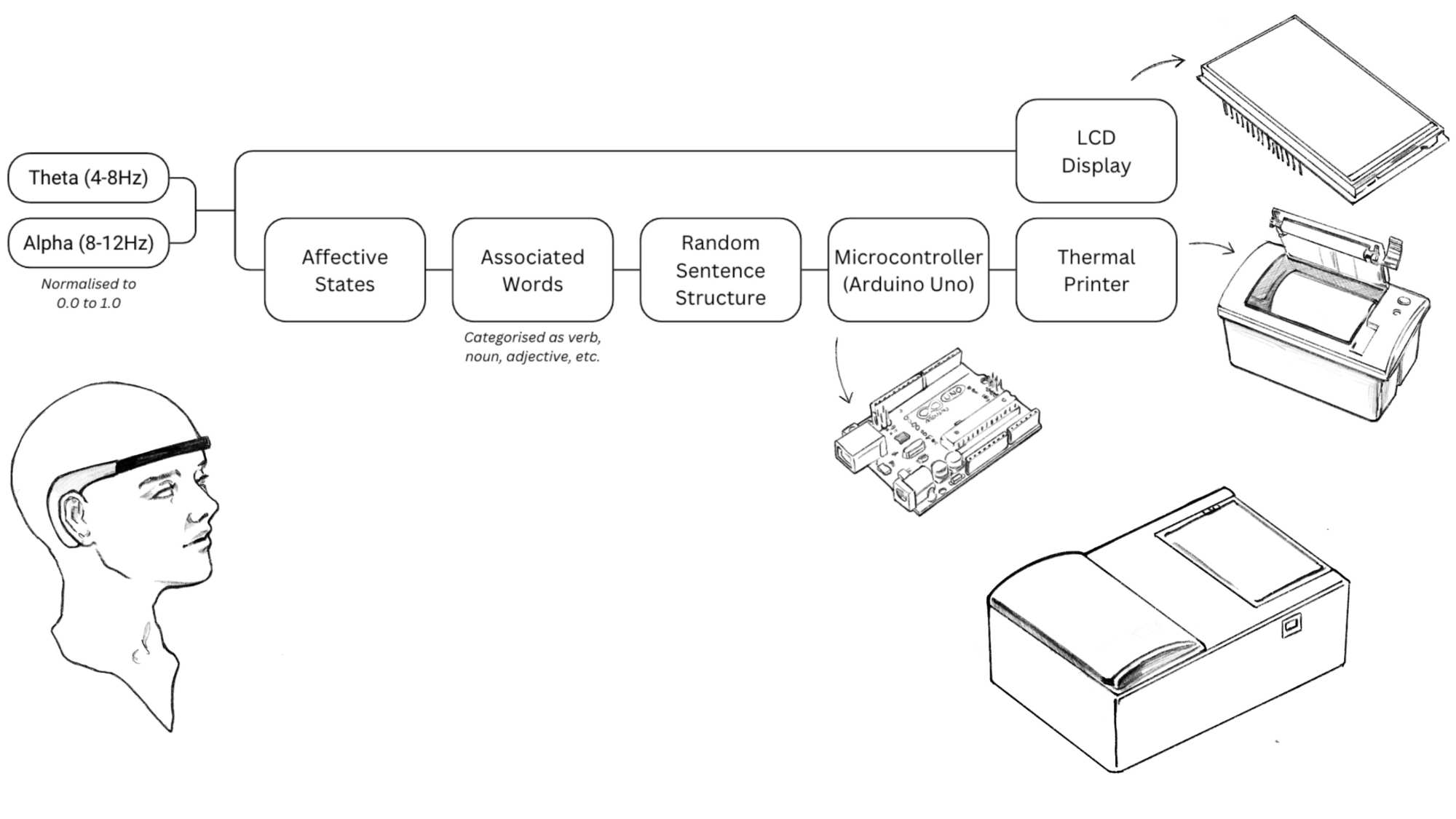
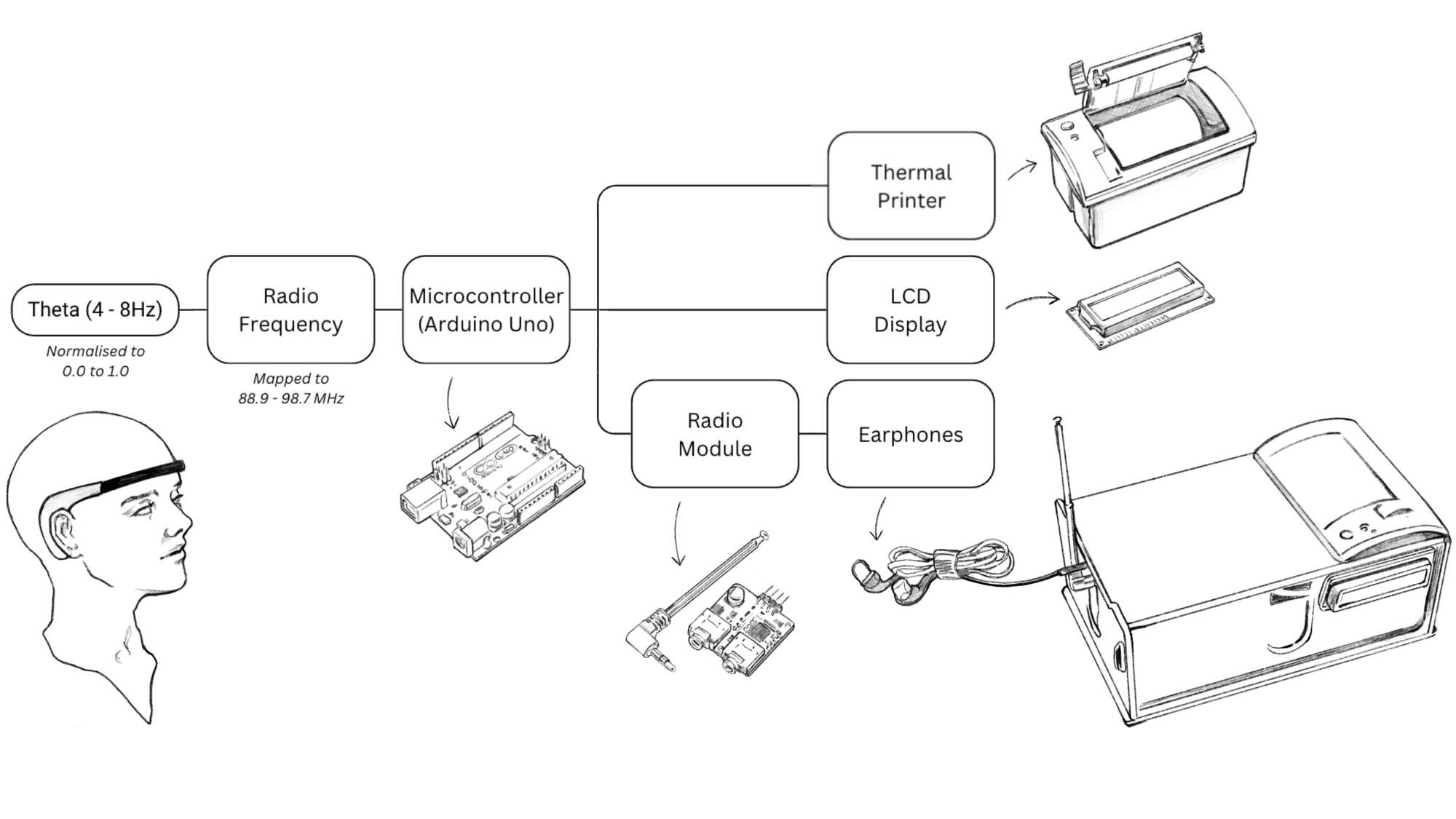
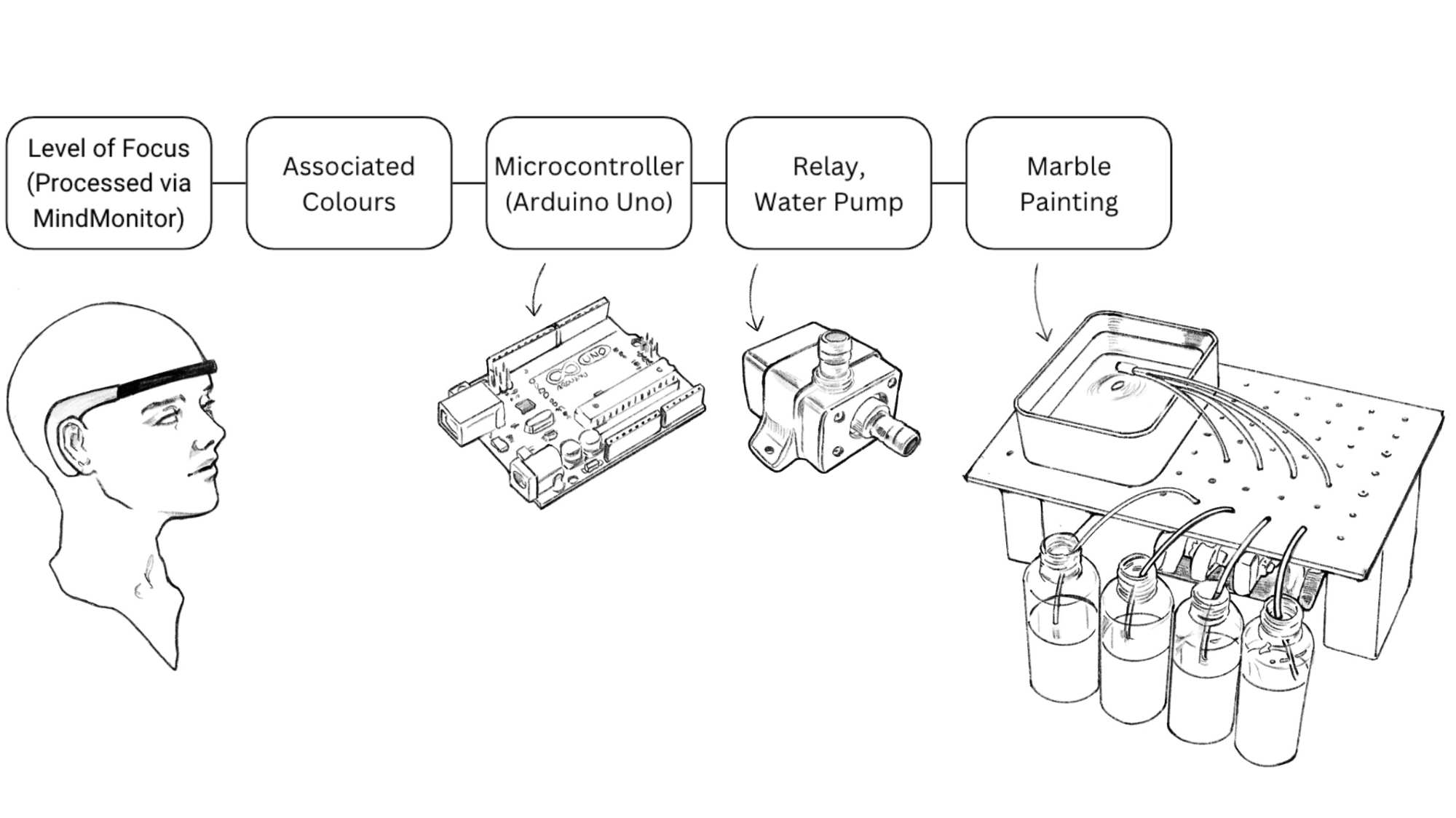
When creating the diagrams, I tried to present the technical setup of the interface in a way that was accessible to anyone reading my dissertation who does not have any context while providing enough detail to illustrate the system's design.
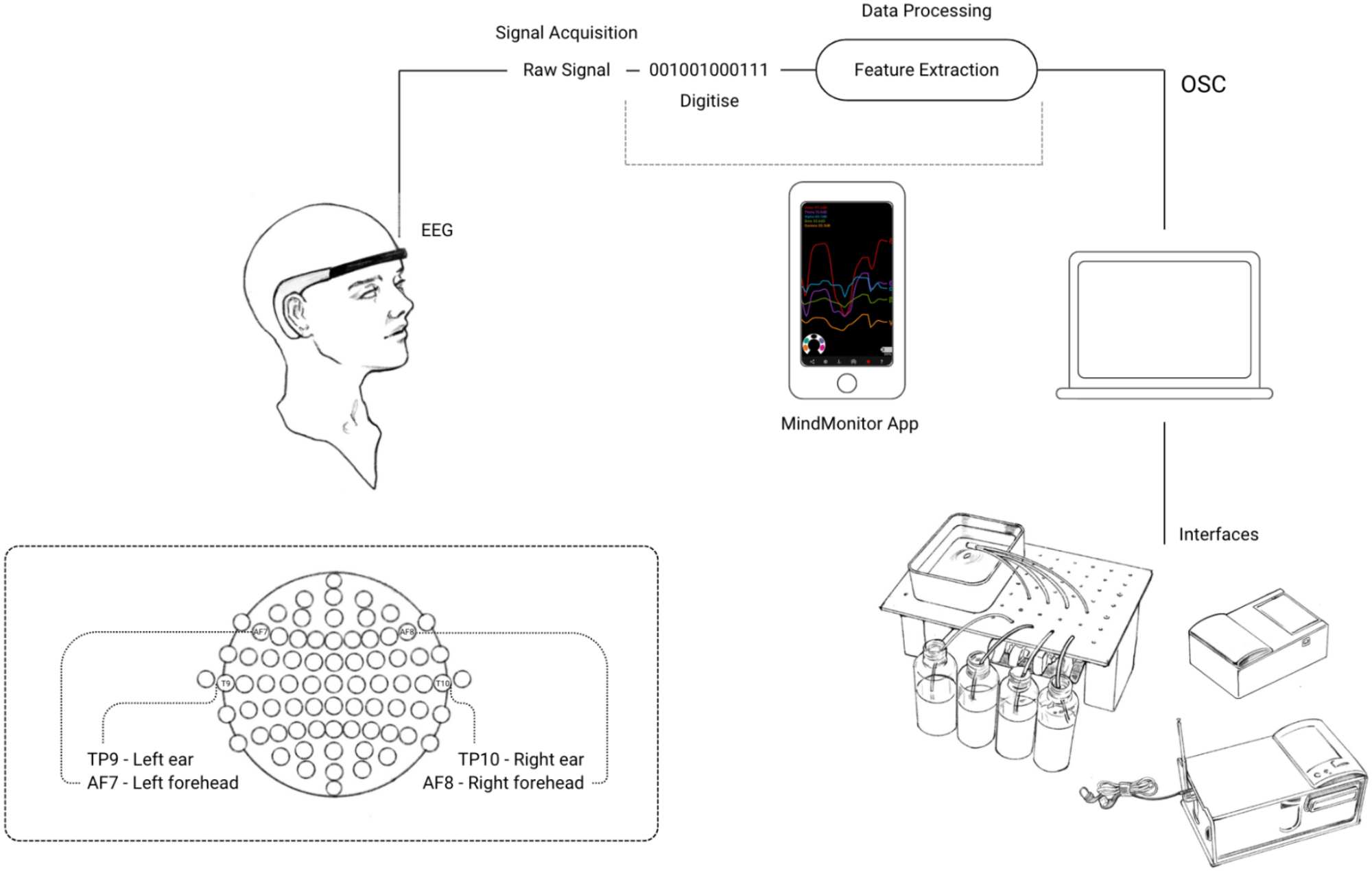
I made an overview of how the Muse 2 headband, MindMonitor app, Processing software, and Arduino Uno work together for real-time acquisition, processing, and output of neural signals. Just the key stages—data capture, processing, and output—without delving into unnecessary specifics.
For the individual prototype diagrams—Dream Journal, Frequent Encounters, and Wavelet—I emphasised each design's unique elements while maintaining the visual style. I highlighted core components with an illustration, such as the placement of the display or speakers, and tried to show the interaction and outcome.
Design Statement
Besides the dissertation, another writing I did was the editing of my design statement. While my original design statement that I submitted for semester one was adequate for my dissertation, the background being passive control and saying it is about control in interactivity was a bit vague and wasn't as interesting for the general viewer. I can see the disinterest in the eyes when I start to go off tangent.
So for my graduation project, which will be the main focus after the dissertation, I shifted the focus from passive control to mindfulness. While I had touched on mindfulness and calm technology in semester one, I didn't explore these ideas deeply because doing so would have required a significant overhaul of my dissertation framework. But for my graduation project, I thought this new perspective would be more relatable to the viewer.
This isn't about changing my project's objective or the design but rather recontextualising it within a new framework. The essence of the project remains the same—exploring the interactions between technology and the human mind—but now with a more approachable narrative. Mindfulness provides a lens through which the concept of passive control becomes easier to grasp, as achieving mindfulness often involves letting go of conscious control.
Interview with Yeo Shih Yun
I've been working on a sort of side project—conducting email interviews. While I initially intended to include these interviews in my dissertation, it didn't fit well within my established structure of RtD. An appropriate way to fit it in would be in the initial research phase, but when I have already finished my prototypes for the dissertation, it would be counterproductive to do so.
However, the insights I gained were too valuable to set aside, so I've decided to publish them as a separate article on my website. I've already received permission from Shih Yun to publish the interviews on a website, and I'm excited to share this additional layer of my research.
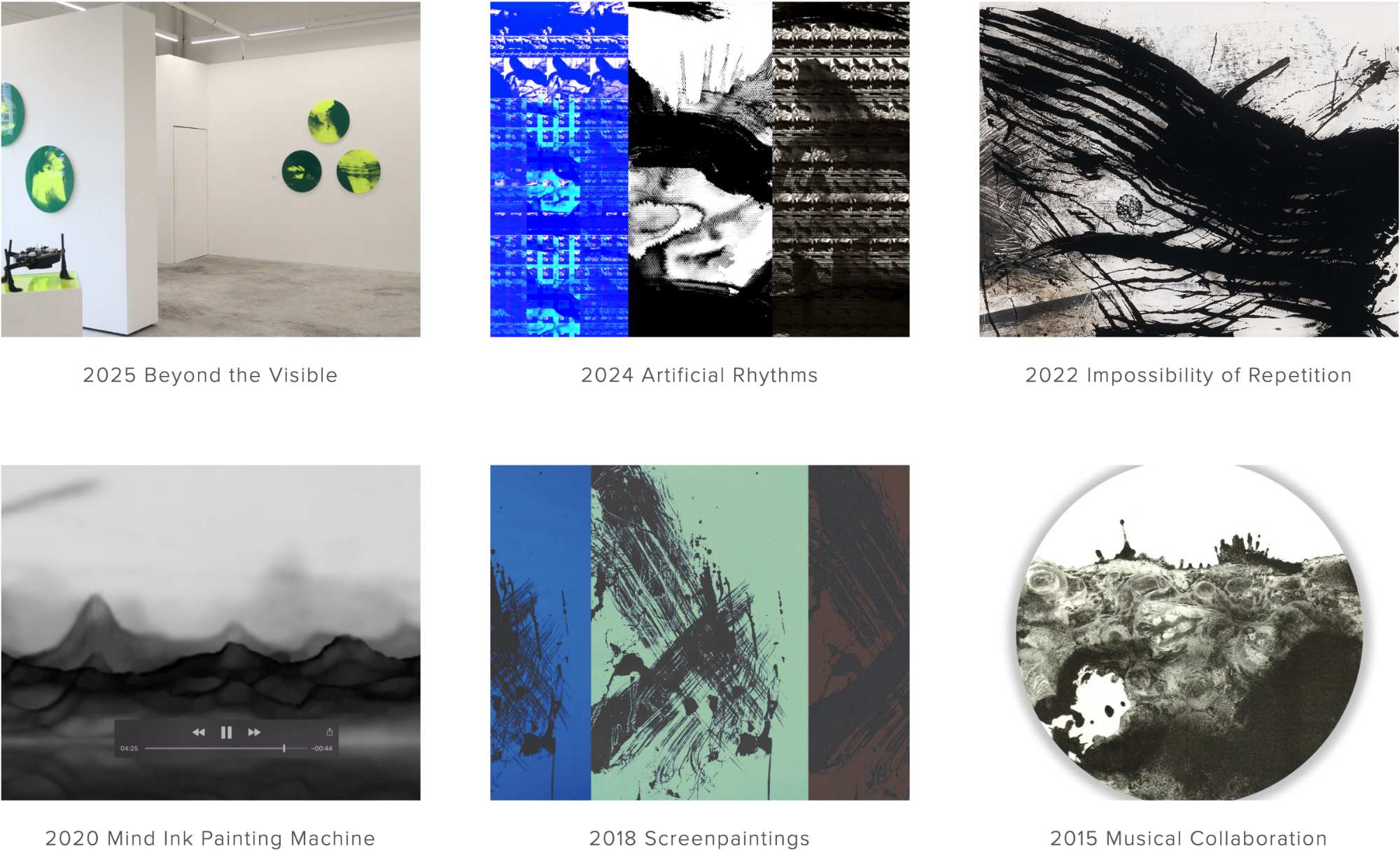
Yeo Shih Yun, a LASALLE alumna, is an artist whose experimental approach to ink painting blends traditional techniques with contemporary media and performance art. I reached out to her for an interview to gain deeper insights into using physical tools for computational installations. Much of her work resonates with my own inquiries into control within interactive installations, exploring the concept of mindless mark-making and the boundaries between intentionality and spontaneity. Notably, she has even created an installation that uses EEG as input, aligning closely with my interest in bridging technology and subconscious artistic expression.
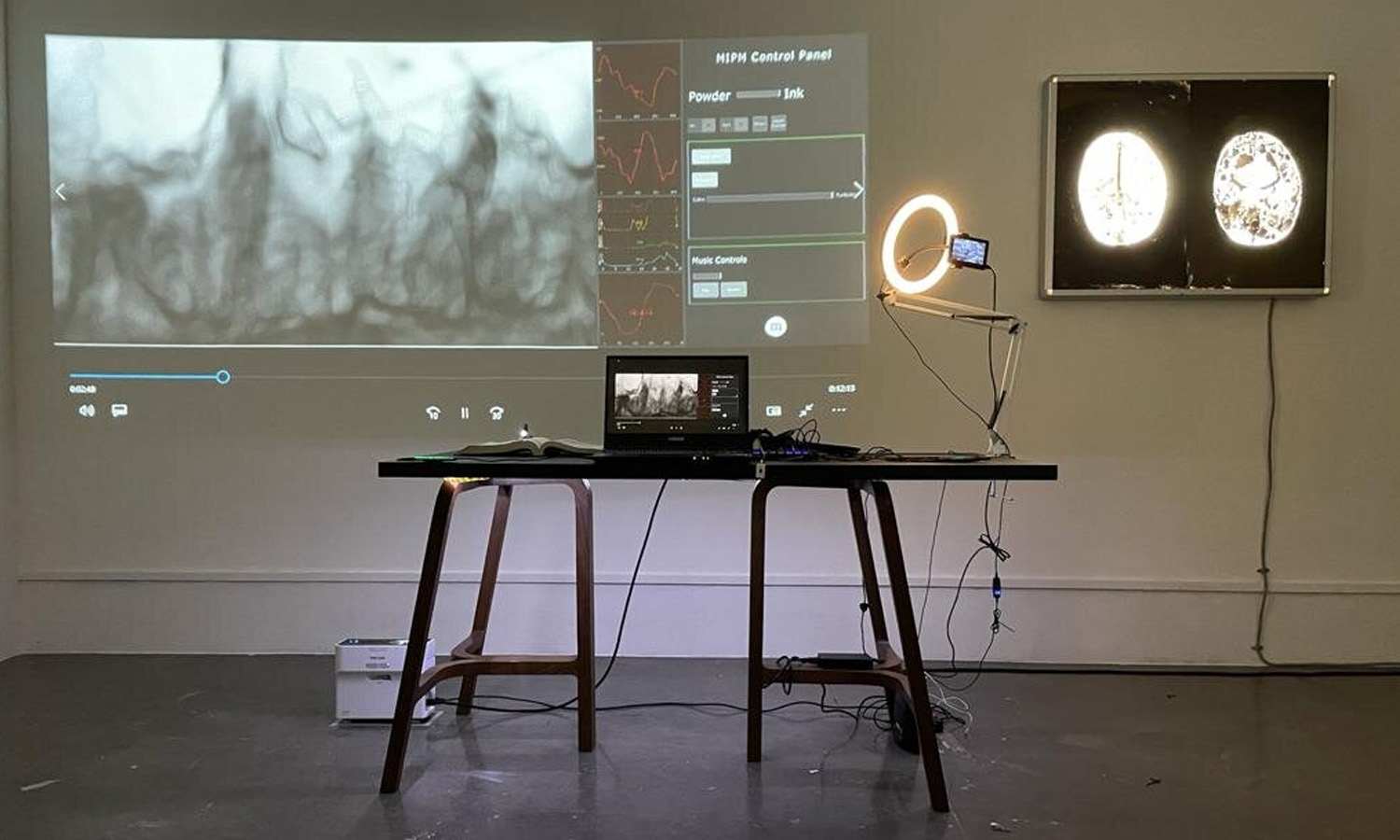
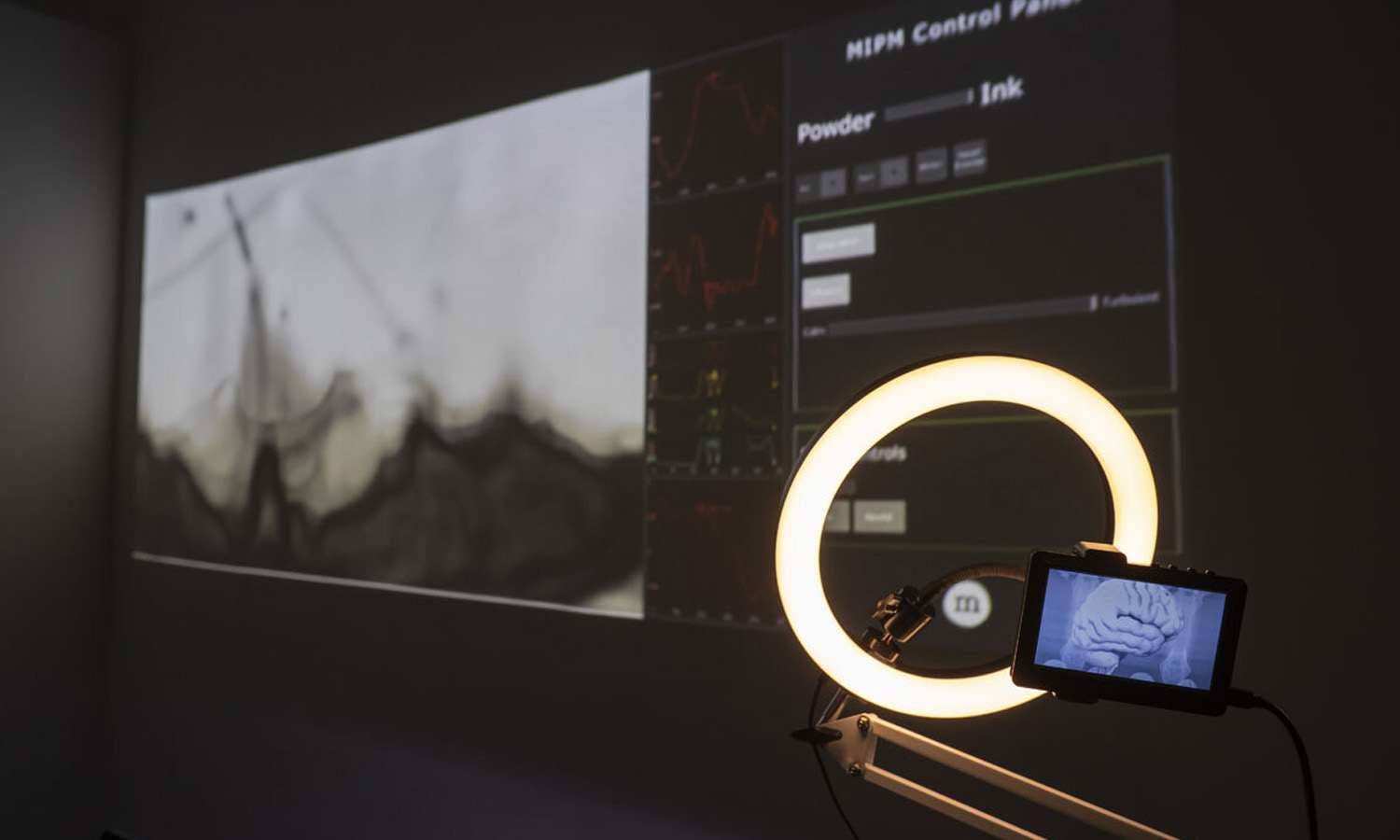
The questions were based on genuine interest after thoroughly reviewing her portfolio and interviews. They were crafted to avoid being too vague or abstract while providing opportunities for her to share genuine insights into her work. One particularly interesting analogy she made was regarding the setup for Mind Ink Painting, which used EEG as input. Her goal was to "make the installation feel like stepping into the workspace of a scientist obsessed with the human brain." Many EEG-based installations share a similar aesthetic, likely due to the overarching theme of exploring the mind.
Her setup seemed to push this further by adding immersive elements like a realistic brain video on a small display, multiple LED panels with scrolling text, an open encyclopaedia page on the brain, and a brain X-ray reimagined through ink painting, presented in a lightbox to mimic an actual scan. This reminds me of feedback I received during a user interview for my Wavelet prototype, where someone mentioned it felt like an alchemist's lab. Since my project still revolves around surrealist automatism, I could take this opportunity to lean into a vintage scientific aesthetic.
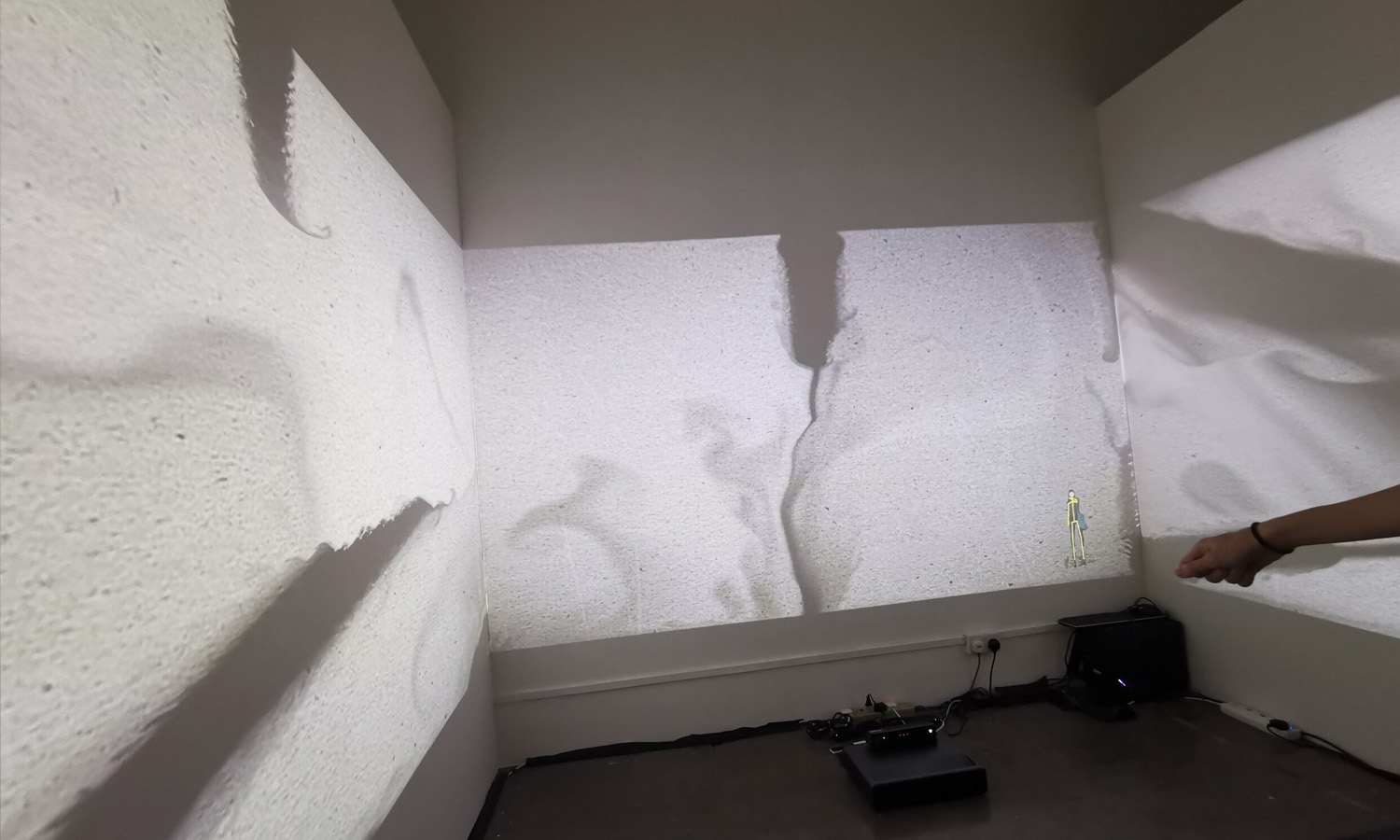
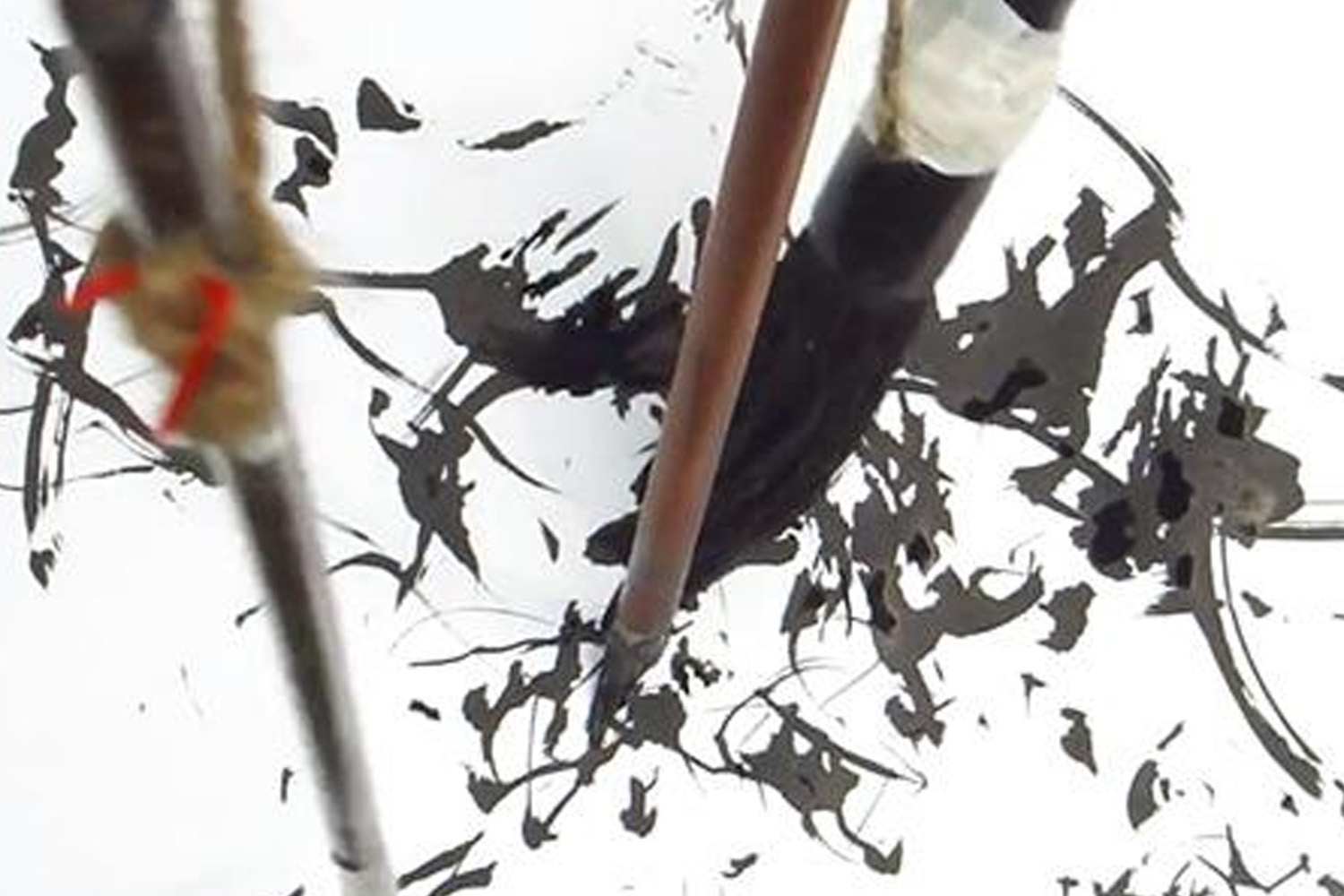
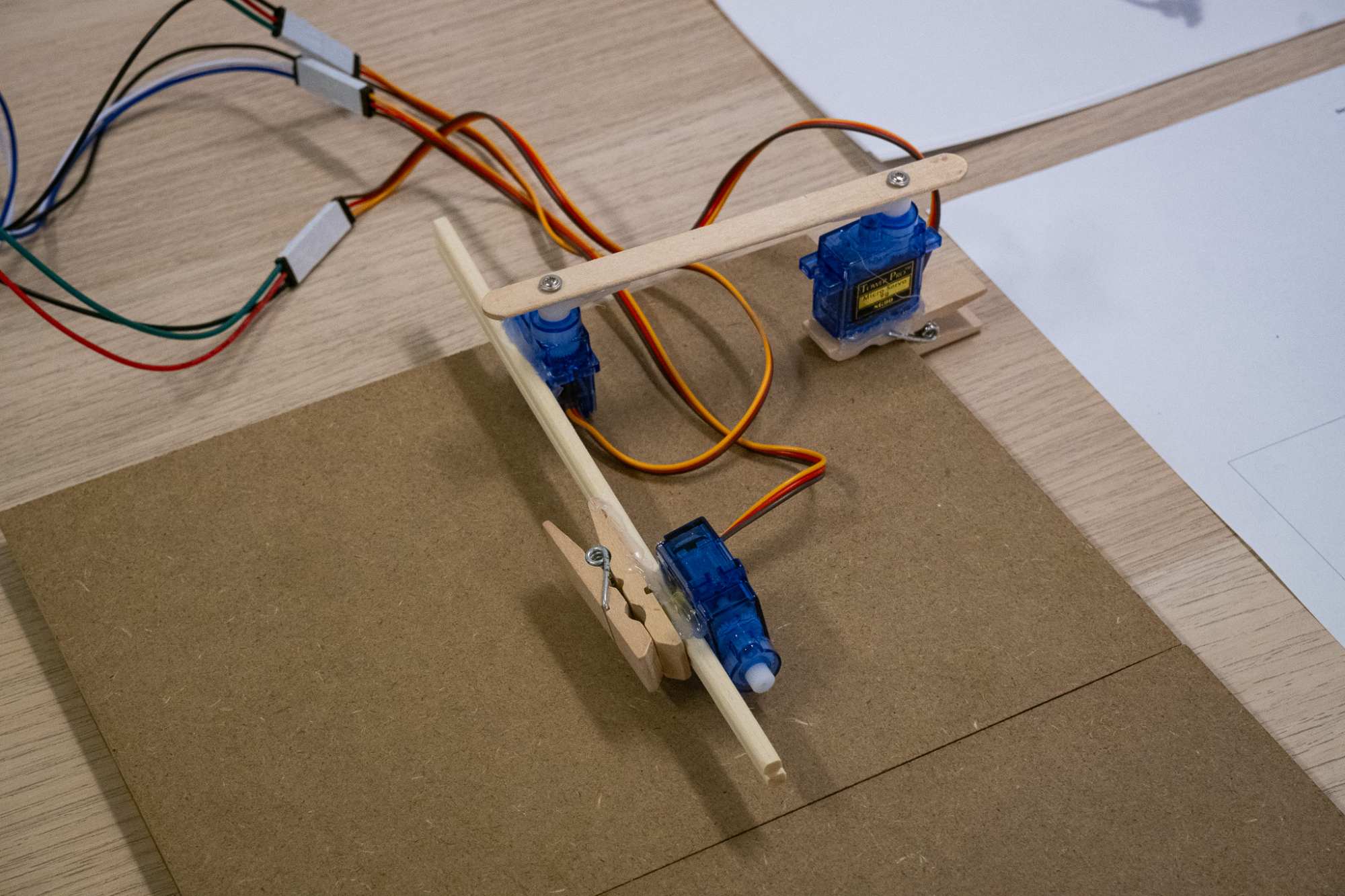
One of the most intriguing answers came from the question: Your work explores robotic mark-making. Do you see a fundamental difference between marks made by a machine and those made by a human hand? I asked this because some of her work delves into the distinction between machine-made and human-made marks, and I was genuinely curious to hear her perspective. She explained that there is indeed a distinct difference. When a robot operates a brush, it maintains constant contact with the surface, resulting in continuous and uniform strokes.
In contrast, a human hand introduces subtle variations—tiny ink splatters, shifts in speed, and changes in pressure. These nuances create a sense of energy and expression that machines struggle to replicate. From her experience, robot-made marks tend to be more controlled and even, while human-made marks possess a natural dynamism and spontaneity. Both approaches are valid, but they generate different visual languages. This perspective aligns well with my automatic drawing experiment, highlighting the value of spontaneity in the servo motors and reinforcing the significance of embracing unpredictability in generative art.