12
Open Studios:
Descriptive Documentation
~ 04.04.2025
Day One
The first day of Open Studios. My first visitor was a young boy—the younger brother of one of my peers—whose whole family was walking around to explore the setup. When he realised he could use the headband to read brain activity, he was thrilled. I felt grateful that even a younger audience was intrigued by the project, and that the documentation was clear enough to be understood.
After reading through my project descriptions, he voted on which prototype he wanted to try most. He became the first person to place a sticker on what would turn out to be the most popular option: the Dream Journal. This showed that he actually read through the descriptions because, at first glance, its interface isn't the most visually appealing.
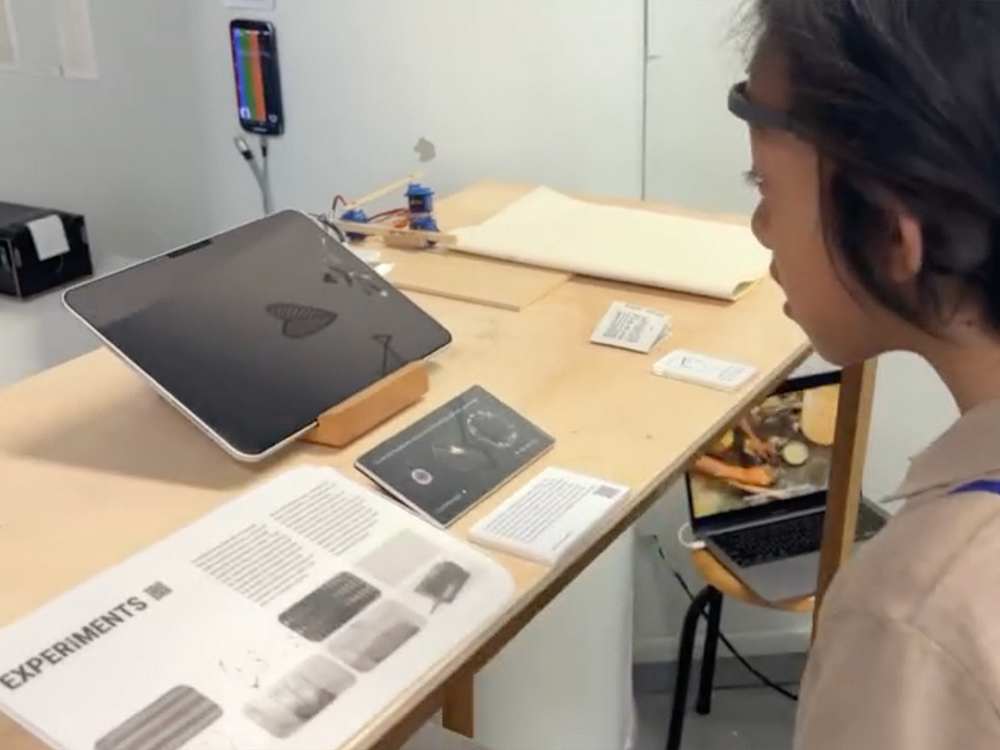
My next guest was from the National Design Centre. She didn't offer critical feedback—probably because she was tired after reviewing many projects—but she did ask for my business card or portfolio link, which I provided. Just in case, I later added a QR code linking to my website on the table.
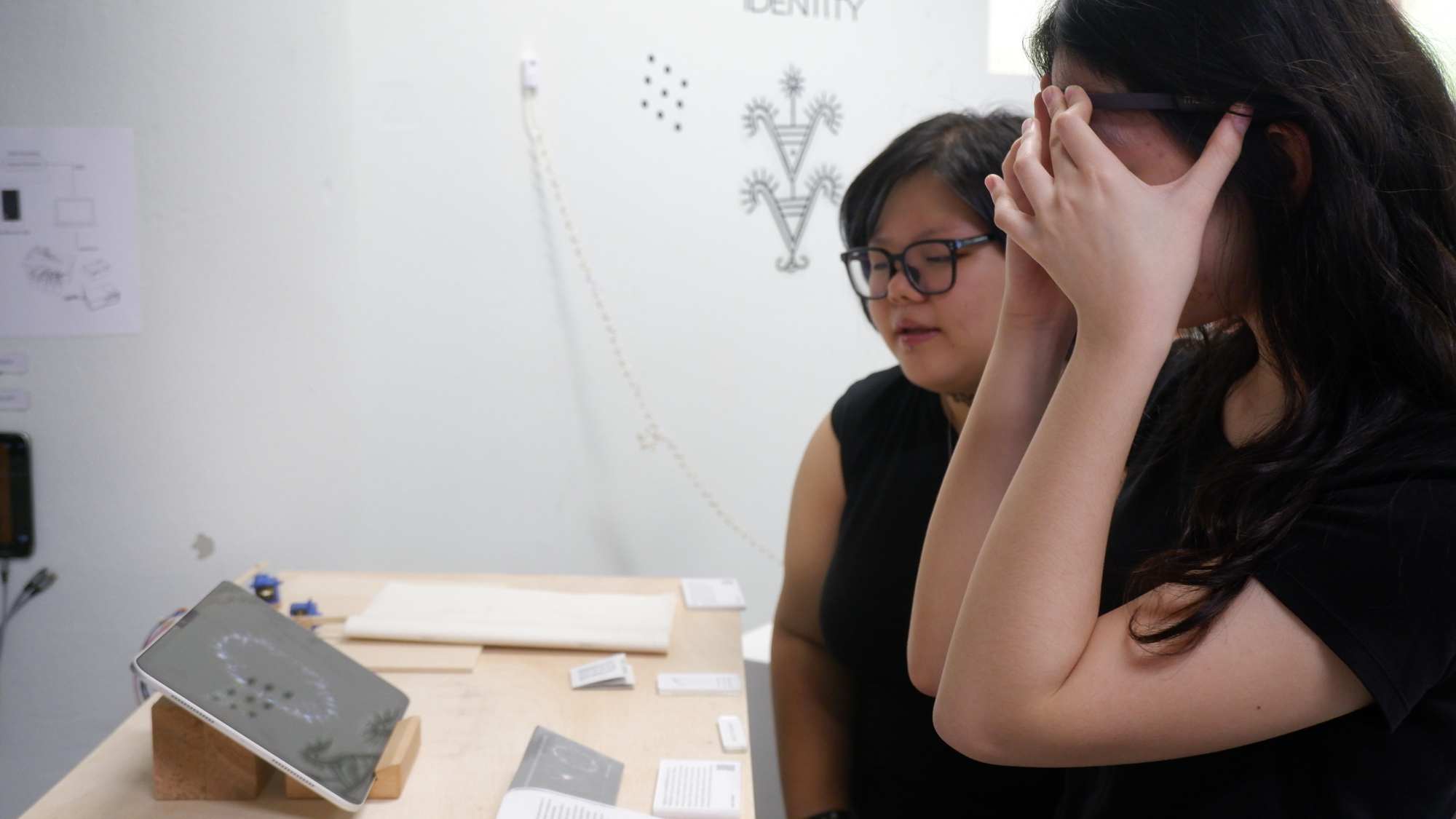
After that, there were many students scouting projects for inspiration. Several juniors asked about joining Andreas' atelier, and I assured them they were on the right path, even though I'm not even sure I am. Still, I was glad to see many juniors and industry guests leave stickers on my voting board—proof they'd spent time digesting my prototypes' descriptions.
I was pleasantly surprised by how many votes the Dream Journal received. While I expected it to be popular, I didn't anticipate people actually reading the descriptions. I thought at first glance, Wavelet would be the most intriguing. A junior later pointed out that the poll actually encouraged visitors to engage with the text.
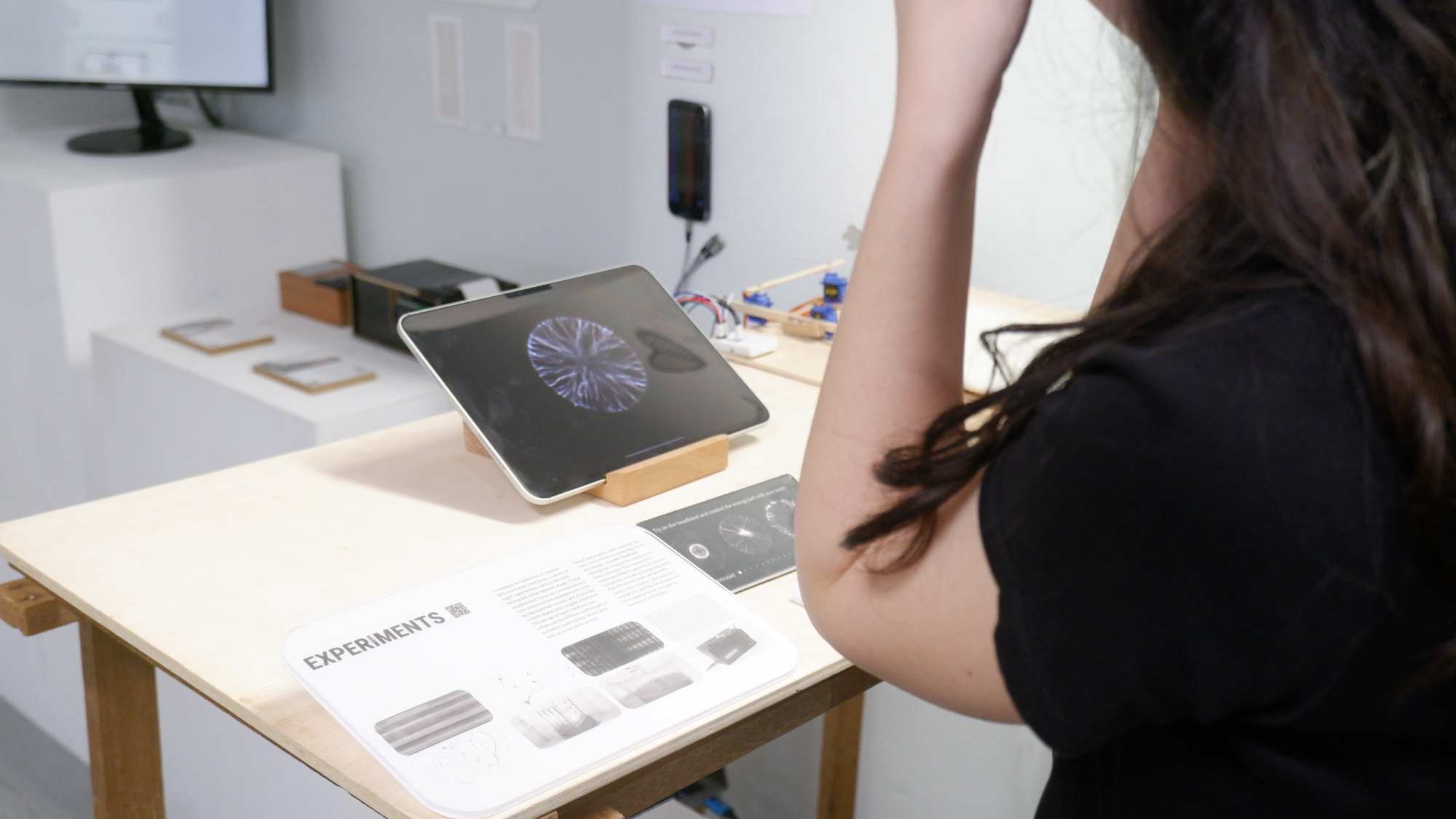
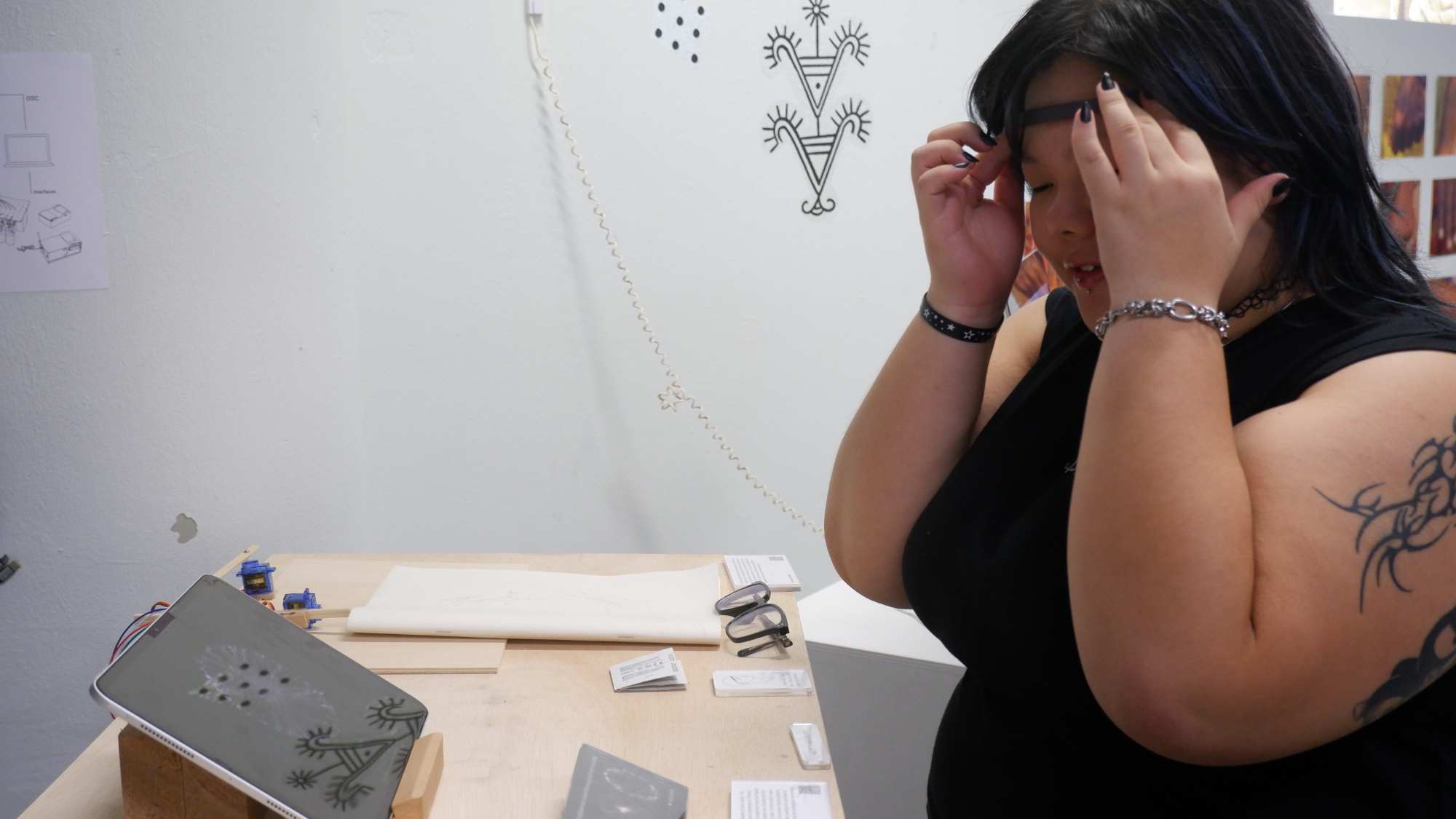
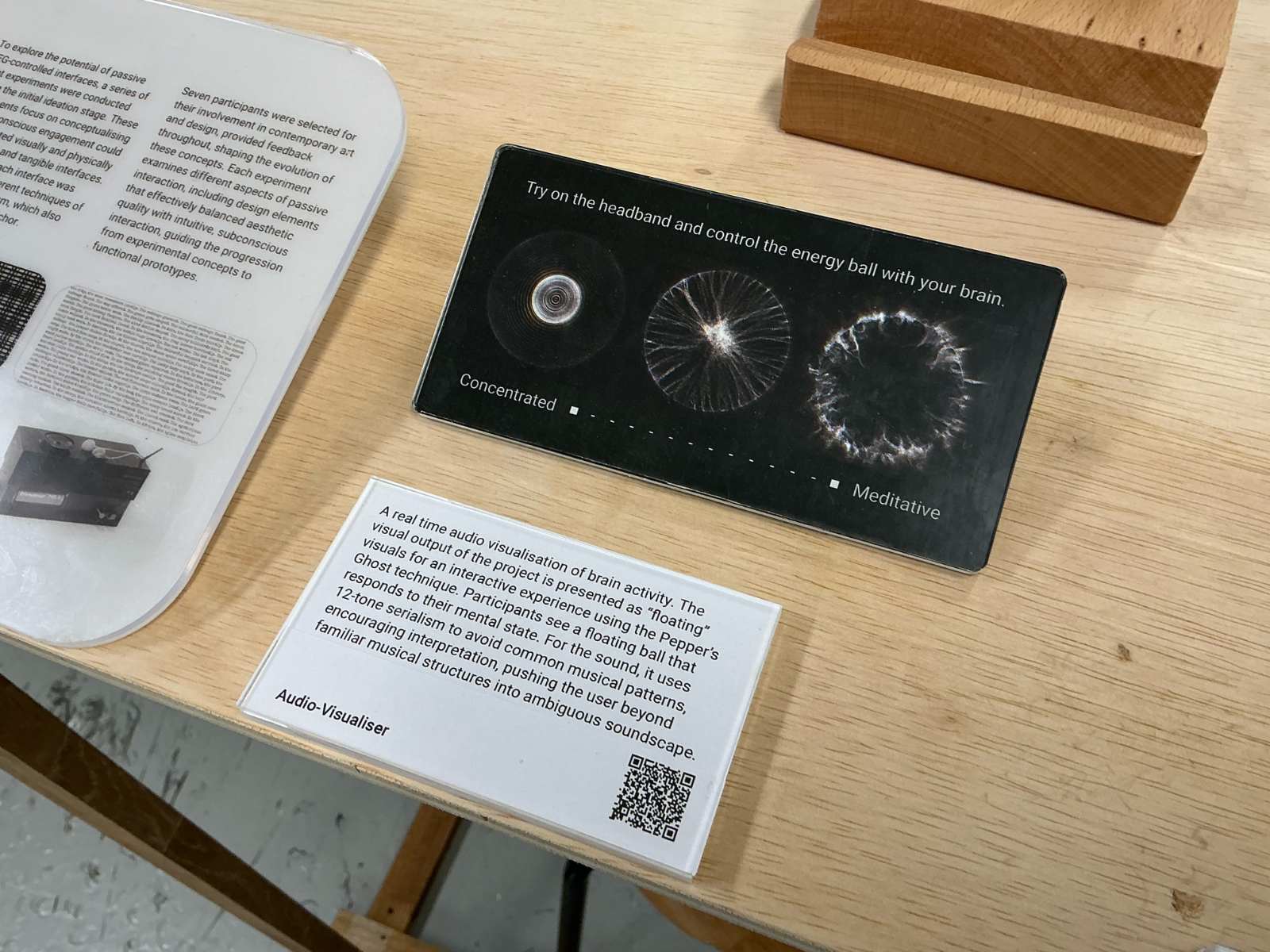
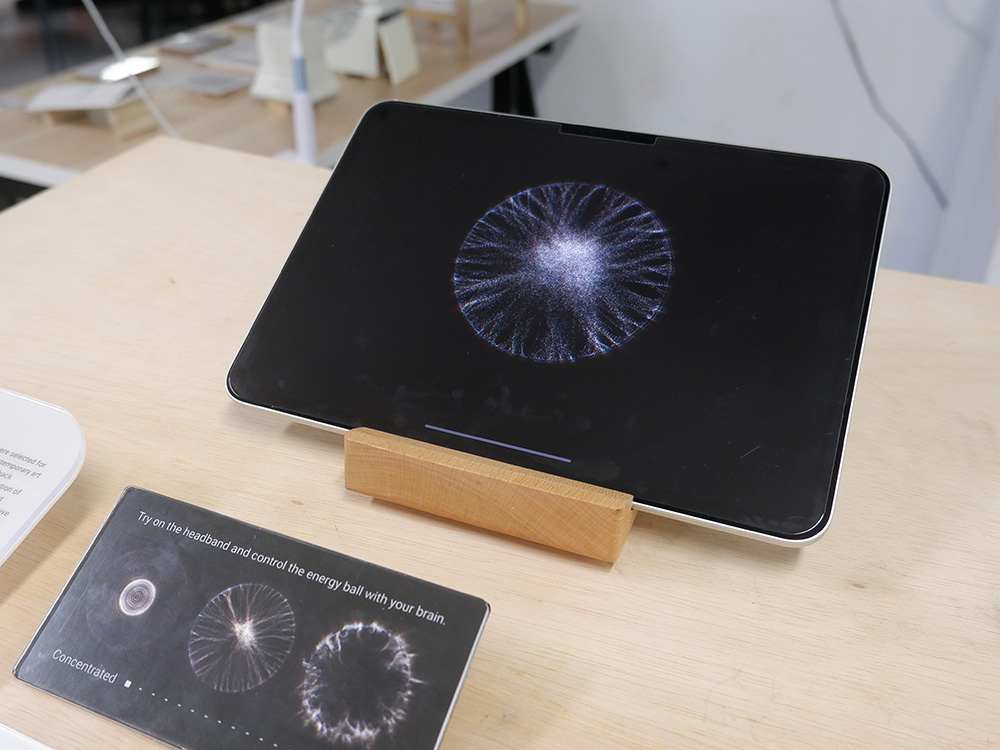
A fun observation: several visitors were drawn to the Audio-Visualiser, because they could interact with it directly during the Open Studios. Four separate people asked where to place their sticker for it, so I eventually created a dedicated spot. A few also liked the Drawing Machine experiment.
Day Two
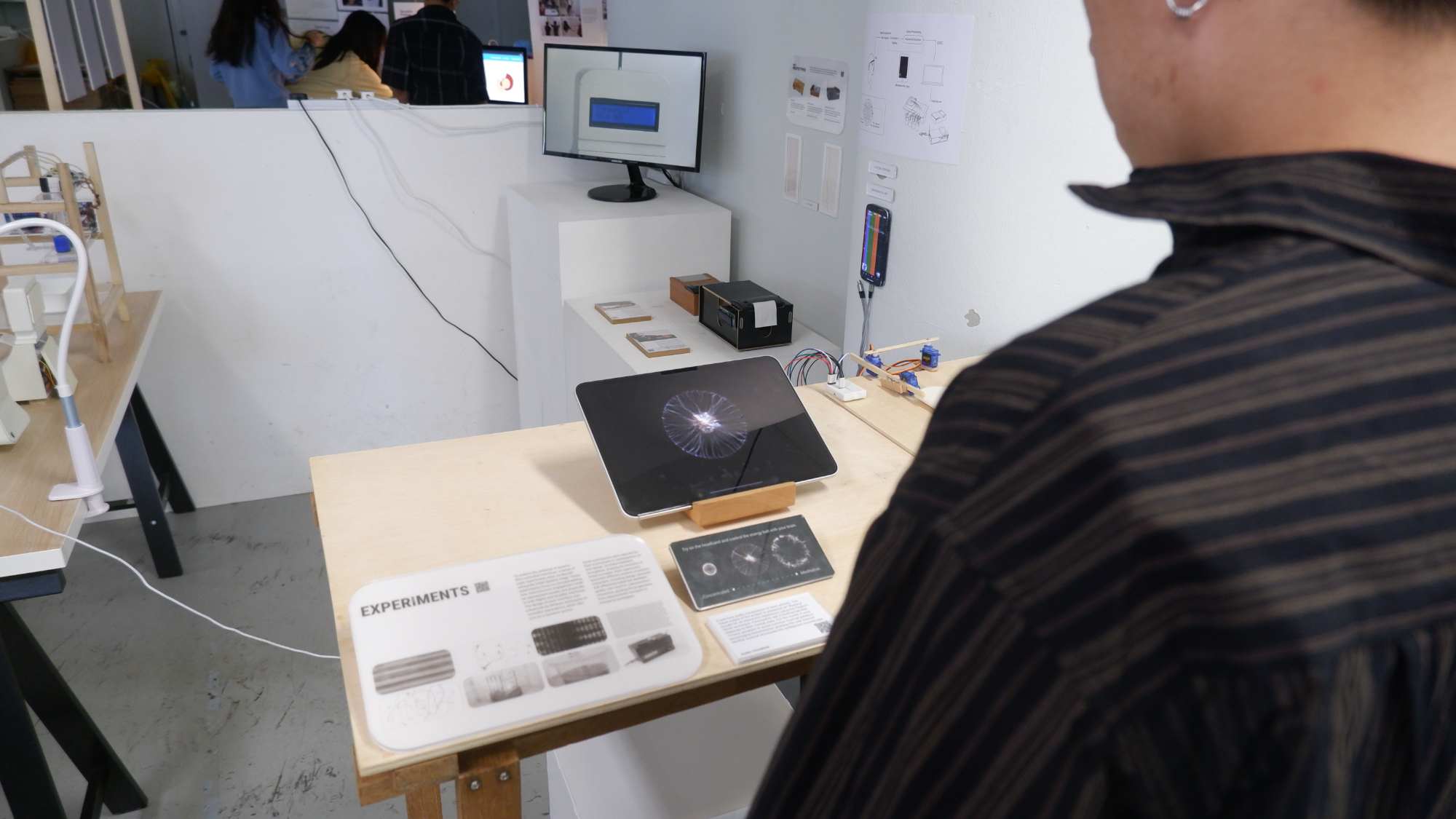
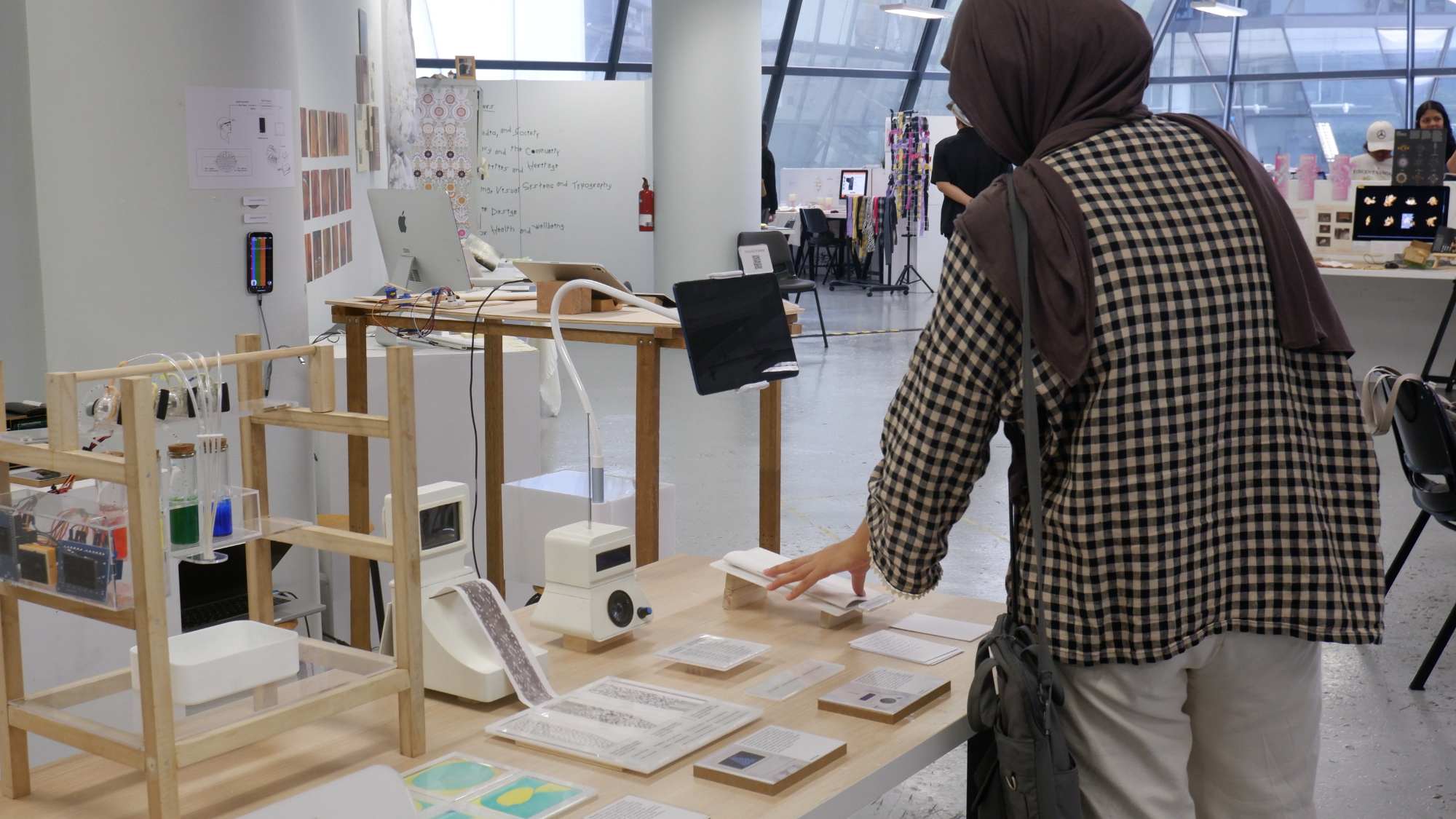
On the second day, there were more industry guests. One notable conversation was with Mark, who was a type designer. He asked about how I will be developing my project after Open Studios. I mentioned wanting to refine how I present my outcomes, especially the visuals.
He suggested that I create custom typography. Using the Automata outcomes (which he felt had the strongest visual language) to create a title treatment that embodies the project's concept. I'd actually experimented with this last week that I felt might be too niche, but his comment validated my direction.
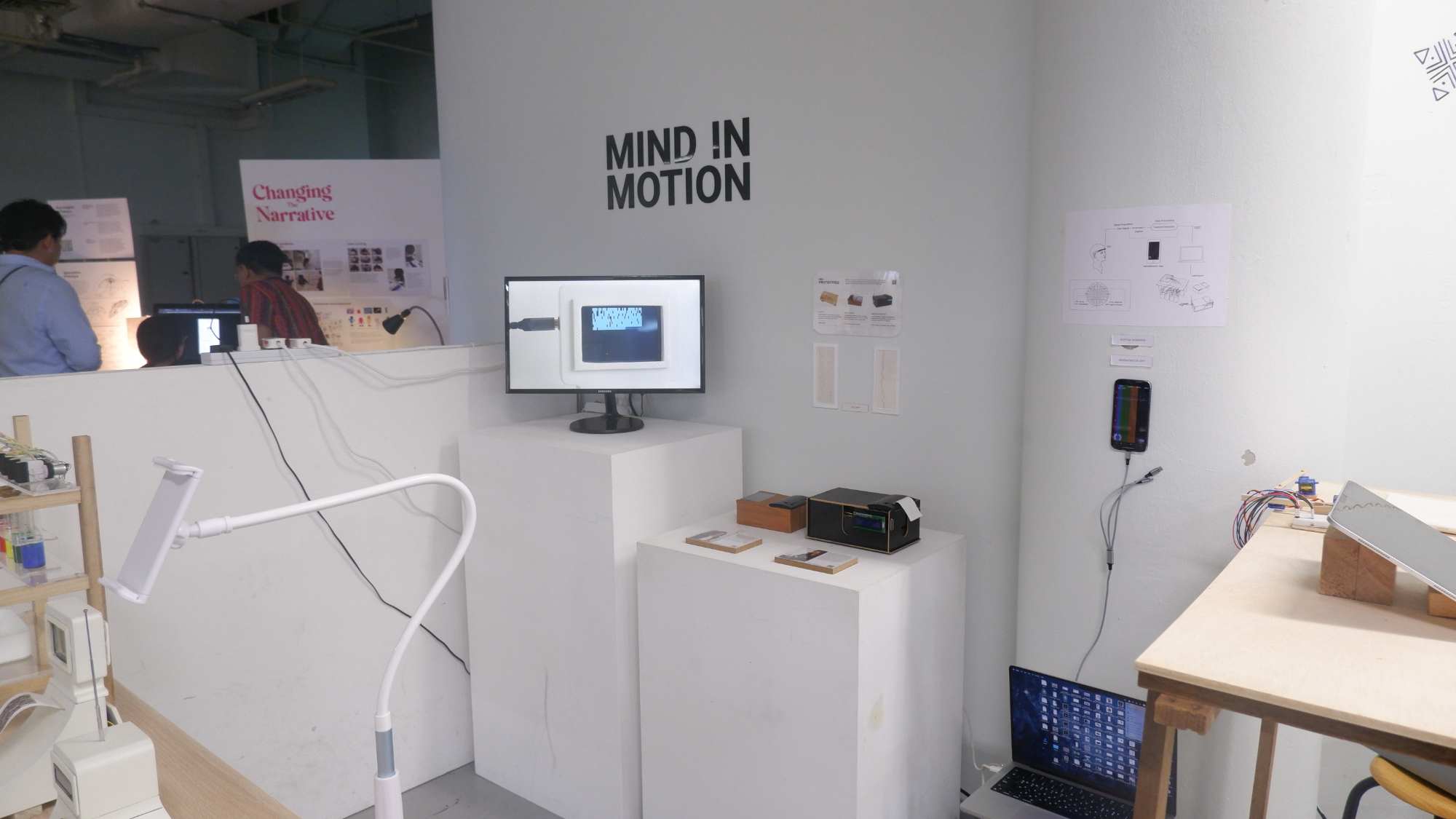
He also suggested adding subtitles. I could add a brief explanatory text under the main title since, as he noted, "Most people won't read descriptions." I agree with this —later, at a school café, I caught myself skimming only the titles and ingredients on the menu, ignoring the details like available times even when I needed them. Note to self: Next time, try to feed key information.
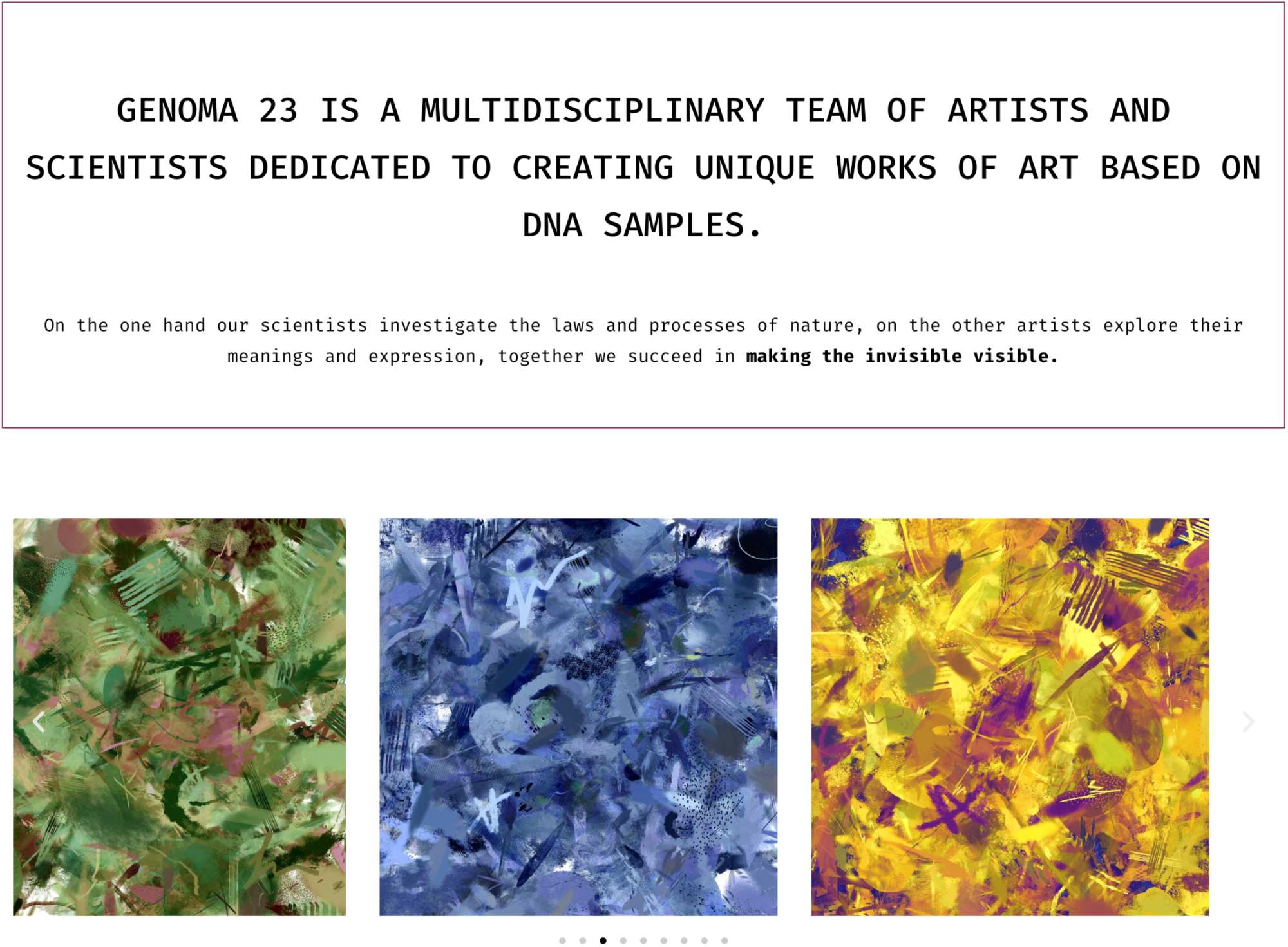
Another industry guest compared my work to a design team that creates art from extracted DNA—mentioning how both generate unique outcomes for individuals without explicit control.
One of the notable moments during Open Studios was the sharing with Nur, the dean. I already met her before, and she even remembered my project—if only vaguely. When I mentioned that the Dream Journal was the most voted-for prototype, she immediately understood why, echoing feedback I'd heard earlier: "Interpretive outcomes tend to resonate more." This also aligns with findings from the user testing for my dissertation.
After I shared my prototypes, she encouraged me to "think about how to frame my findings"—which led me to articulate what I'd discovered so far. She seemed to resonate with my explanations of how even without explicit control, the outcomes can be meaningful as an imprint of the user's individuality, especially as a physical souvenir. I will definitely try to emphasise on my findings for my final setup.
Day Three
The third day began with an unexpected presentation for visitors from Singapore's National Health Innovation Center. I felt unsure how to frame my project for a health-oriented audience, but yasser reassured me I didn't need to force a connection to health. I did a short demo of the Audio Visualiser.
They suggested adding prompts to guide users on what to do while wearing the headset—a note I had also received from another student on Day Two. Because the entire concept of my project about the unconscious, I wanted it to be self-prompted. But considering the feedback, I will be considering adding more explicit prompts, maybe even breathing exercises.
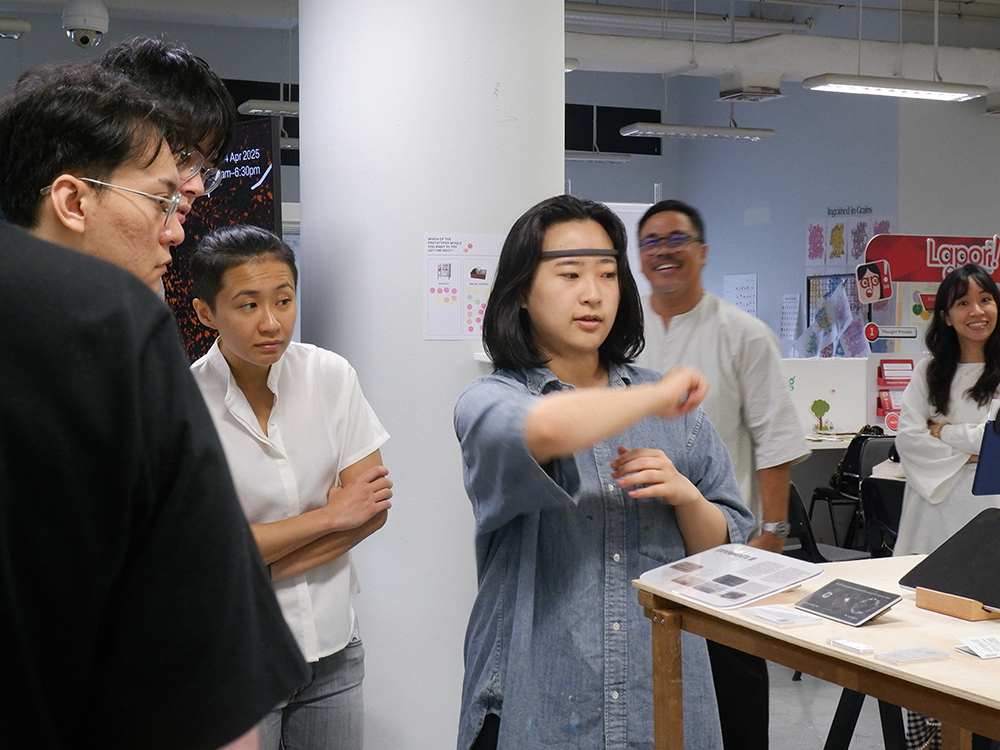
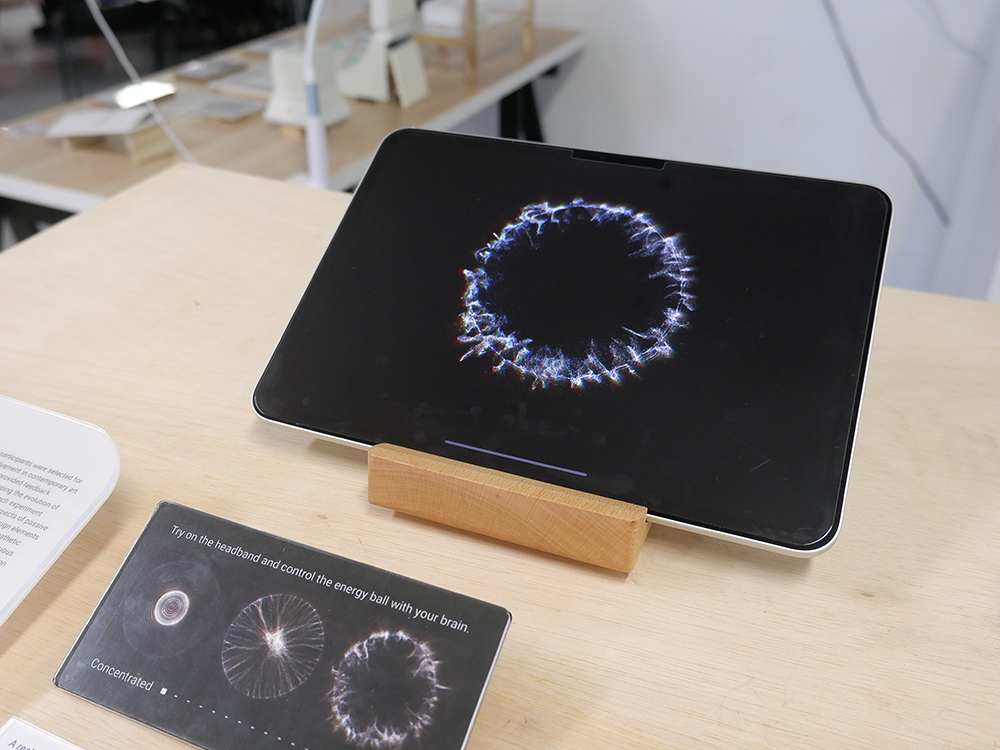
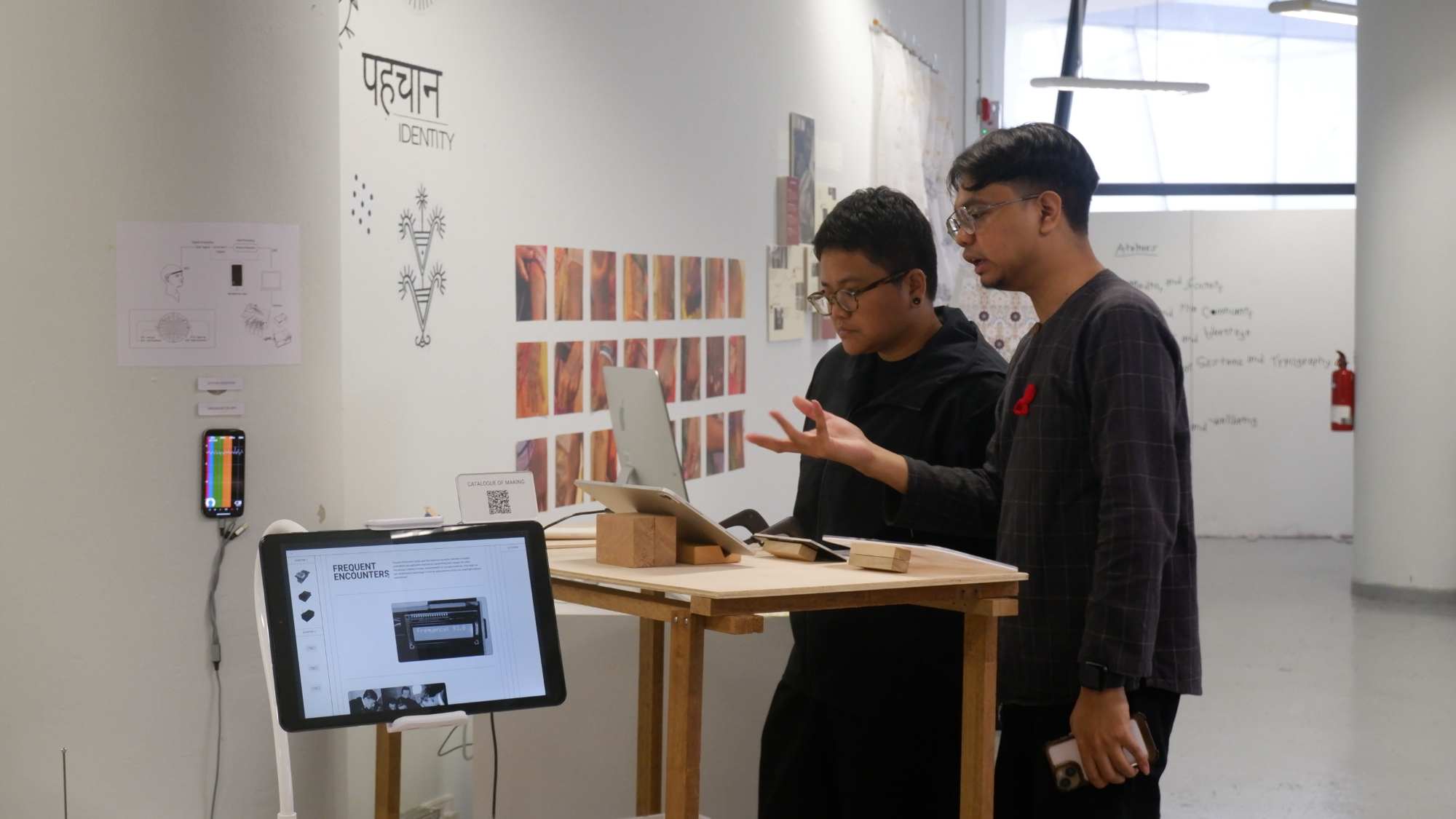
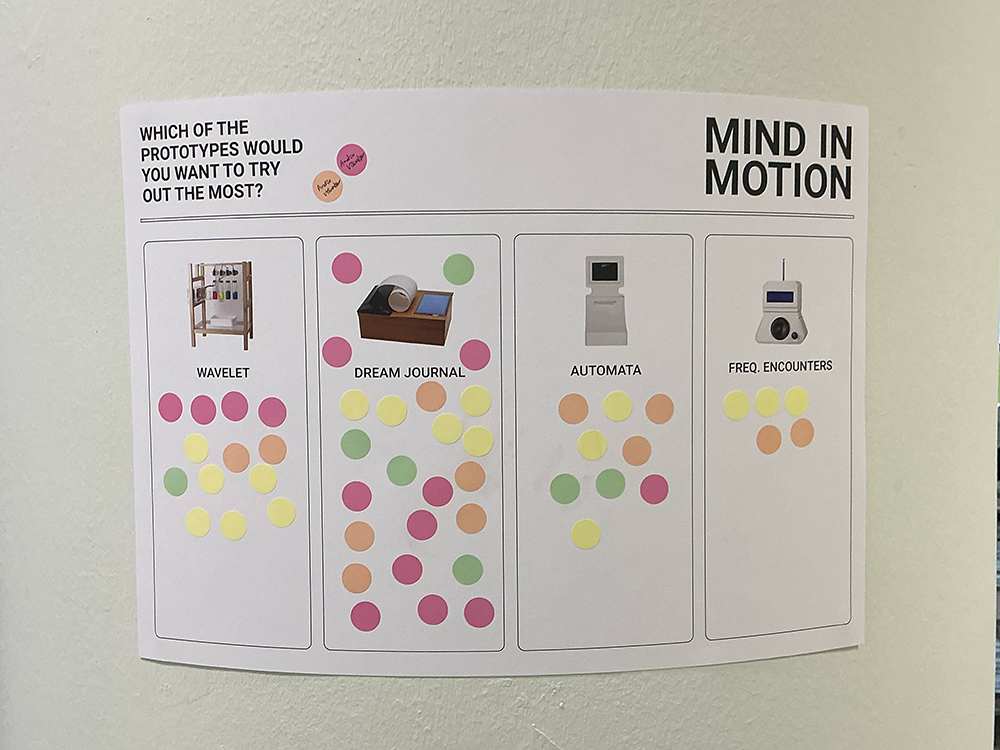
The rest of the day brought another wave of students and industry guests curious about my project. I was a bit shy to explicitly ask for feedback, but many left stickers on my voting board. When I asked a few why they chose specific prototypes, patterns emerged.
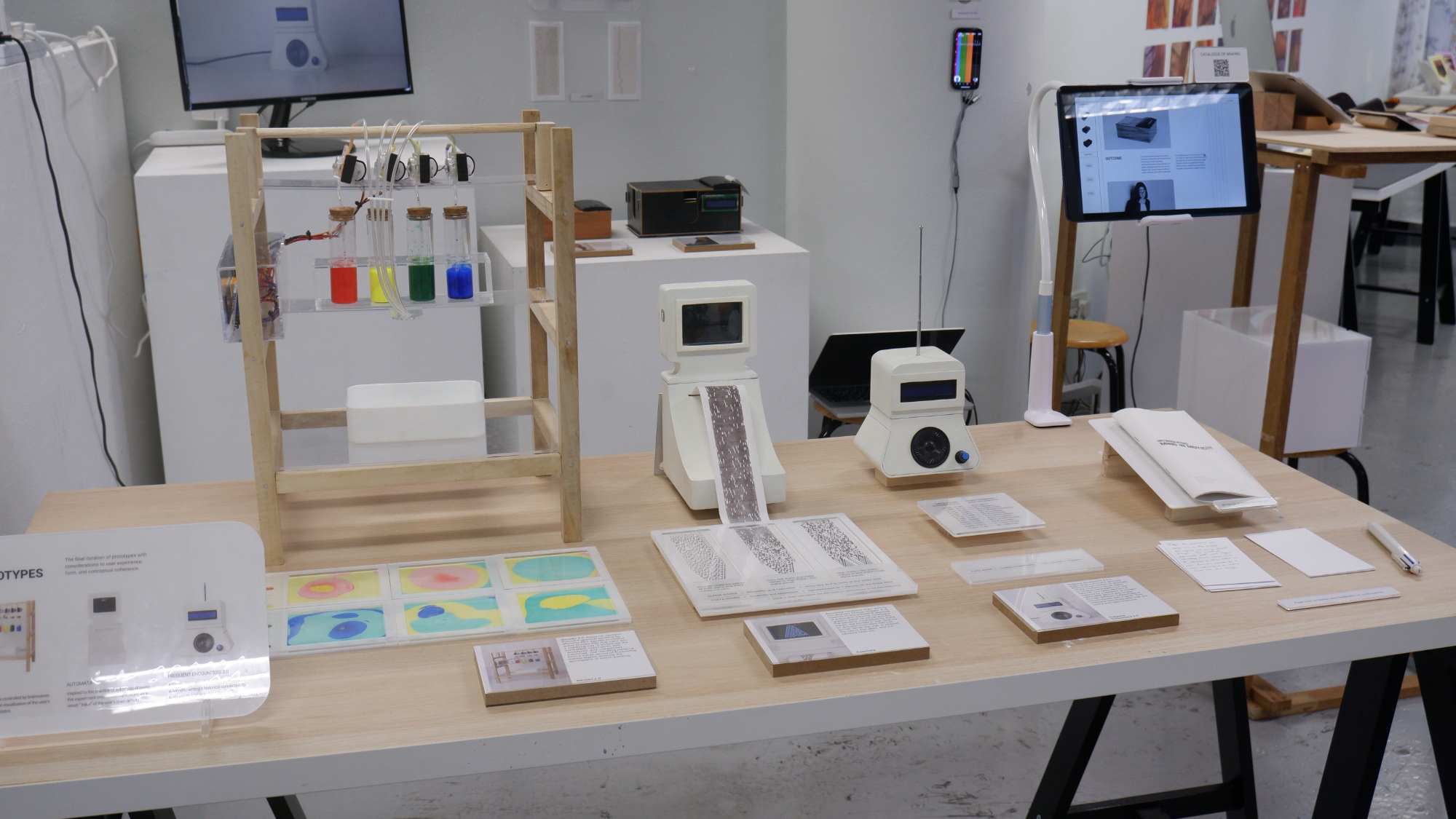
- Wavelet & Dream Journal: Favored for being "more interpretive."
- Automata: Chosen for its visual appeal (especially the generated patterns).
- Frequent Encounters: Preferred by those who enjoy abstract concepts—often peers from my cohort.
Written Feedback
For the written feedback notes, these were some of the more constructive feedback I received minus the friendly and positive comments from my peers (which I of course appreciated nonetheless).
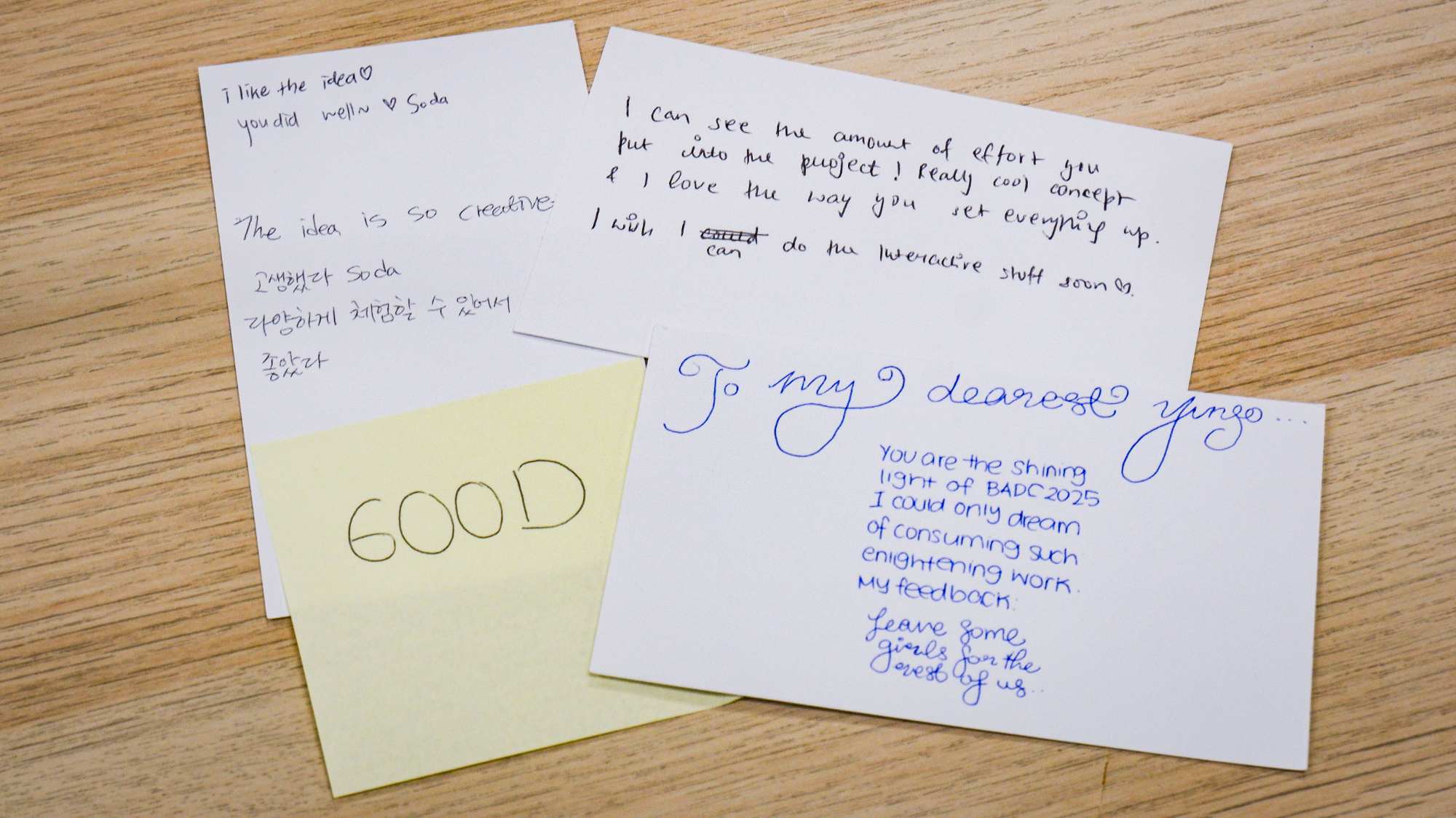
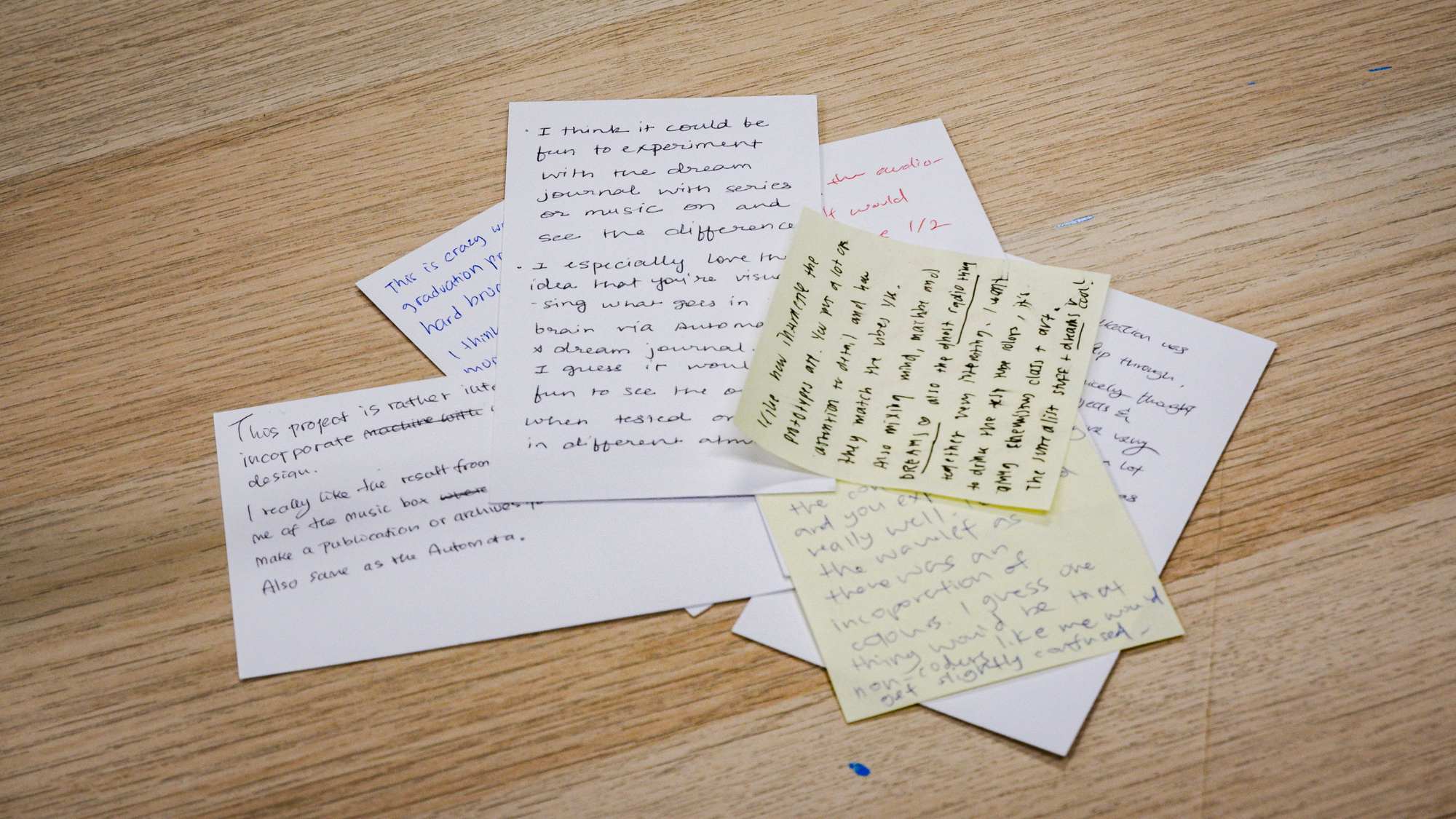
- Firstly, the publication was very nice to flip through. The layouts are nicely thought through. The projects & experiments itself were very interesting which brings a lot of potential to other topics as well. Like the brainwaves & how authenticity & ownership comes into the story.
- I really enjoyed the audio visualiser. It would be good to have 1 / 2 activities for ppl so that ppl can see wether they are focused of not. Overall, great work!
- This is a LOT for a student project, very cool and high-quality stuff. I'm a bit worried about joining Andreas' atelier now. I hope the words used in the descriptions can be slightly simpler next time for novices like me, although I know it's necessary to explain the concept in detail.
- I think it could be fun to experiment with the dream journal with series of music on and see the difference? I especially love the idea that you're visualising what goes in the brain via automata and dream journal. I guess it would be fun to see the outcomes when tested on user in different atmosphere.
- This project is rather interesting on how you can incorporate machine, mind, and design. I really like the results from dream journal, it reminded me of the music box. I felt like you could make a publication or archives for them. Also same as automata.
- I like how interactive the prototypes are. You put a lot of attention to detail and how they match the aesthetics. Also mixing mind, machine, and dreams. Also the ghost radio together very interesting. I want to drink the test tube colors, it's giving chemistry class + art. The surrealist stuff + dreams very cool!
- Hello! I think that the concept is interesting and you explained it really well. I esp loved the wavelet as there was an incorporation of colours. I guess one thing would be that non-coders like me would get slightly confused.
- This is crazy work for a graduation project! You cooked hard bravo! I think it's better if you provide more explanation on what you mean by more "concentrated" and more "meditative" so people can understand more about their brains lmao.
(The last feedback seems to reference my shared research indicating that individuals with ADHD may consistently exhibit higher theta wave values, which correspond to the "meditative" visualizations, while those with OCD may consistently display the "concentrated" visual patterns.)