15
Wrap-up:
Wavelet and Documenting
18.11.2024 ~ 24.11.2024
Drip Drop 2.0
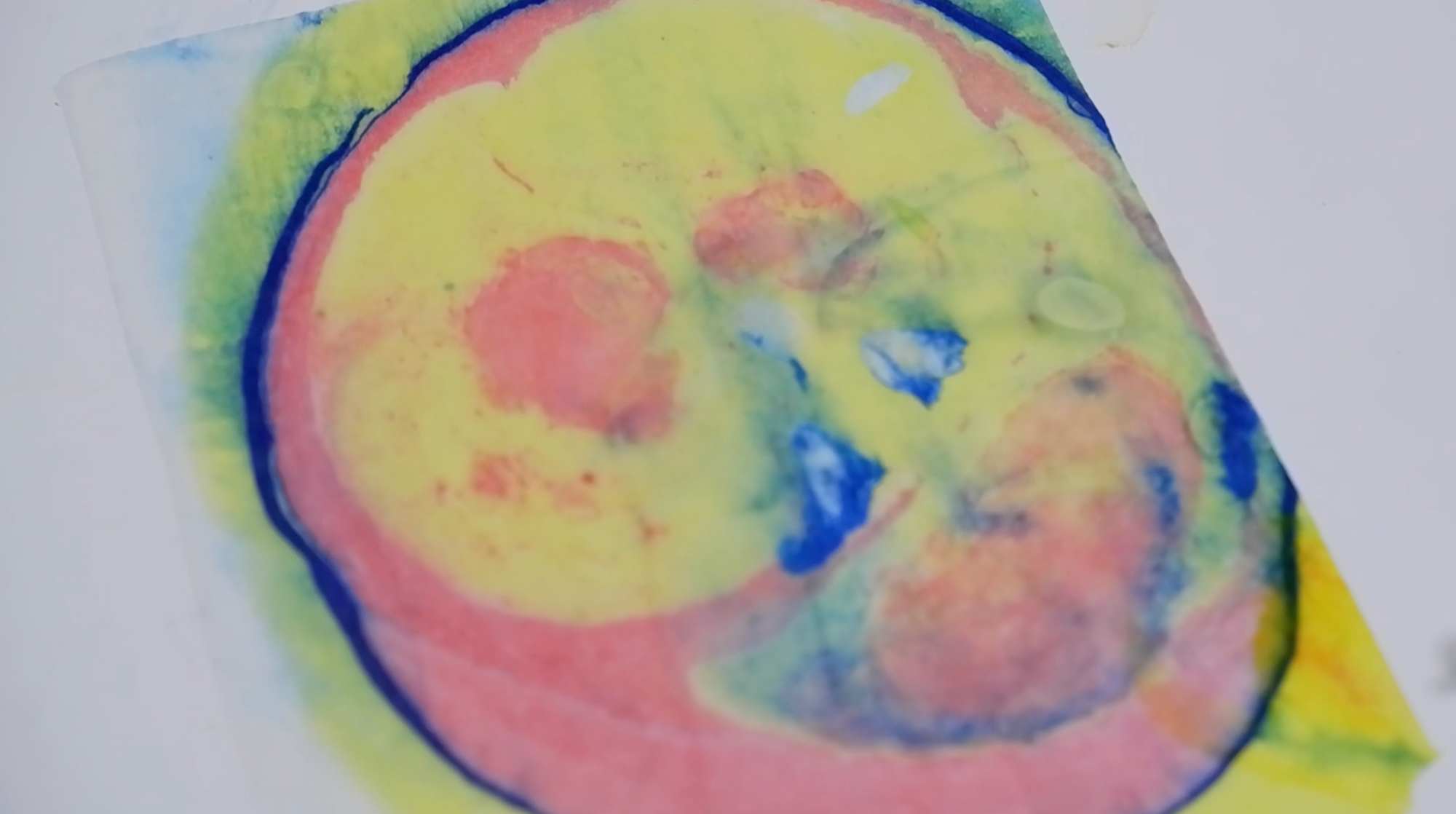
Before moving on to the documentation, I had one more prototype to develop. Wavelet is the second iteration of the Drip Drop Experiment. This time, I found a way to find my own approach tot he interface. Marble Painting.
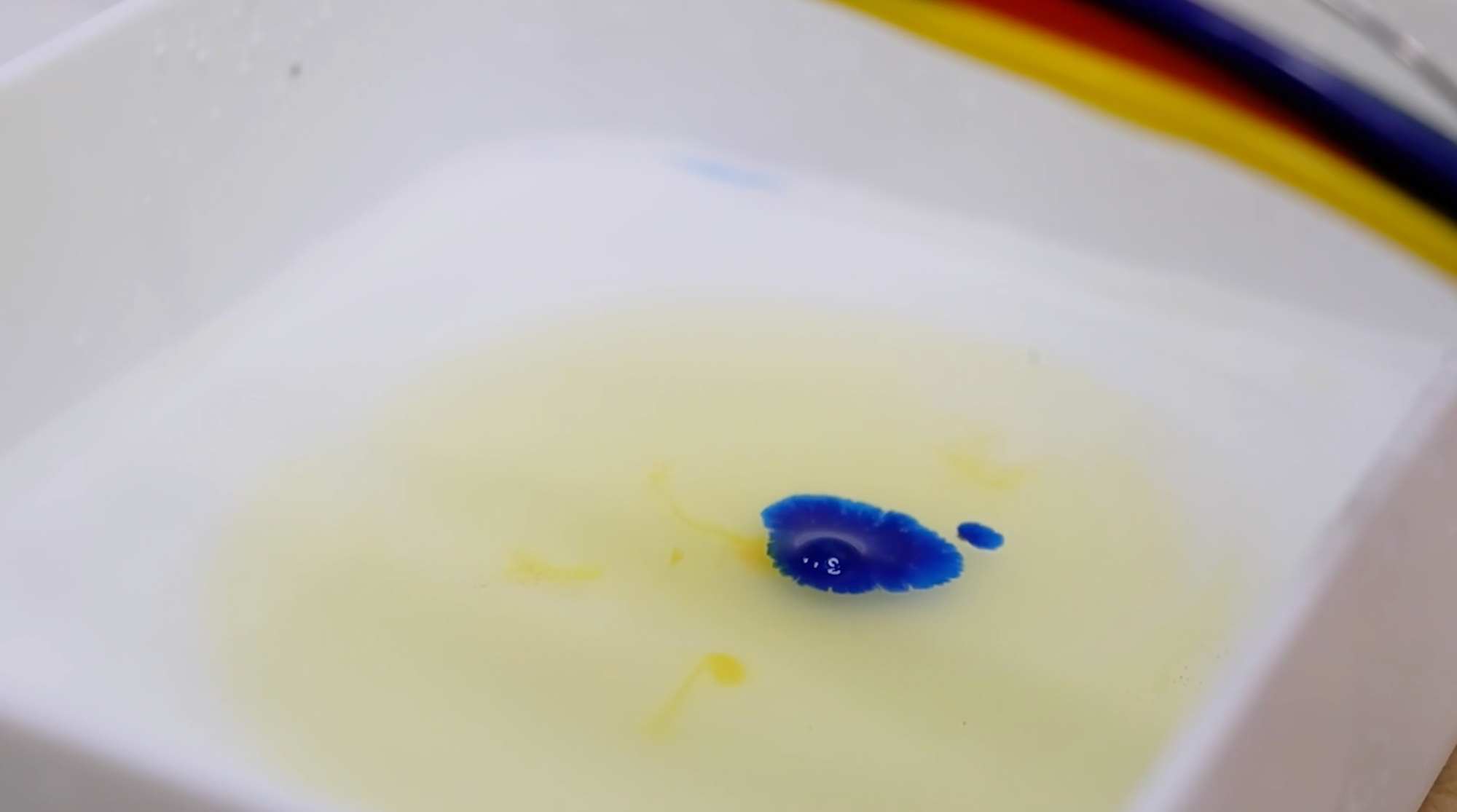
Marble painting uses fluid dynamics and pigment immiscibility to produce intricate, serendipitous patterns. I feel that it is a fitting example of how randomness can be added to structured mechanisms as a tactile and visually apealing medium for expressing the subconscious.
The Third Prototype:
Wavelet
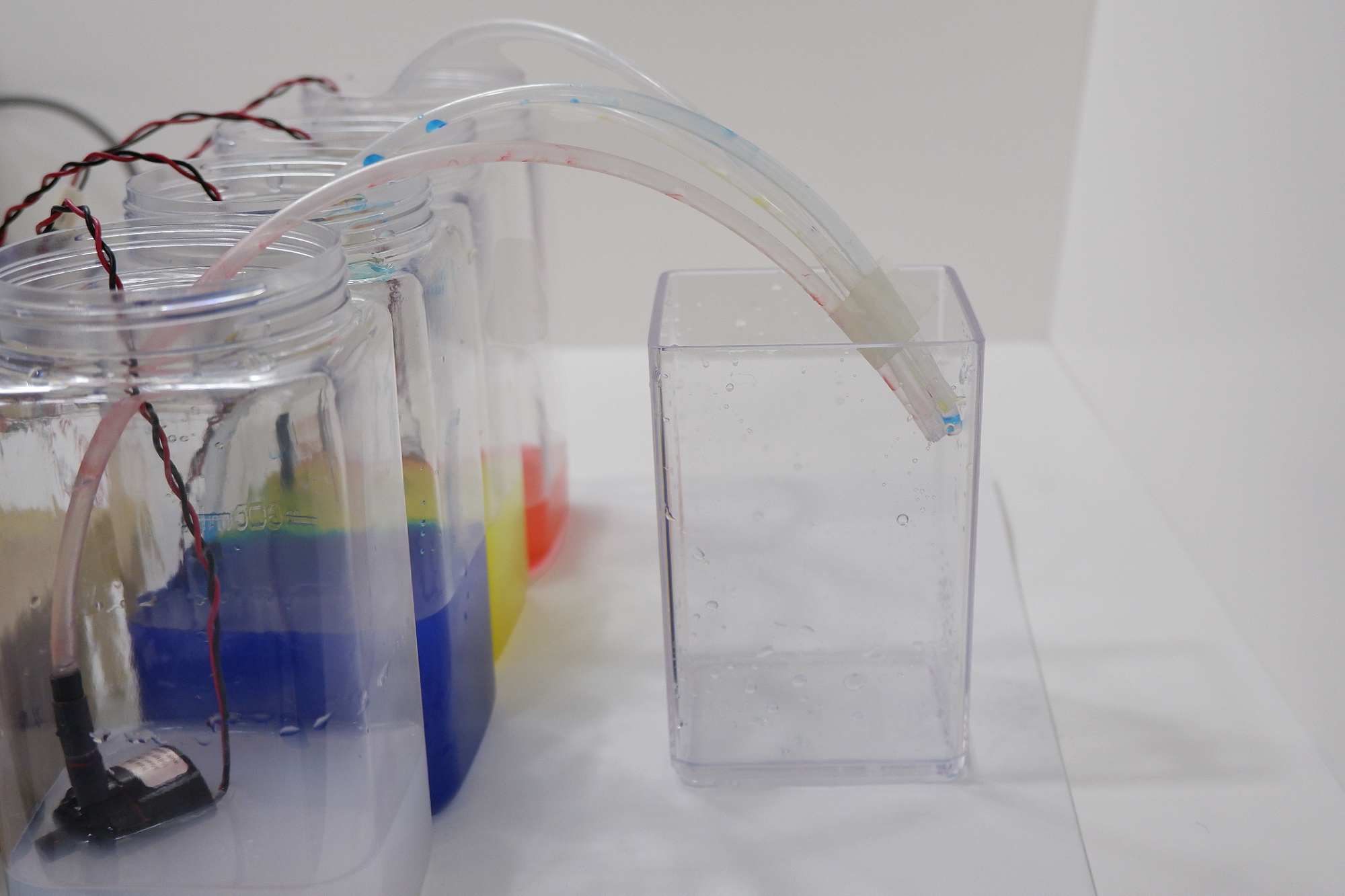
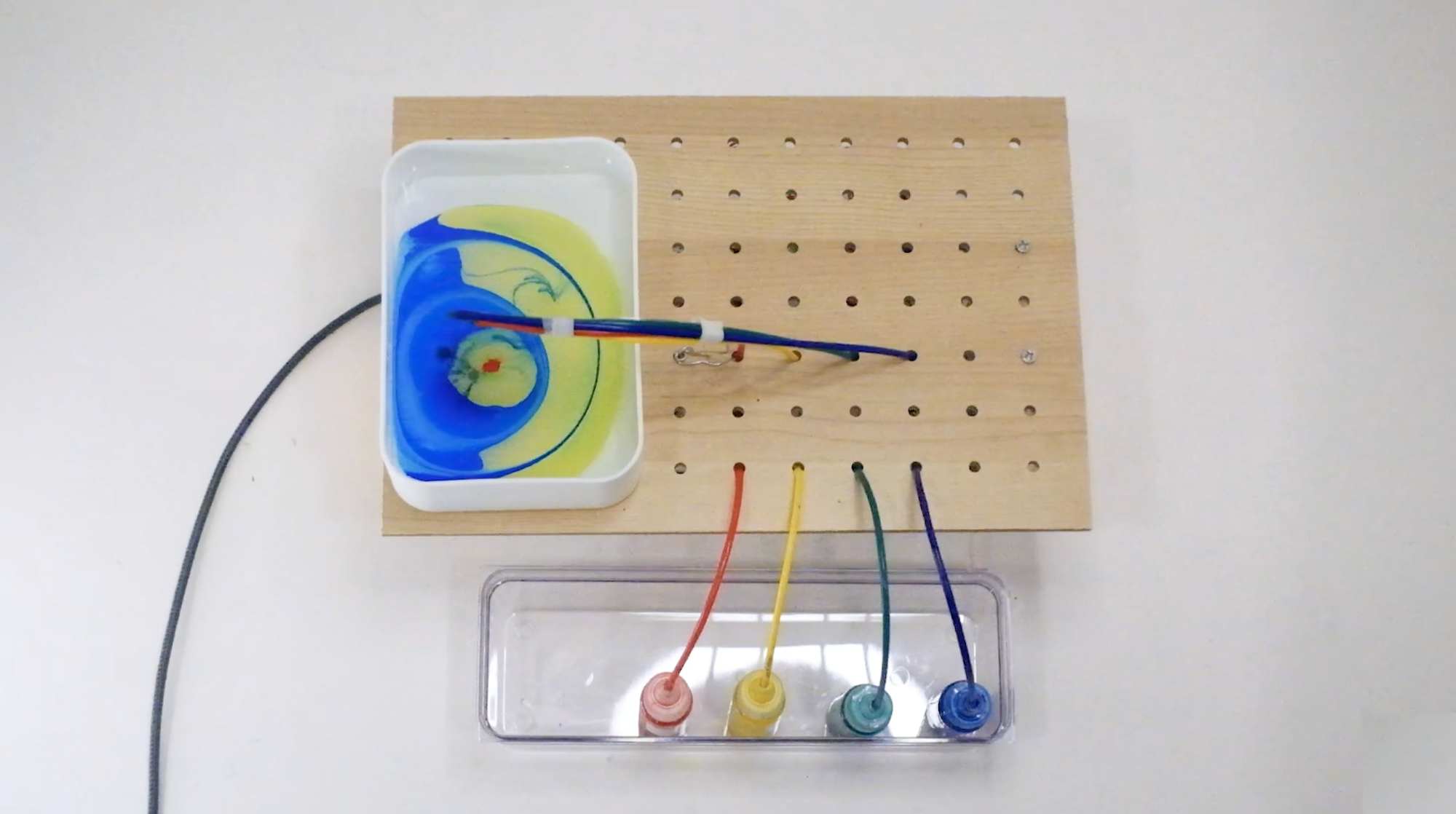
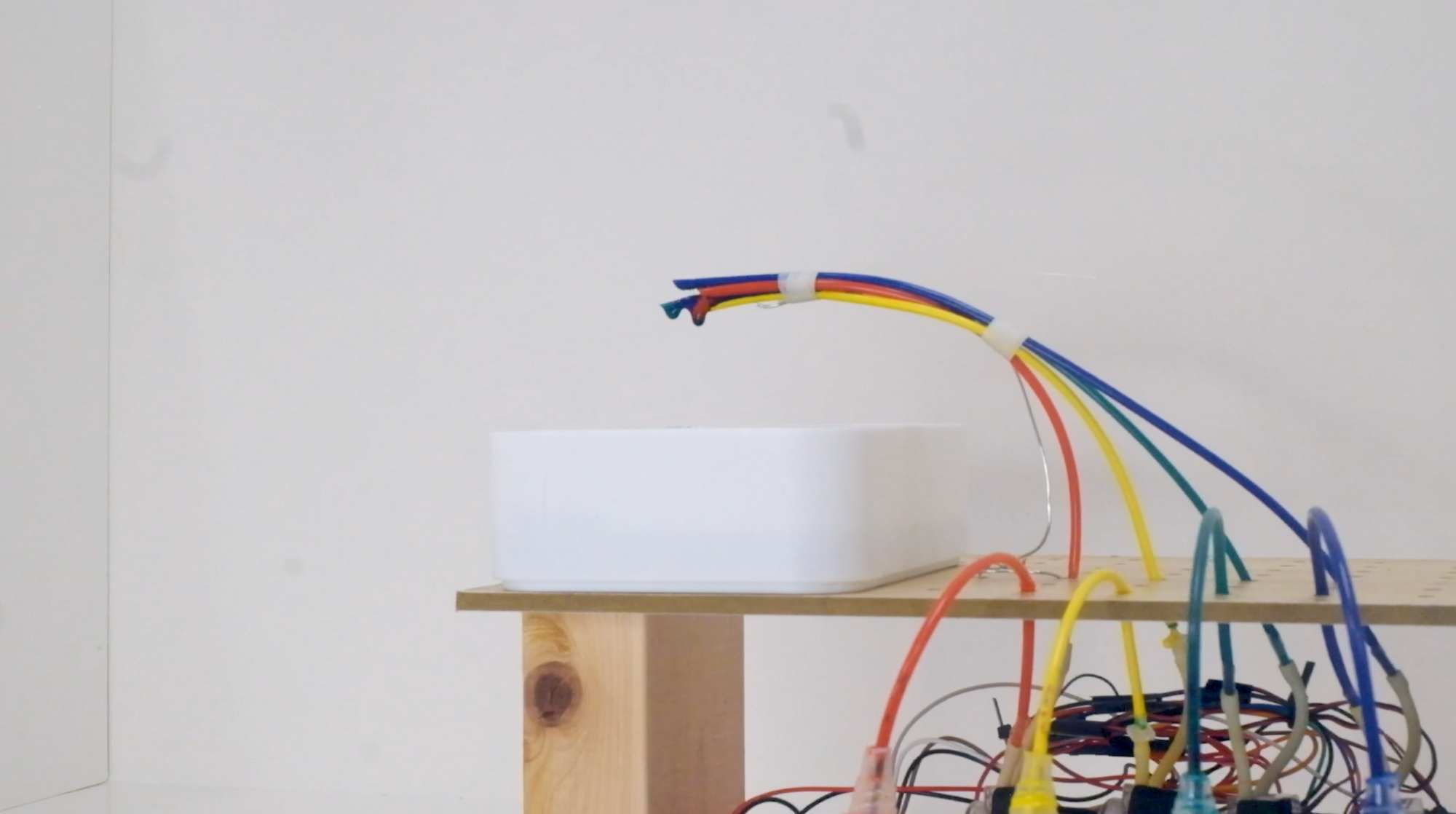
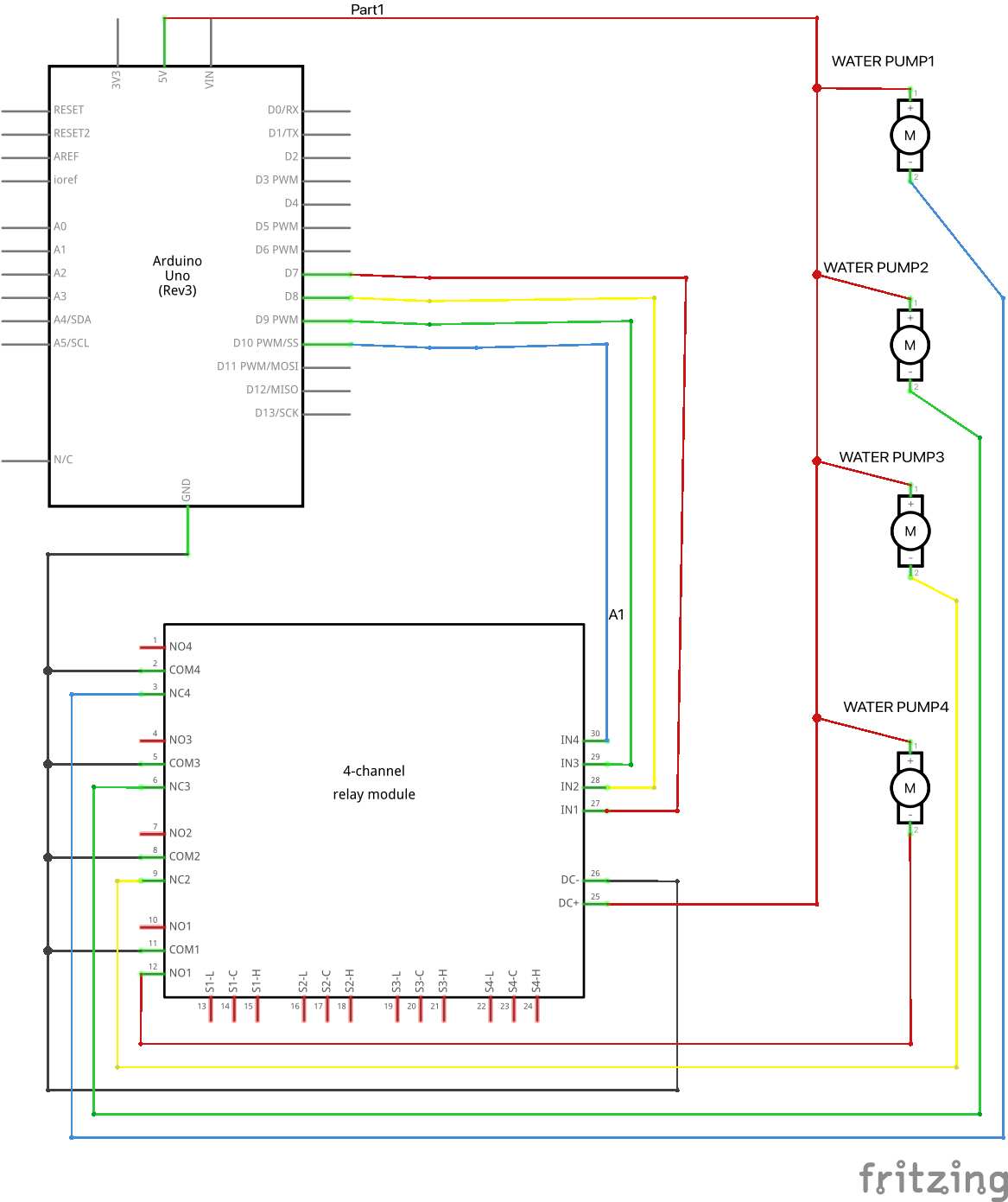
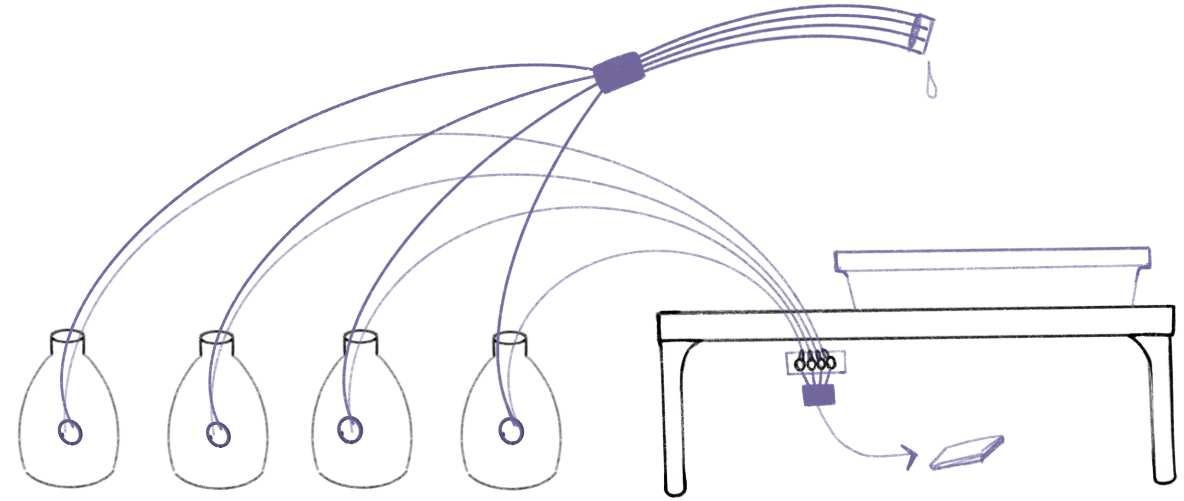
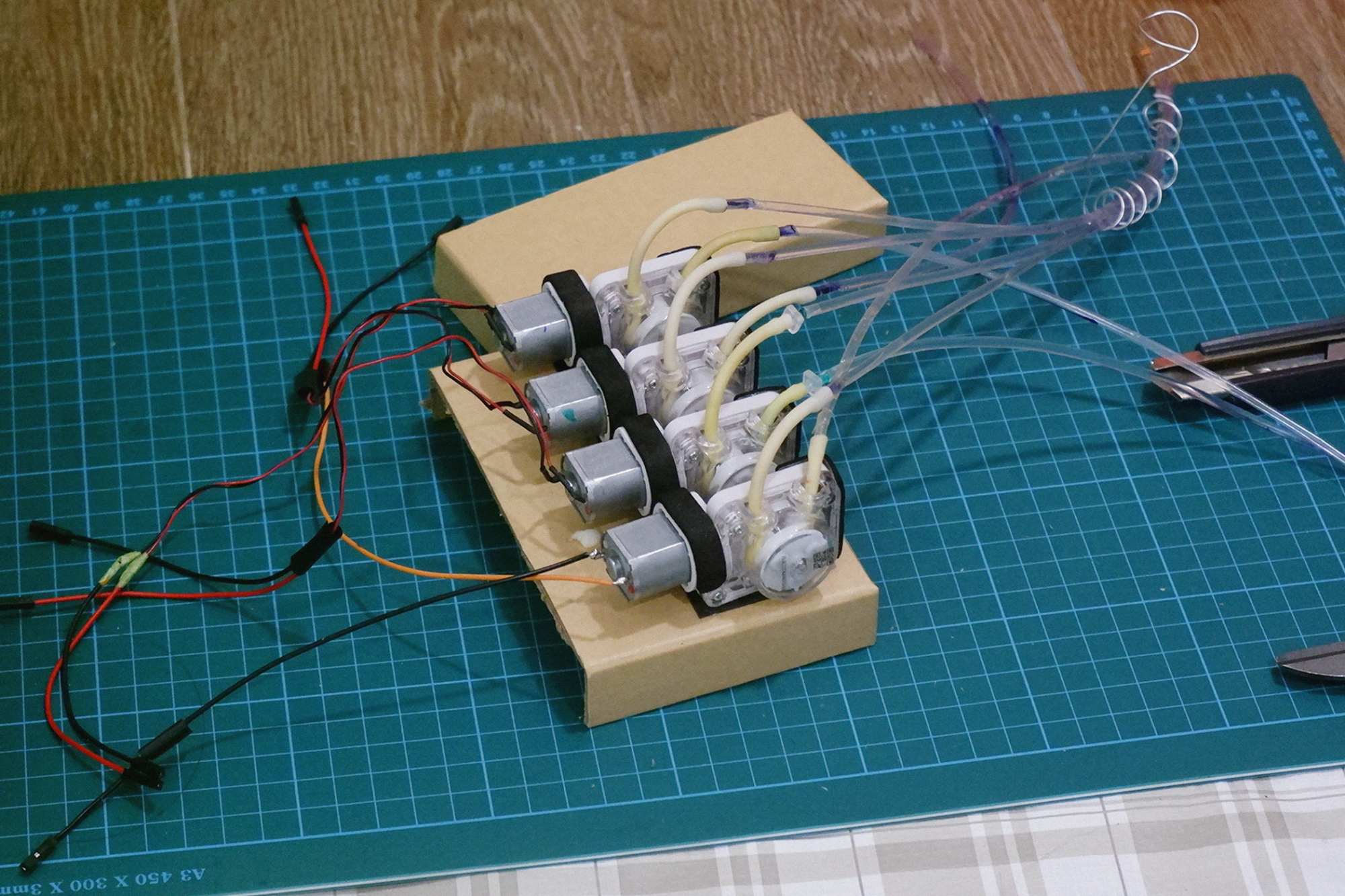
Using Arduino-controlled water pumps, I created a system that manipulates liquid pigments on a marbling surface, combining the tactile qualities of marbling with computational control. The logic of the calibration was similar to Drip Drop, but this time using green instead of white, based on common colours seen in spectograms.
As mentioned in my previous entry, these prototypes for semester 1 are focused on the practical funtionality, and the design of the hardware was not thoroughly considered. However, I also felt that the wooden board with holes was a good fit, both functionaly and aesthetically.
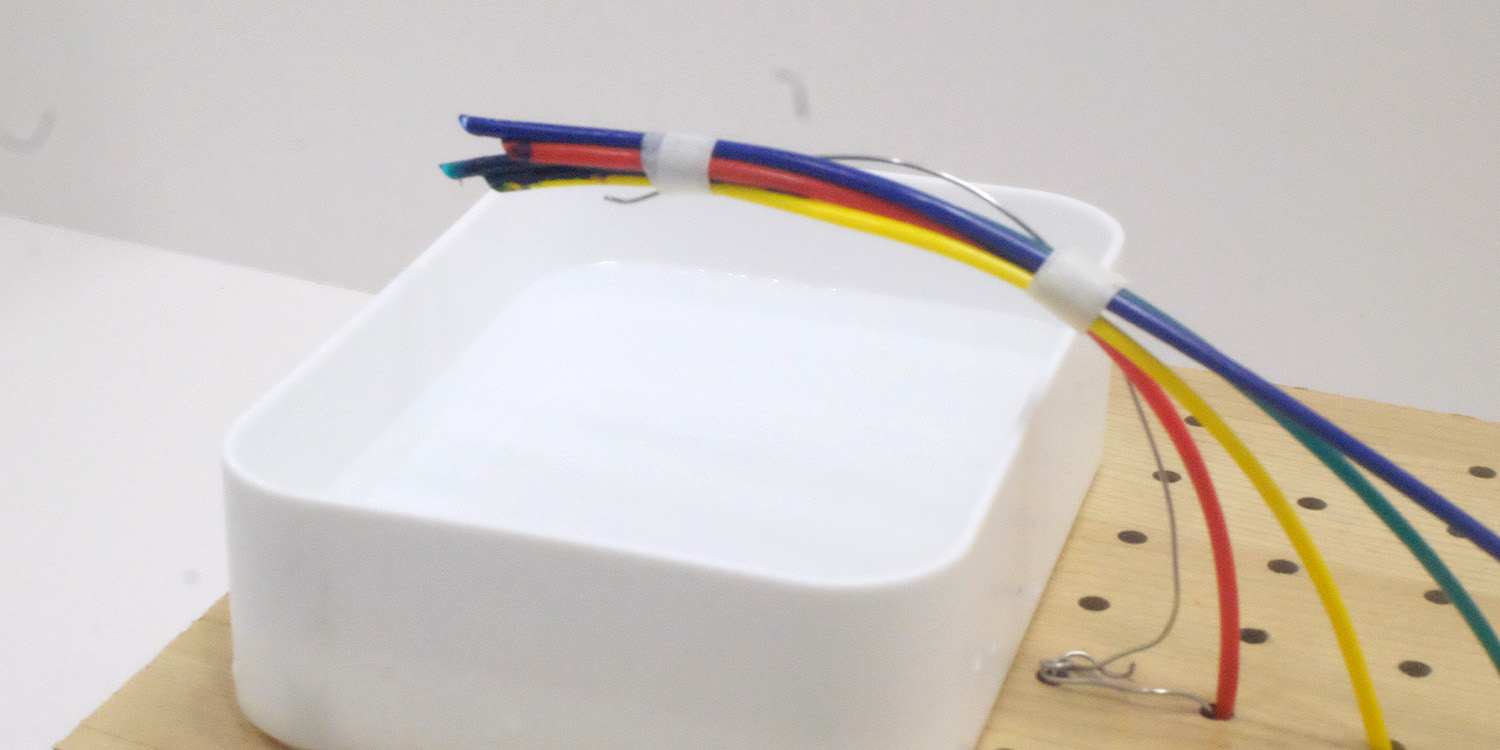
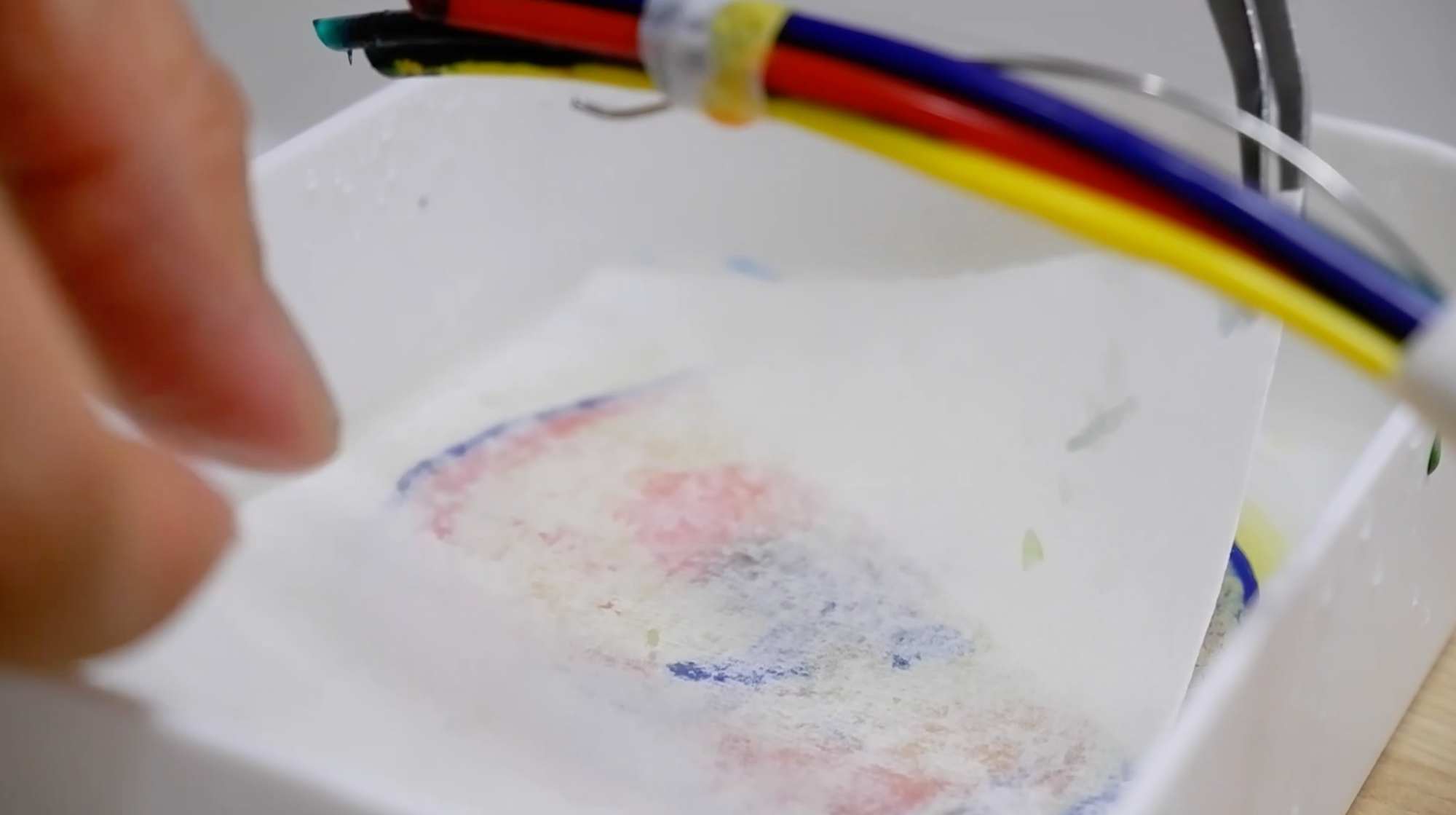
An unexpected challenge was the directing the hose to the tray filled with starch paste. Thanks to the wooden board that I meantioned before, I was able to tie different materials to guide the 4 hoses together. I tried making different structures with the wires, but it ended up visually quite messy, and difficult to untie.
I also tried using multiple zipties together to make a flexible stand, but it was too wobbly. Finally, I simply cut a piece of wire, tied it to the board, and taped the hose onto it as a stabiliser. Visually, it looked cleaner, and the hose didn't bend (clog) as much as when I tried the zipties.
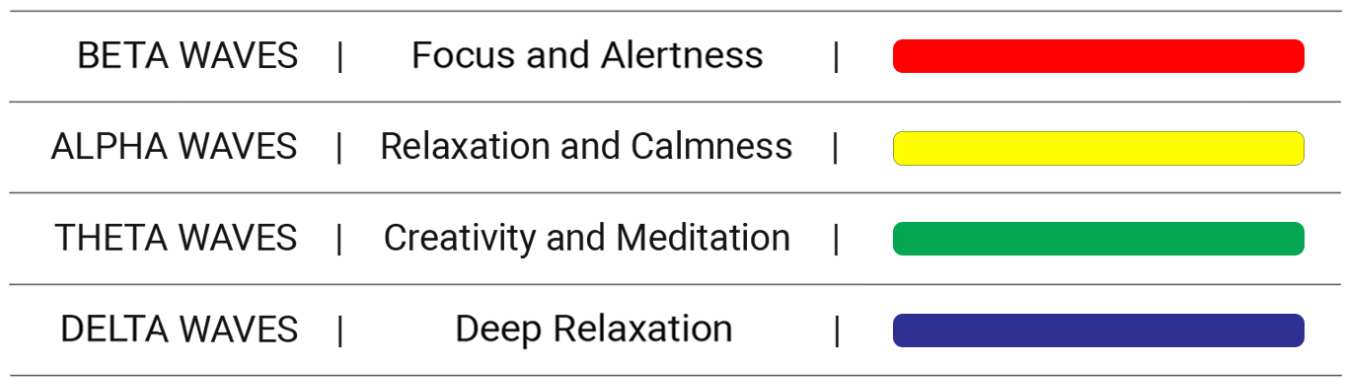
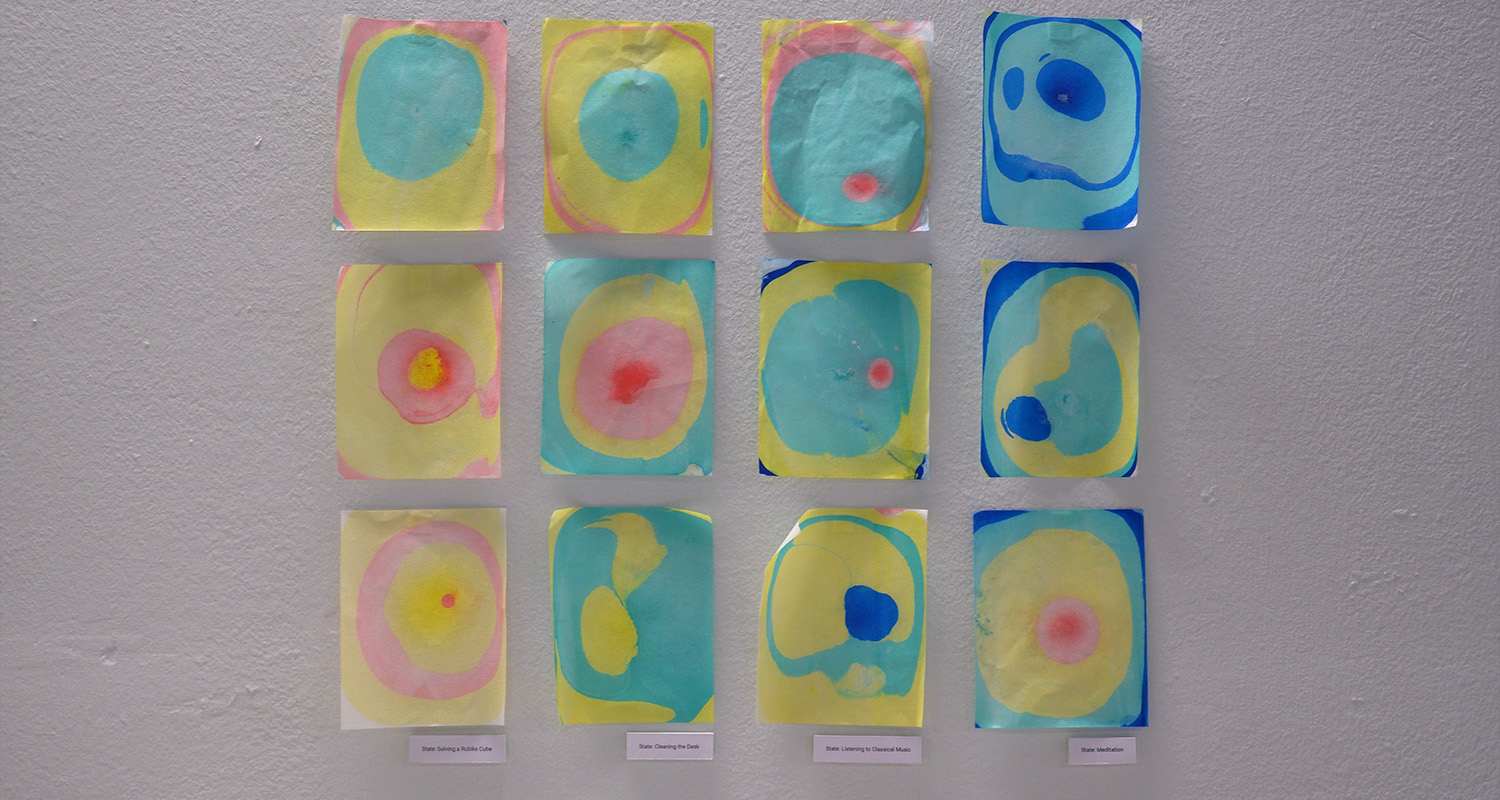
As usual, the EEG data directed the process, this time with mental states linked to specific colors: Delta (Blue) for calmness, Theta (Green) for subconscious creativity, Alpha (Yellow) for clarity, and Beta (Red) for focus. The interaction between the pigments and the liquid introduced an element of physical unpredictability, while the brainwave input added a personal dimension, connecting the user’s mental states to the resulting patterns.
User Testing and Refinement
| User | Feedback | Comments | Action Taken | Future Improvements |
|---|---|---|---|---|
| LJJ, JHH | Paint Saturation | Excessive paint blurred the patterns, making them difficult to distinguish. | Reduced paint saturation by reprogramming pump triggers to activate only at brainwave thresholds. | Further refine activation logic to ensure consistent pattern clarity across various mental states. |
| LJJ, HSM, NDR | Hose Stability | Observed that hoses occasionally bent or clogged, disrupting paint flow. | Used wire stabilizers taped to the board for better hose management. | Explore sturdier, modular structures to support hoses, possibly with 3D-printed holders. |
| KAA, PYJ, HKY, LJJ | Pattern Clarity | Suggested that smaller droplets might improve detail in marbling patterns. | Switched to thinner tubes for finer droplets. | Experiment with adjustable nozzle sizes to accommodate varying pattern requirements. |
| NDR, HKY, KAA | User Interaction | Found the mental state-to-color mapping intuitive and engaging but wanted clearer visual feedback. | Clearer brainwave-to-color mapping in documentation and adjusted color thresholds. | Add a small display or LED indicators to provide real-time feedback on active brainwave inputs. |
| JHH, LJJ, GAP | Hardware Aesthetics | Felt the wooden board was functional but appeared unfinished for a gallery setup. | Accepted as a temporary design choice for Semester 1; no immediate action taken. | Experiment with other materials and finishes for a more polished and cohesive aesthetic for public presentation. |
| LJJ | Fluid Dynamics | Mentioned that pigment spread sometimes appeared uneven due to static surface. | No direct action yet. | Add servo-controlled tilting to introduce varied surface angles in response to mental states. |
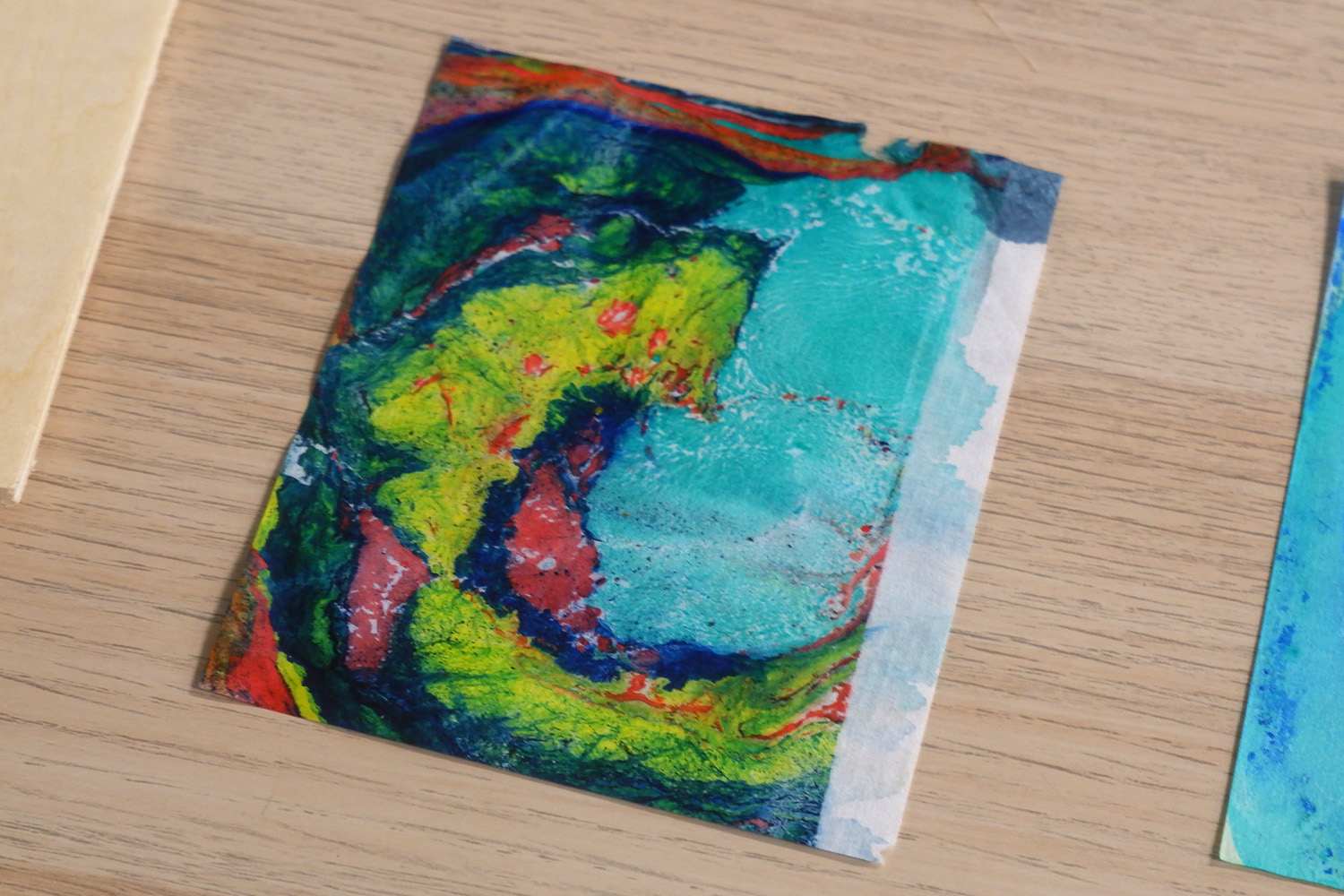
During early tests, excessive paint saturation obscured the patterns. To resolve this, I refined the system’s mechanics: Pump triggers were reprogrammed to activate only when brainwave thresholds were met, reducing over-saturation, Controlled delays regulated paint flow for better precision, Thinner tubes replaced the original hoses, producing finer droplets and improving the clarity of the outcomes.
Possible Considerations
The most important consideration at the moment is to conduct proper user testing through a well justified framework. While I did gather feedback from seven selection of peers consistently throughout the experiments to guide future iterations, they were jotted down in a messy notepad to refer to in the refinments. In the future, I will be documenting them in a structured format so that it will be easier to refer to in my practice, and also for documentation of the project development.
I might further explore the potential of the tilting mechanism. Servo motors could be used to adjust the marbling surface’s angle and movement dynamically, with speed and direction responding to brainwave activity. Calm mental states might produce slow, gentle tilts, while more active states could create faster, chaotic movements. These improvements would make the connection between the user’s subconscious states and the final visual outcomes deeper, continuing to widen the possibilities of subconscious-driven creativity.
Reflection
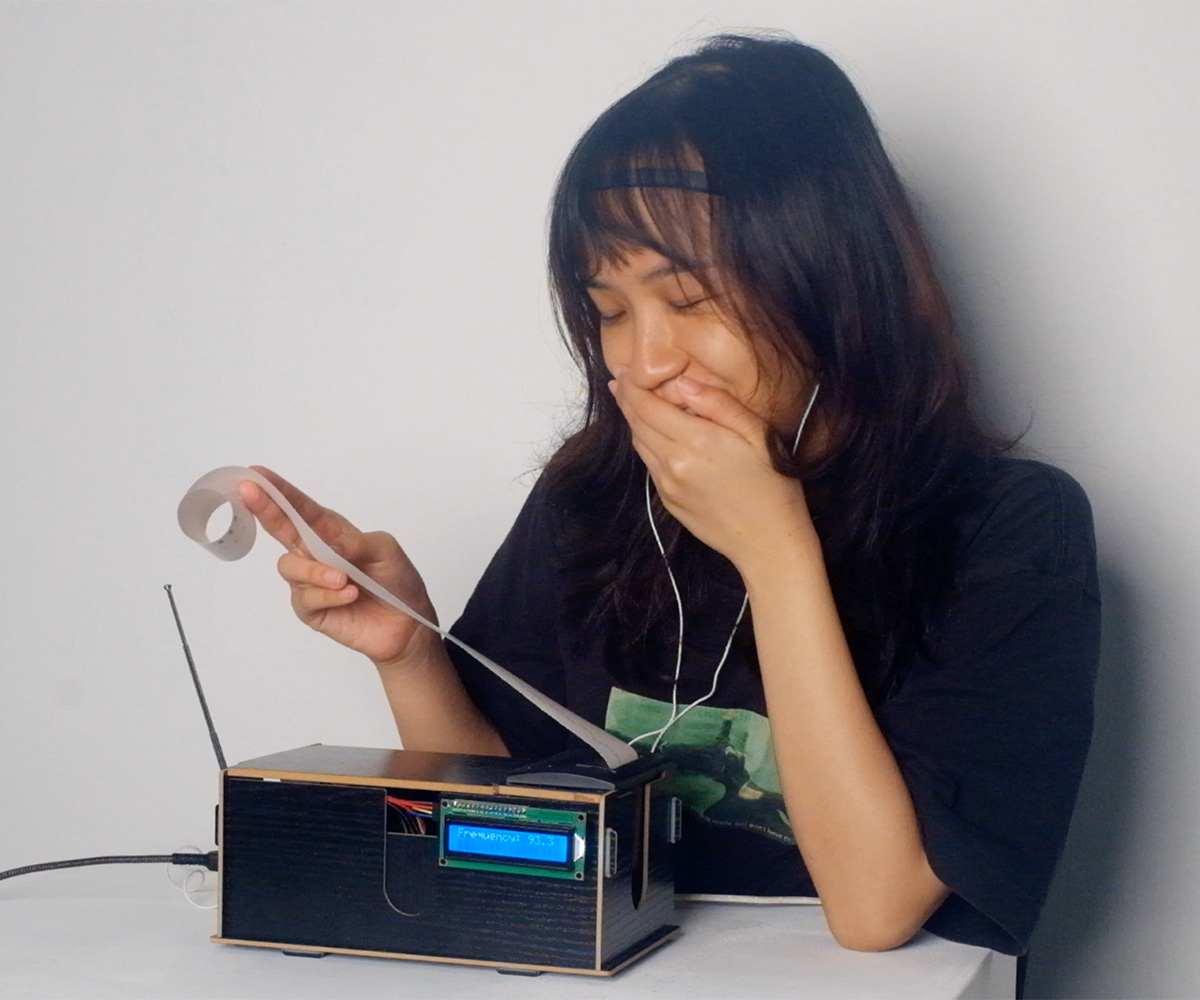
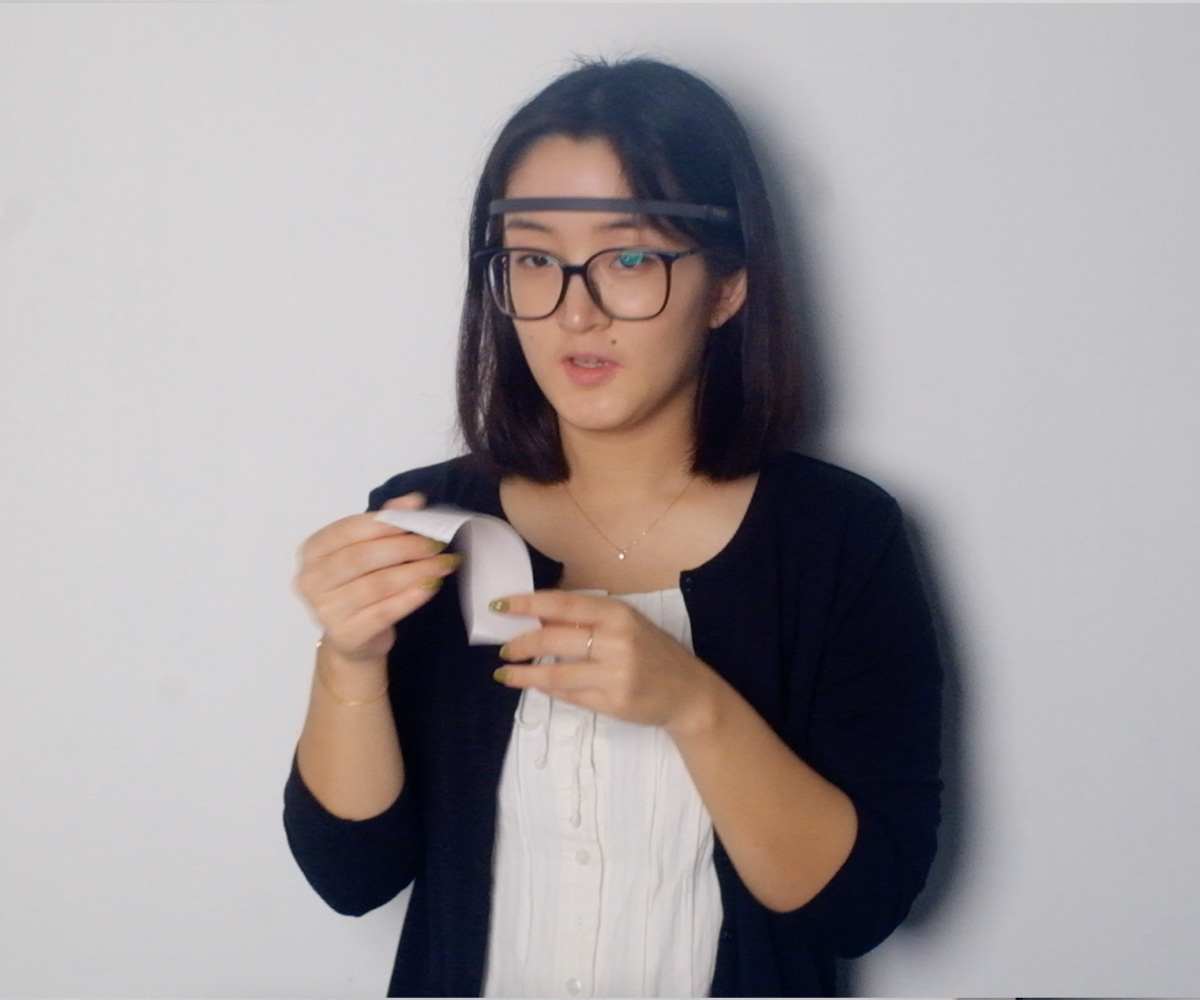
My main concerns during creating these prototypes revolved around balancing conceptual ambitions with the practicalities of implementation. For instance, I meant the Dream Journal to use EEG signals to generate nonsensical yet intuitively surreal text. But this is somewhat of an oxymoron. If the test is illogical, how do I linken it to user experimence that is objectively engaging for most users? How do I justify something so artistic through design research? The early attempts had resulted in outputs that felt overly random, ironically detracting from the intended surrealist effect. Adjustments were made to the word selection process, so that the text could actually reflect the emotional and cognitive states detected by the EEG device.
Now what's interesting is that even though the analysis of data isn't accurate enough to concretely link the text to the user's mental state, just the introduction to the OLED screen that shows the data being received and the added narrative of surrealist automatism made a significant positive impact on users. The prototyping process in the past 10 days gave me a glimpse into how I could maintain the balance between the concept and the technical methods. Or on how I can make the output meaningful without requiring perfect precision. Can I simply shove surrealist automatism to every narraive to make it meaningful? Is there a more grounded framework to justify the surrealist effect through the act of designing?
Documentation
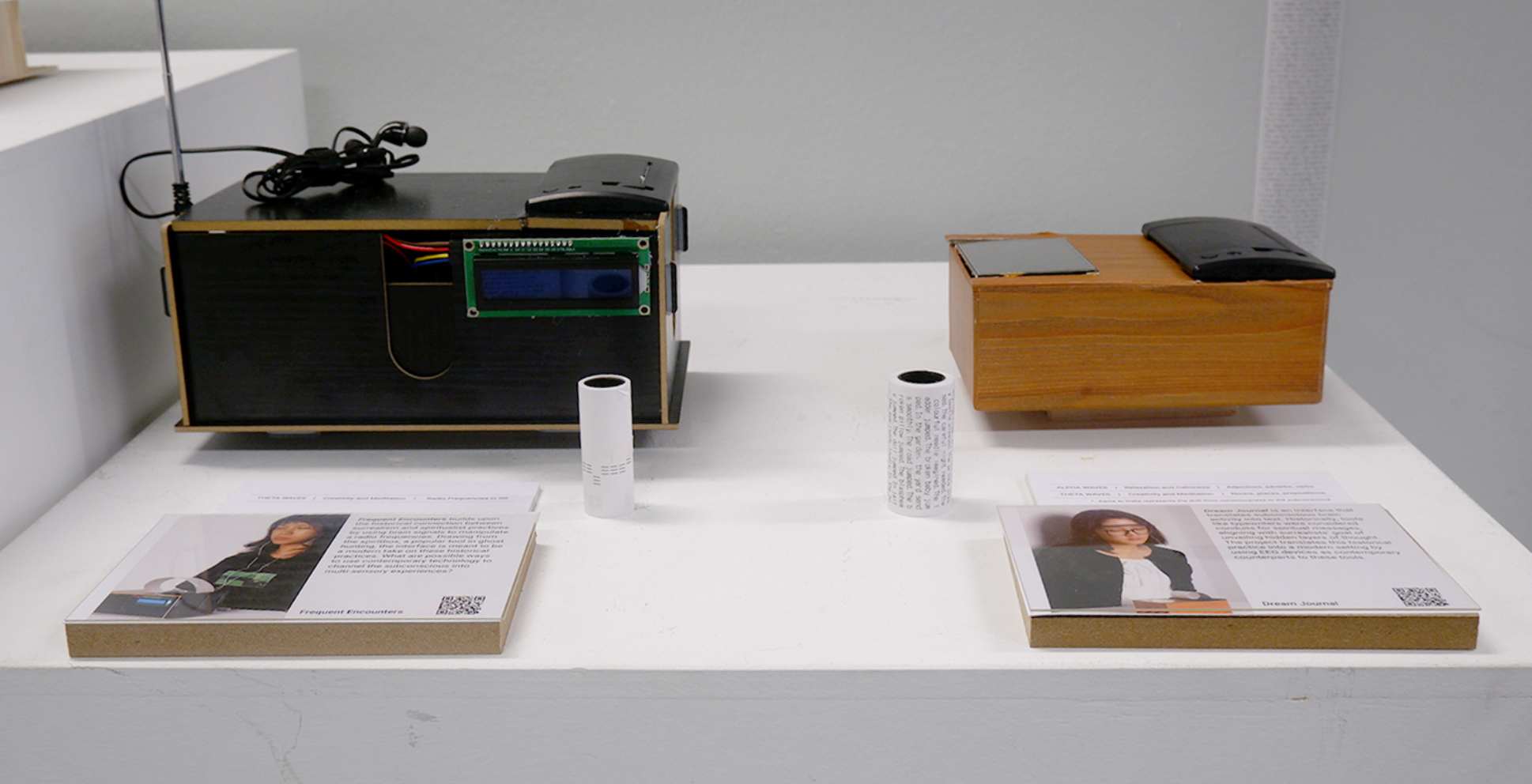
The rest of the week was busy with documenting my prototypes for my catalogue of making and planning for the physical setup. Since I felt that I had a lot of outcomes to show for, it actually made me anxious. I felt the documentation was a somewhat shallow and repetitive description of things, without actually getting into my detailed thought process.
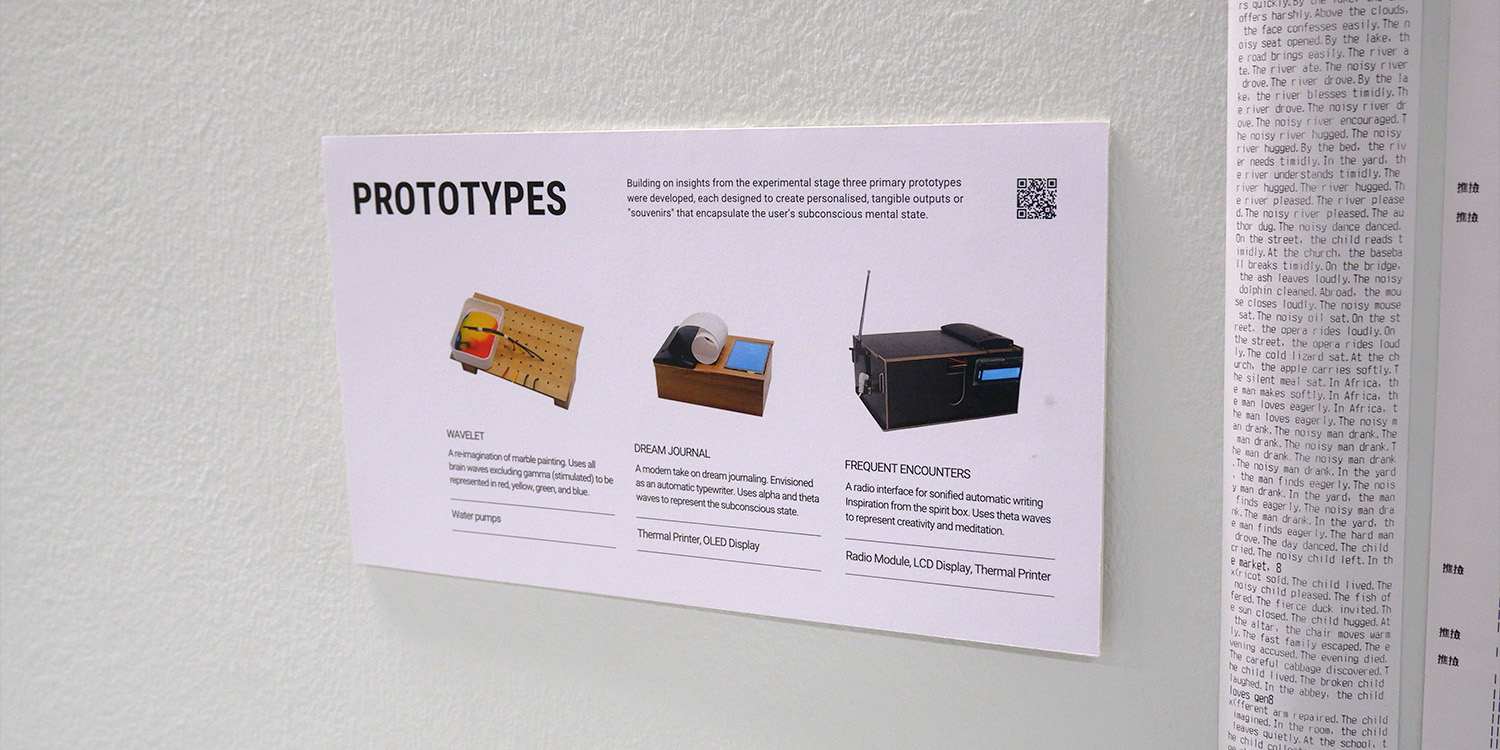
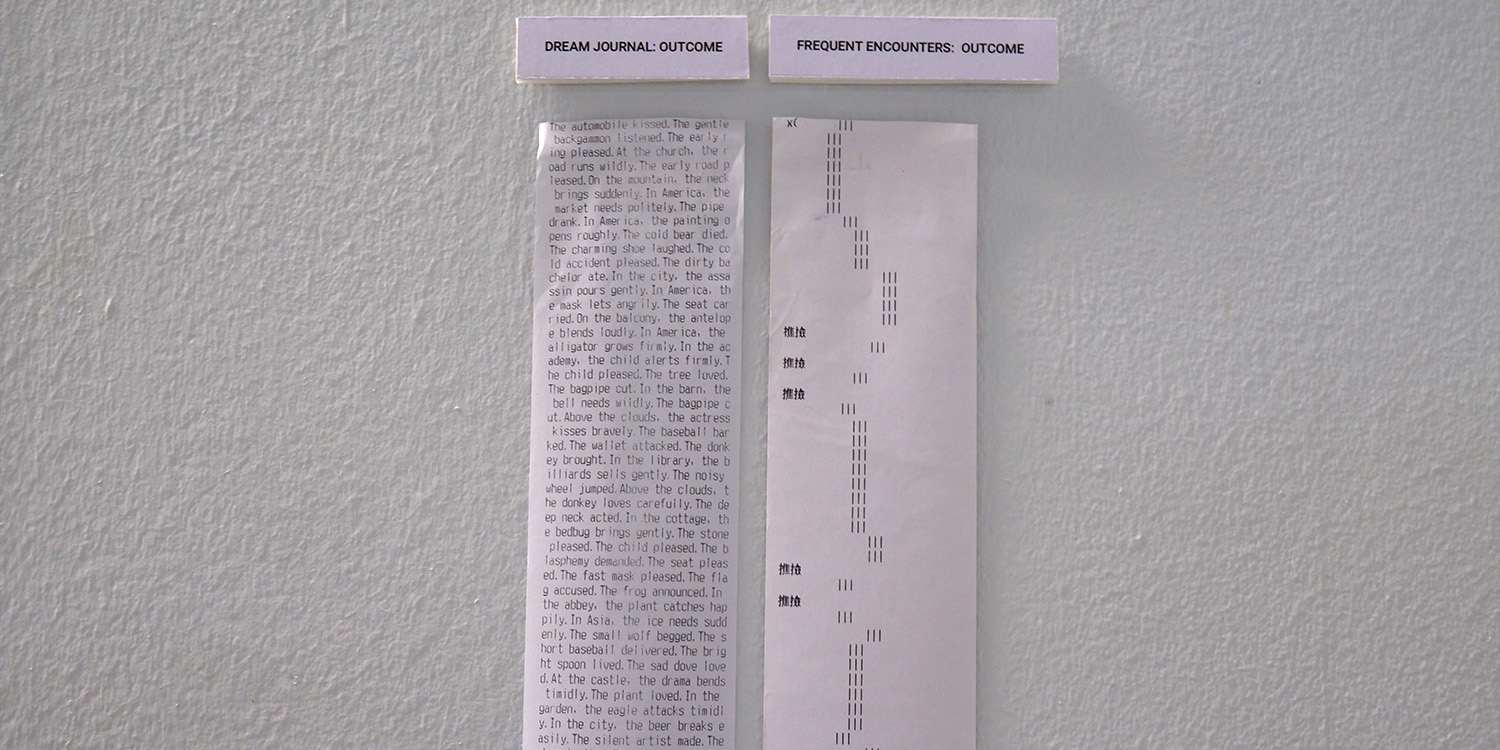
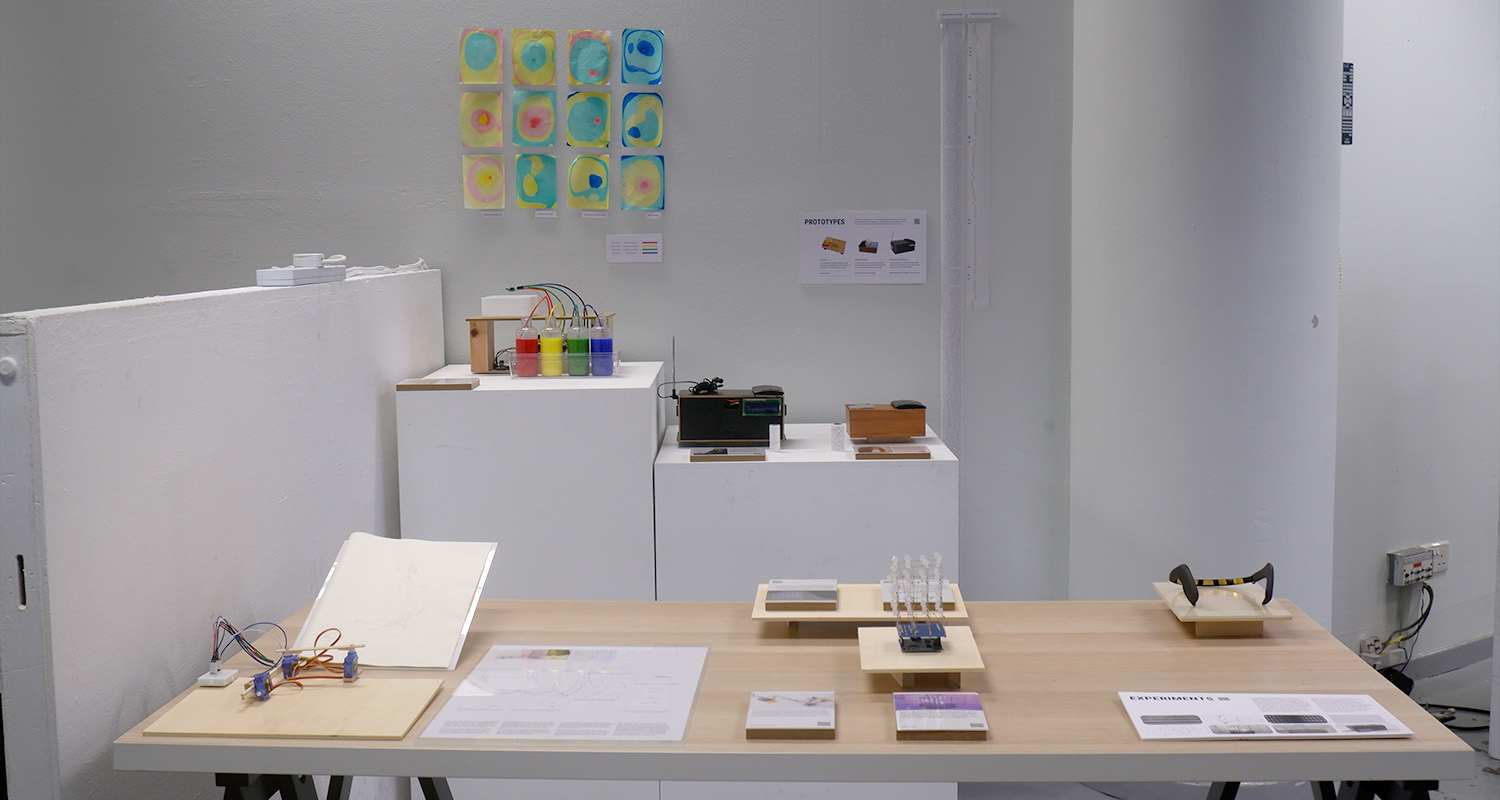
However, I decided that, at least for this semester, I did not need to have definitive answers for all my inquiries. I can leave them as streamlining the areas of further exploration. A more methodological approach to the user testing, feedback, and reflections will be added in my next steps. The following is my selection of physical outcomes to be presented on my table, along with the user testing videos.
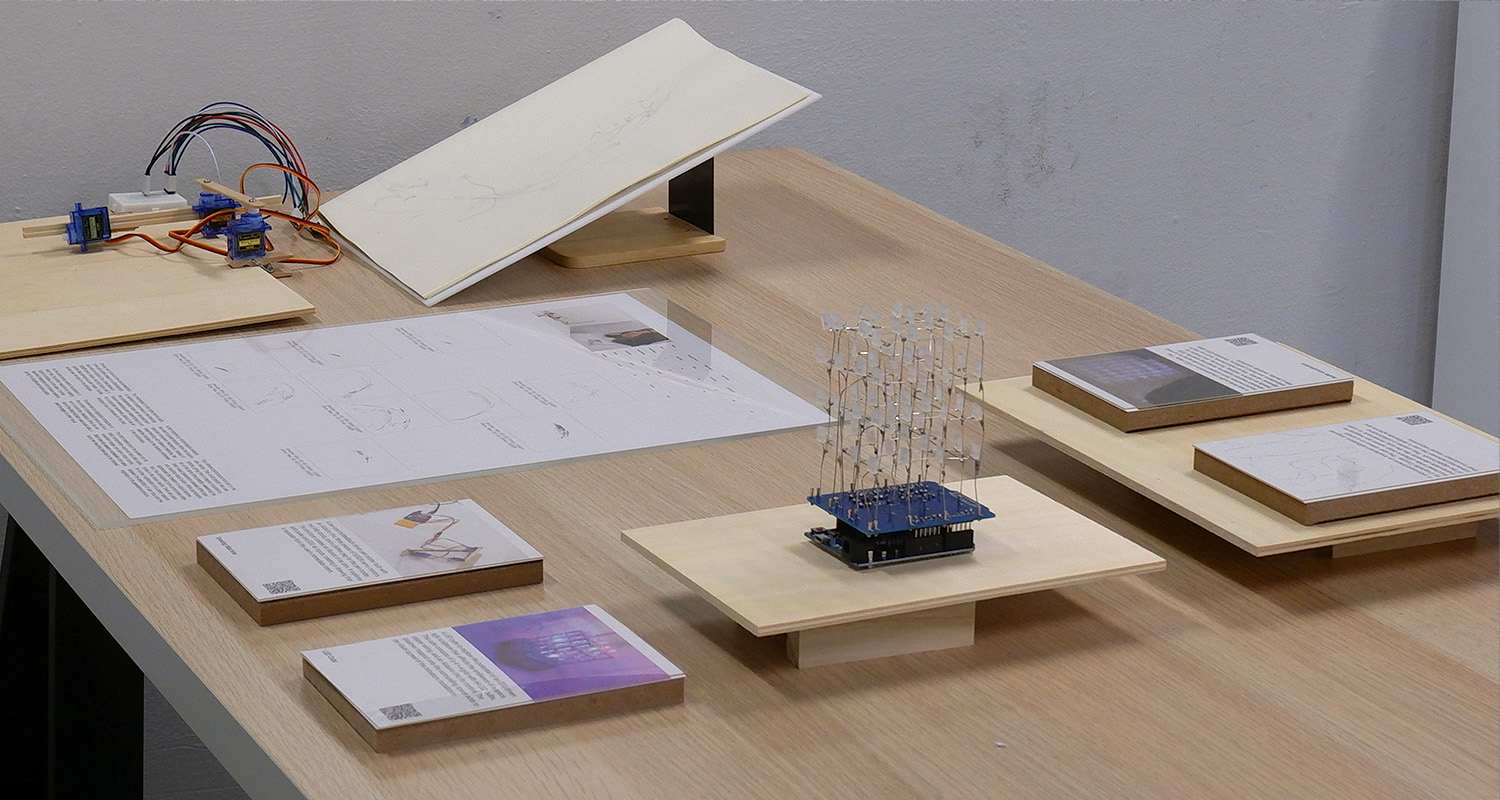
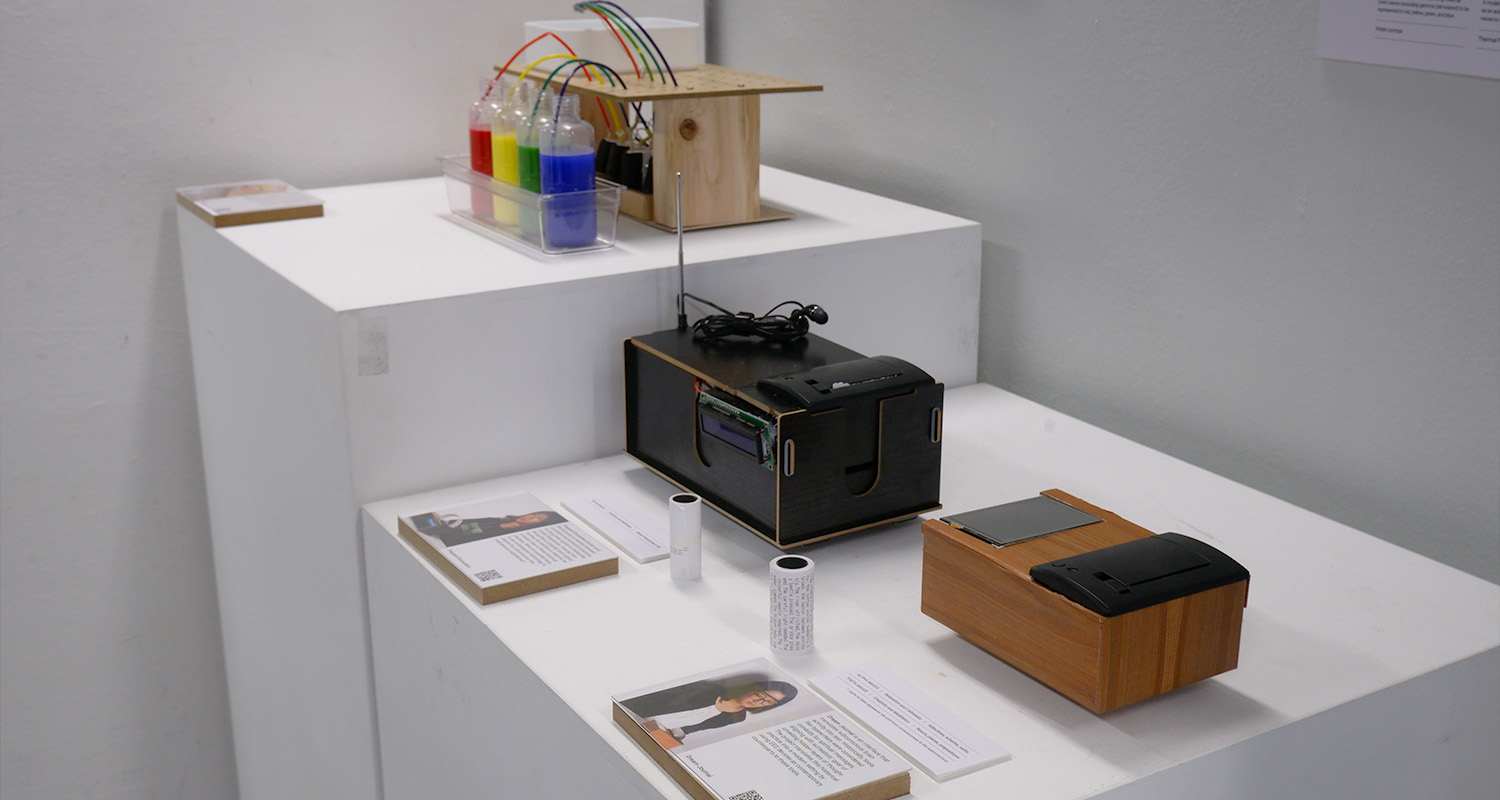
Moving Forward
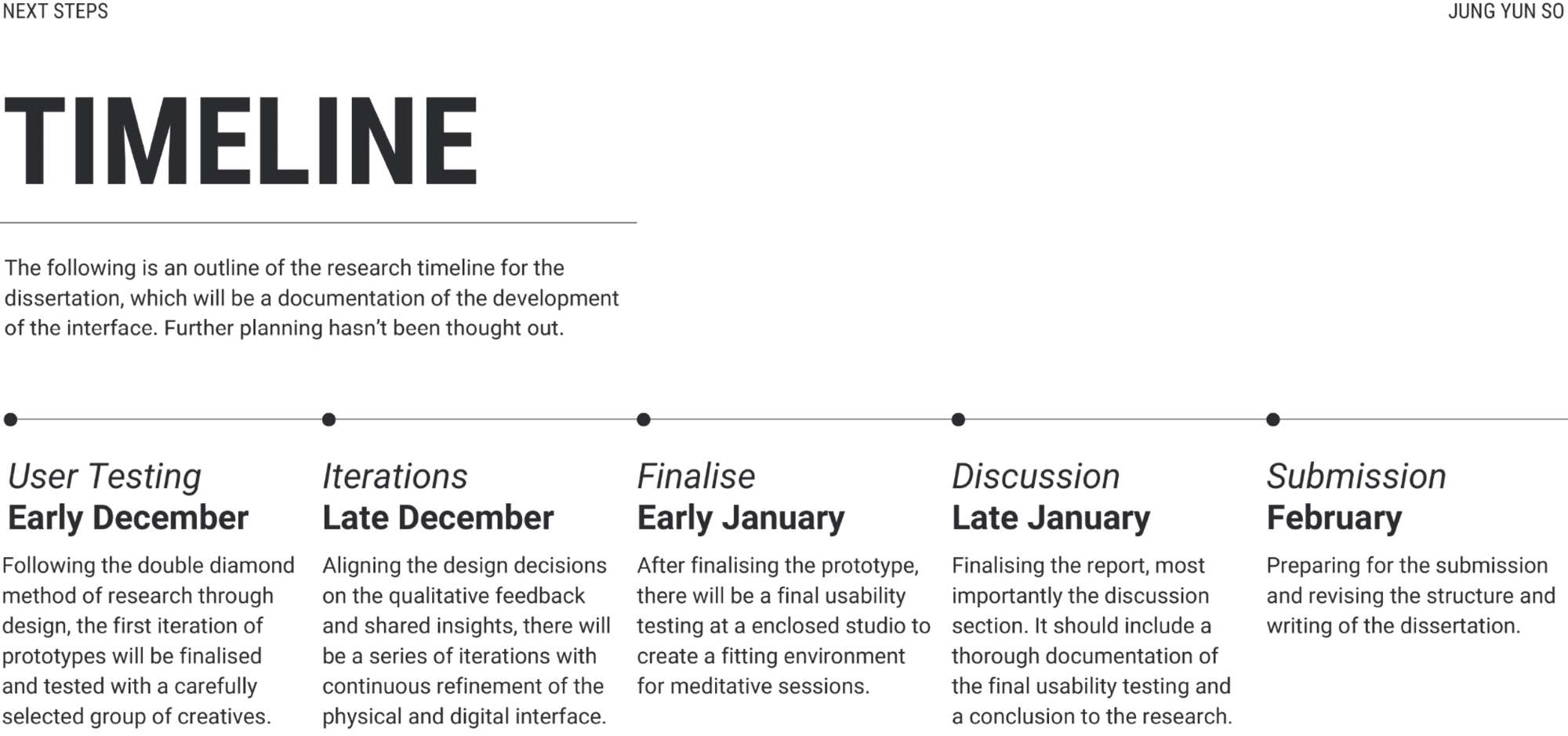
After completing one more prototype, the prototypes will undergo more thorough, well-documented and analysed user testing under a specific framework to inform the next phase of iterations. I would also need to start focusing on the hardware design as well, wether it be for usability or aestheitc purposes.
Additionally, I have identified open-source software that can accurately analyse data from my EEG headband, reducing noise and calibrating it for easier interpretation by researchers and non-professionals alike. The next step is to integrate this tool into my workflow to ensure more reliable and accurate data collection.