09
Final Prototypes:
Wavelet & Dream Journal
~ 14.03.2025
Wavelet
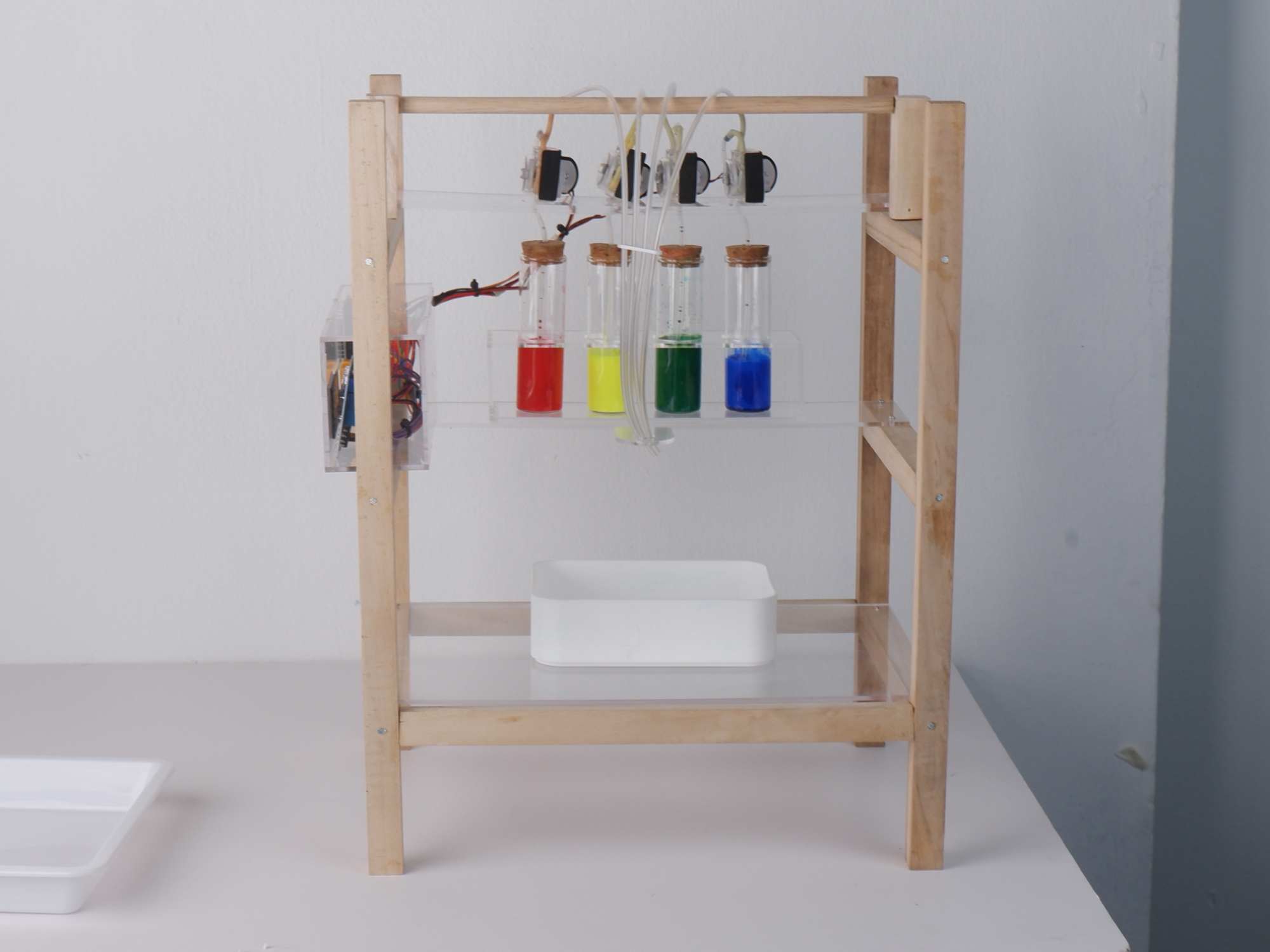
I had planned on using aluminum extrusions for this prototype but switched to wooden bars to create a cohesive overall visual appearance. The aluminum might have looked too modern, whereas wooden bars offer a more retro aesthetic. First, I considered the overall size—a balance between being compact when all components are assembled and large enough to capture the audience's attention and create an engaging space through the interface. Next, I cut the wooden bars according to the decided dimensions.
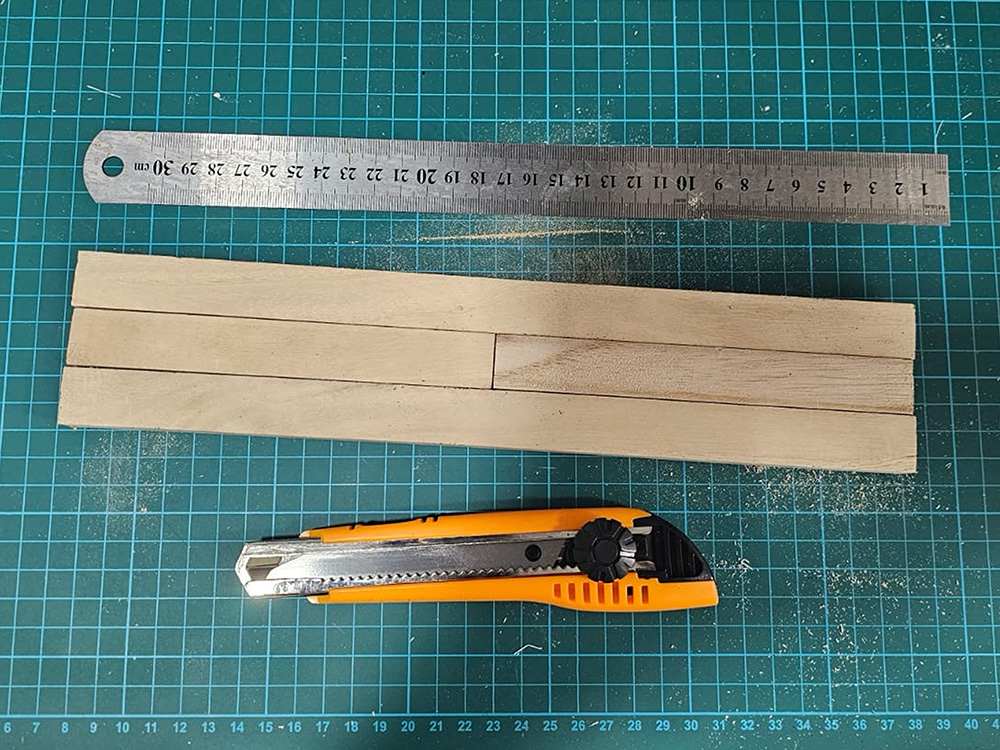
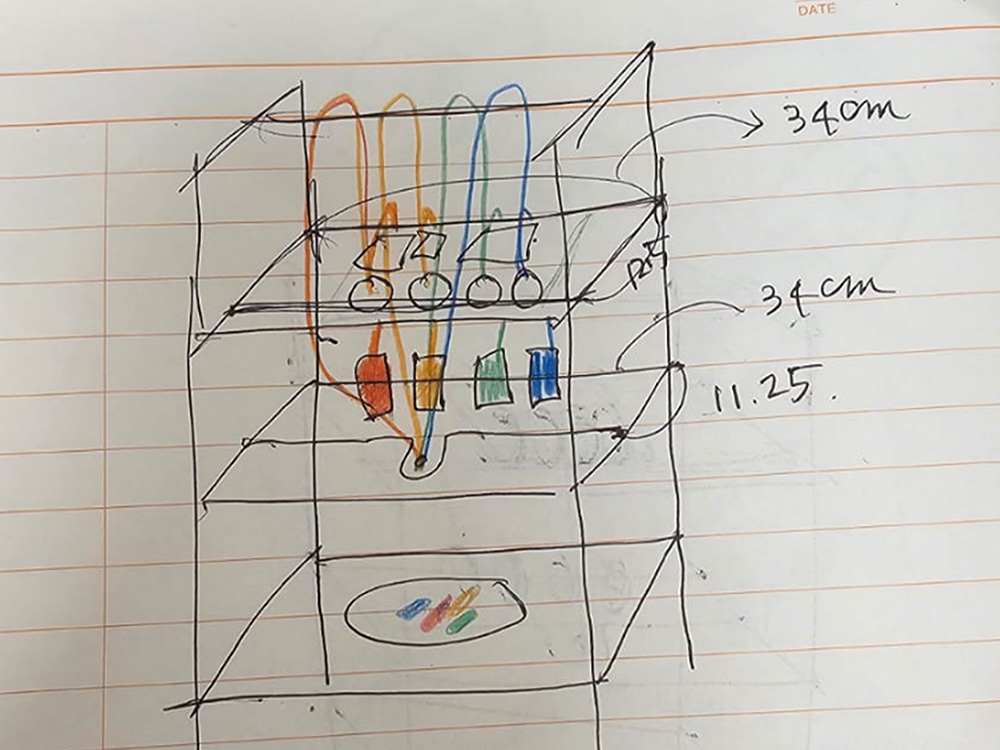
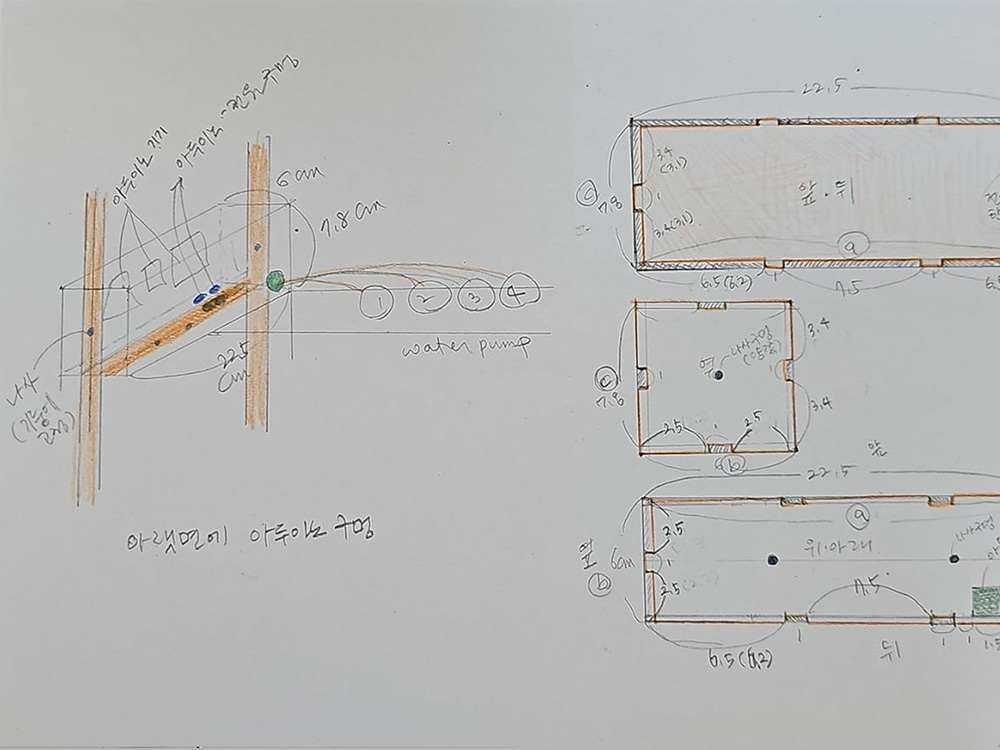
I determined that three levels would be appropriate to guide the users' eyes from the top, where the paint bottles are located, to the first level, where the paintings are generated—a stream of paint flowing from top to bottom. Consequently, I arranged the wooden bars in a ladder-type shape, with dimensions set for each level. Attached is a sketch.
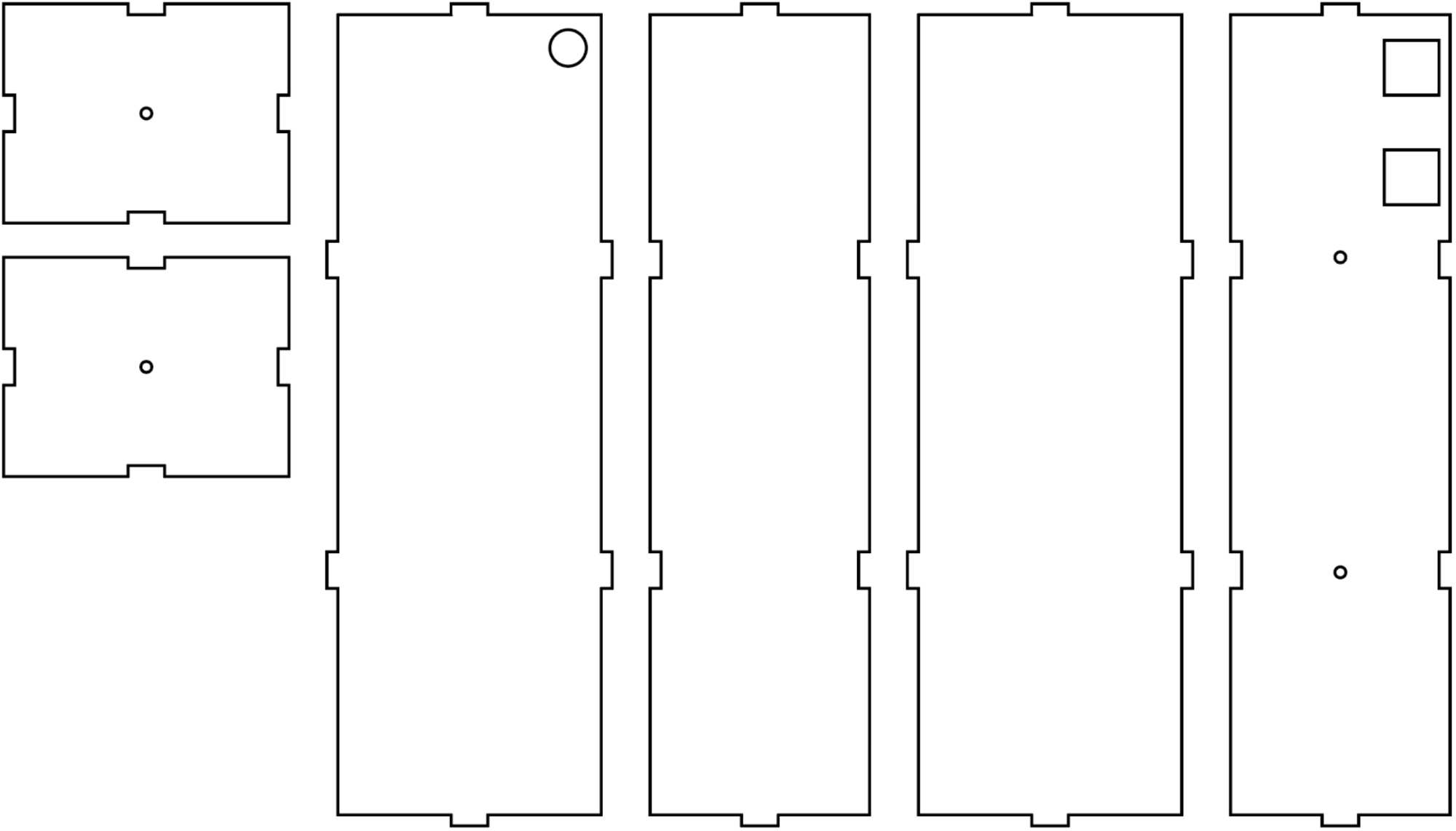
The positioning of the different components was determined based on where they could be stable without distracting from the paint flow. I laser-cut the boxes and plates that stabilized and supported components such as the microcontroller, relay, motors, and paint bottles. I will not go into detail about the measurements, as this entry is already quite descriptive; they were based on practical considerations and user experience.
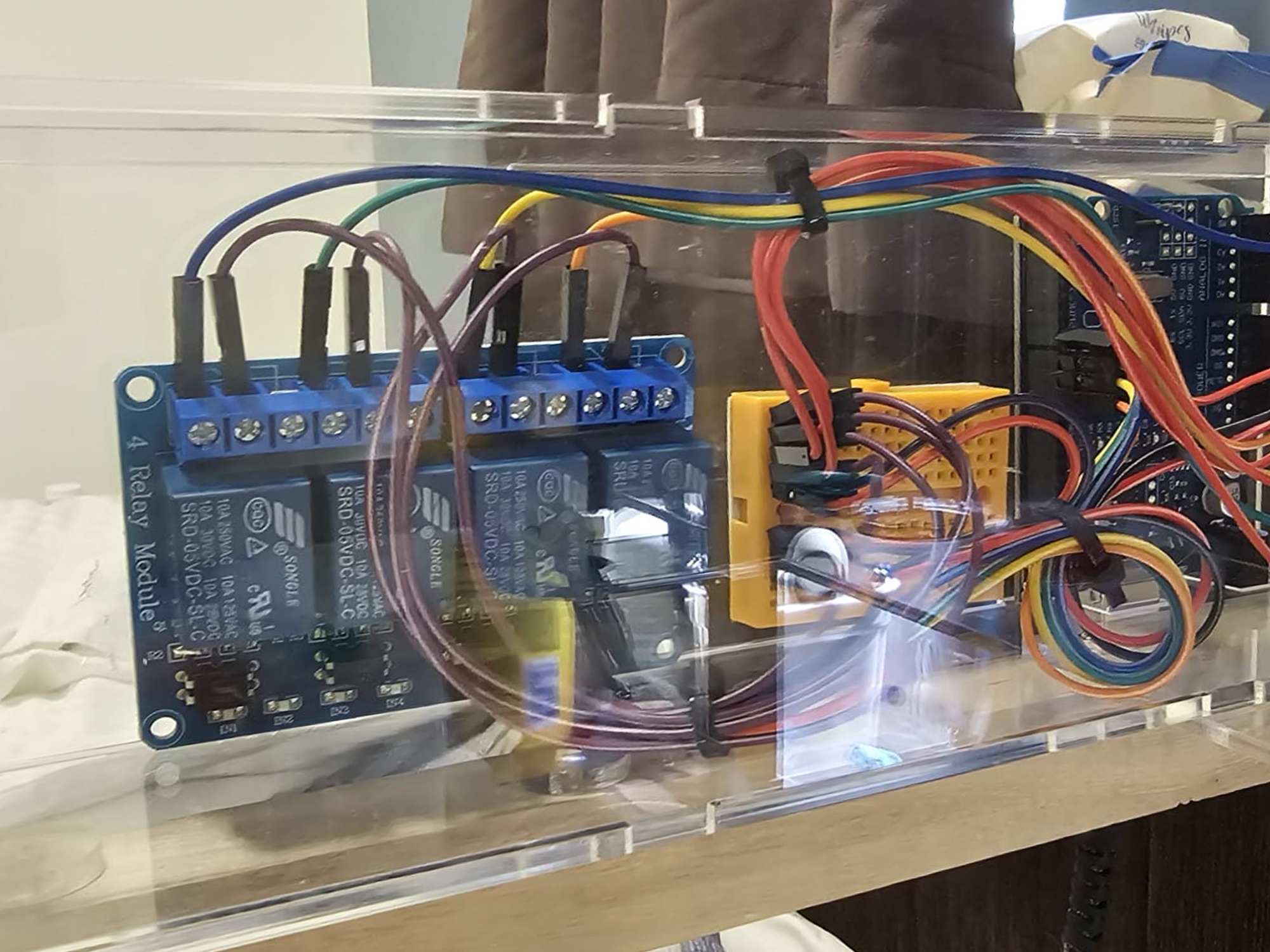
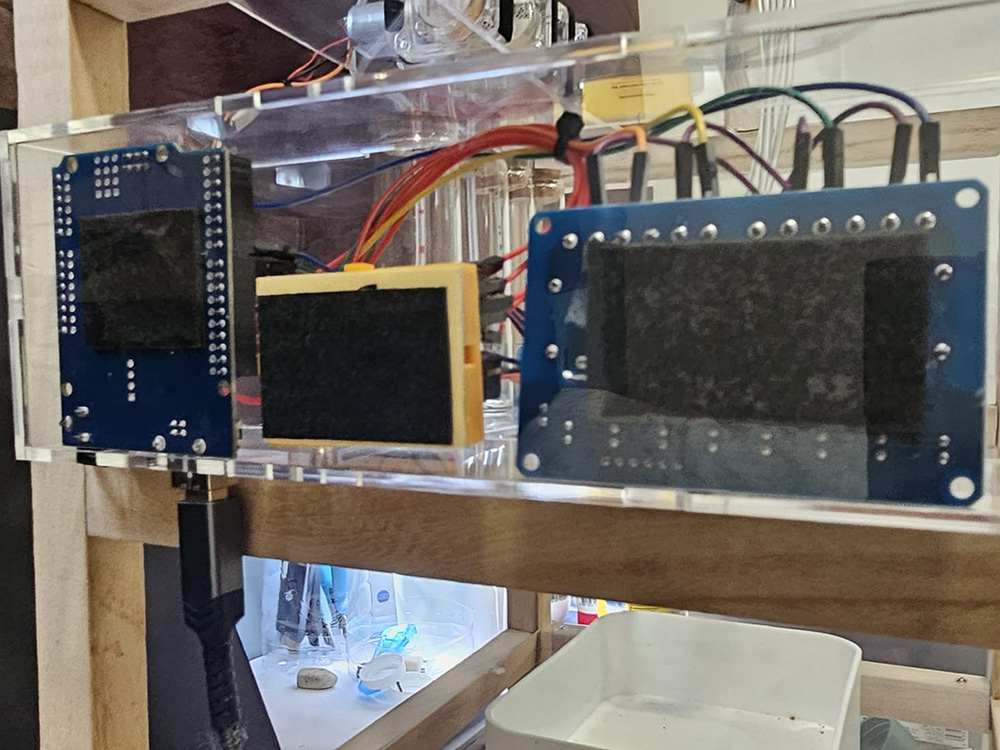
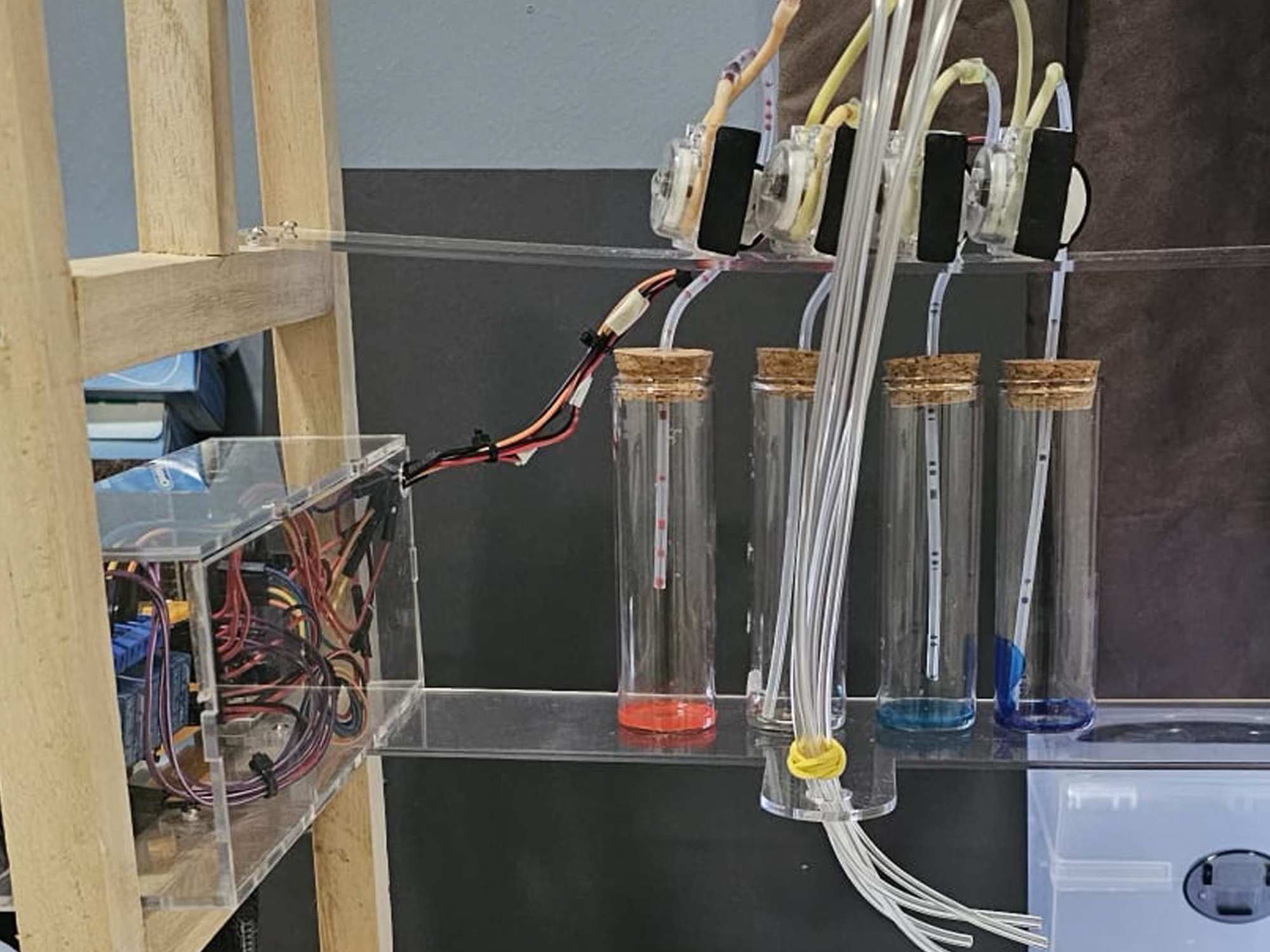
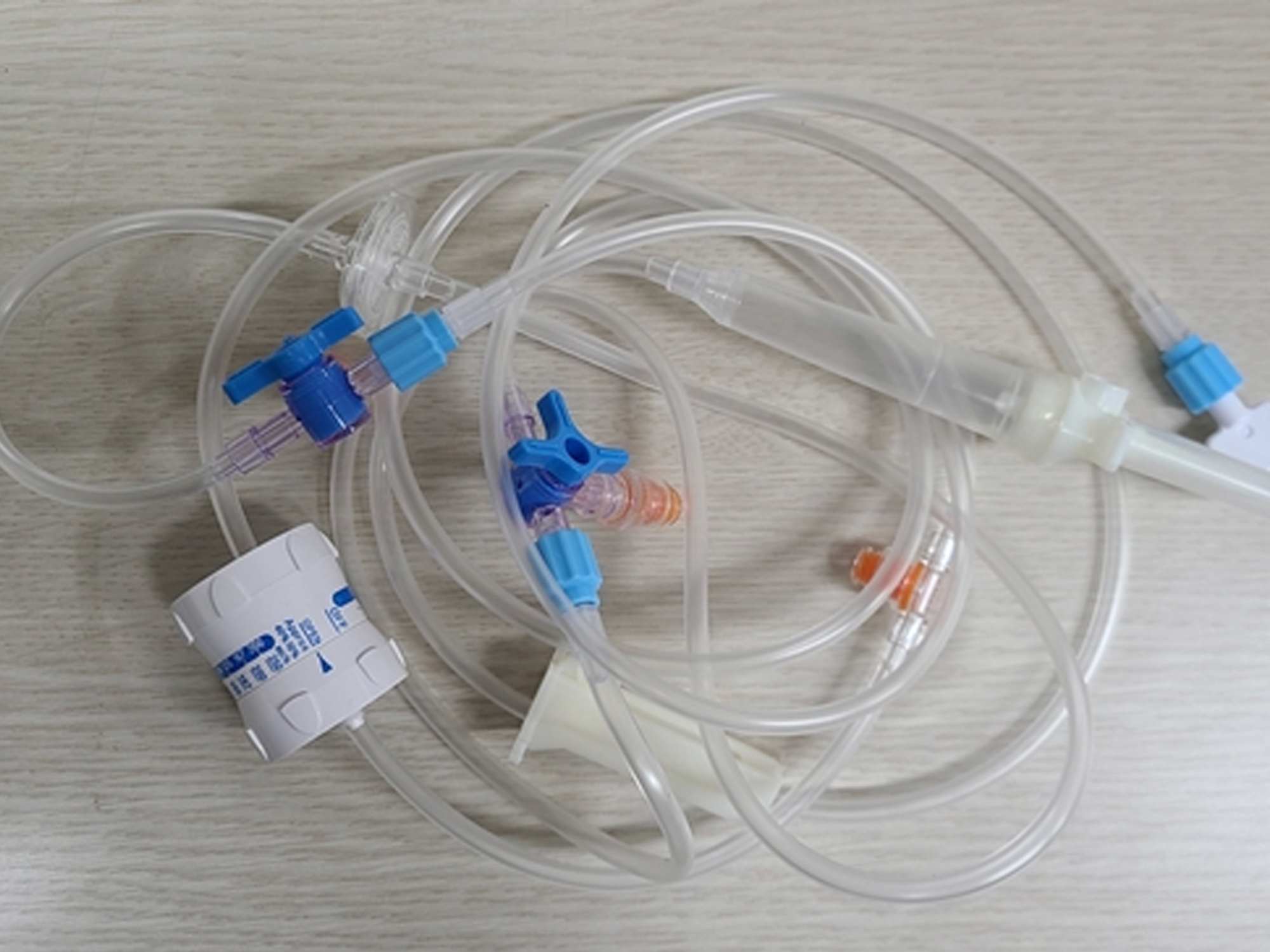
Additionally, I replaced the hose from last semester with infusion sets used in hospitals for IVs, ensuring that the paint drips in increments even more precisely than before.
Another possible plan is to add 3D-printed components, such as covers for the wooden poles, to further enhance the visual cohesion with the other prototypes.
Dream Journal
The fourth prototype, the Dream Journal, is a writing interface maintaining the 20th-century aesthetic. Like mentioned before for the other prototypes, the design prioritised practicality and functionality, ensuring all components fit nicely, naturally guiding the user's eyes from the interface screen to the printed output.
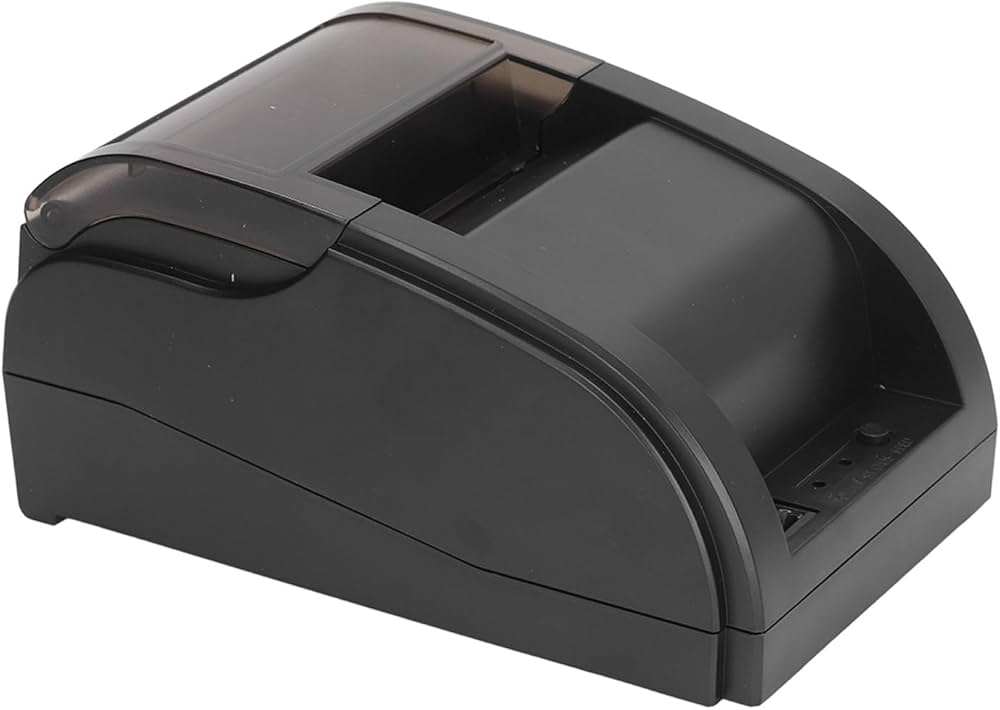
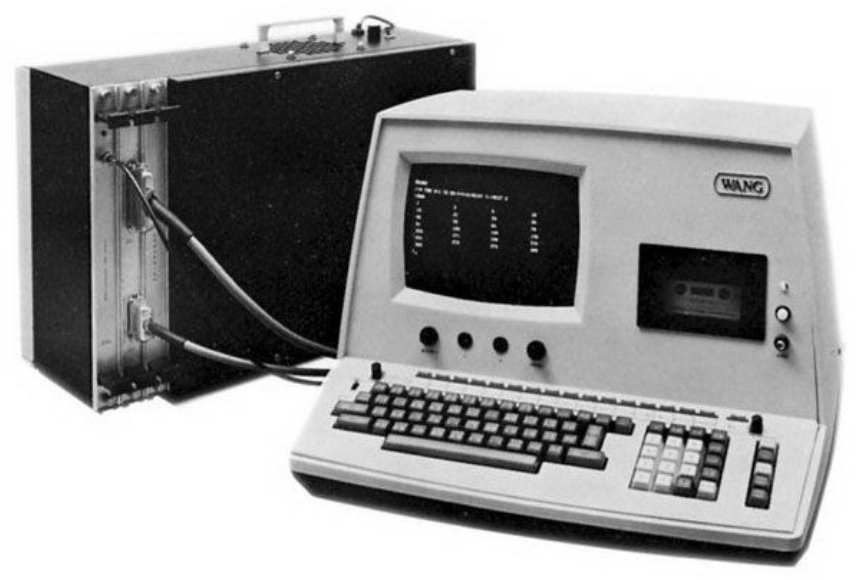
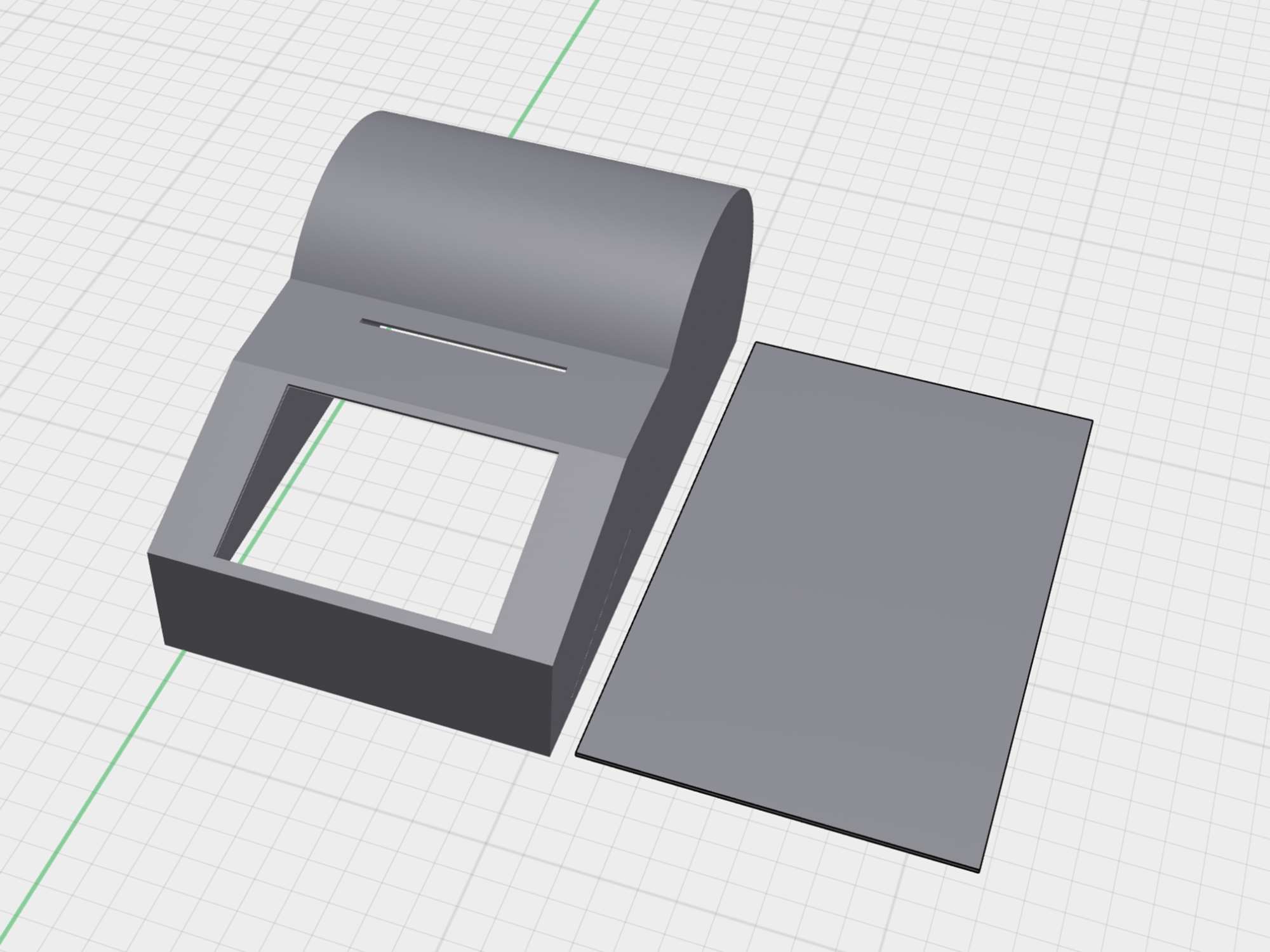
For the hardware, the model was shaped so that a round surface would guide the printed outcome. Because the print needs to printed upward like a typewriter, it was positioned and modelled as such. The considerations were again had to do with rounded corners and a vintage 20th century machine aesthetic.
After the 3d print was ready, I needed to align the height and angle of the printer's paper output slot with the corresponding opening in the case. Considering the need to refine other prototypes and work on the documentation and collaterals, I will be postponing the refinement of the physical interface until after Open Studios.
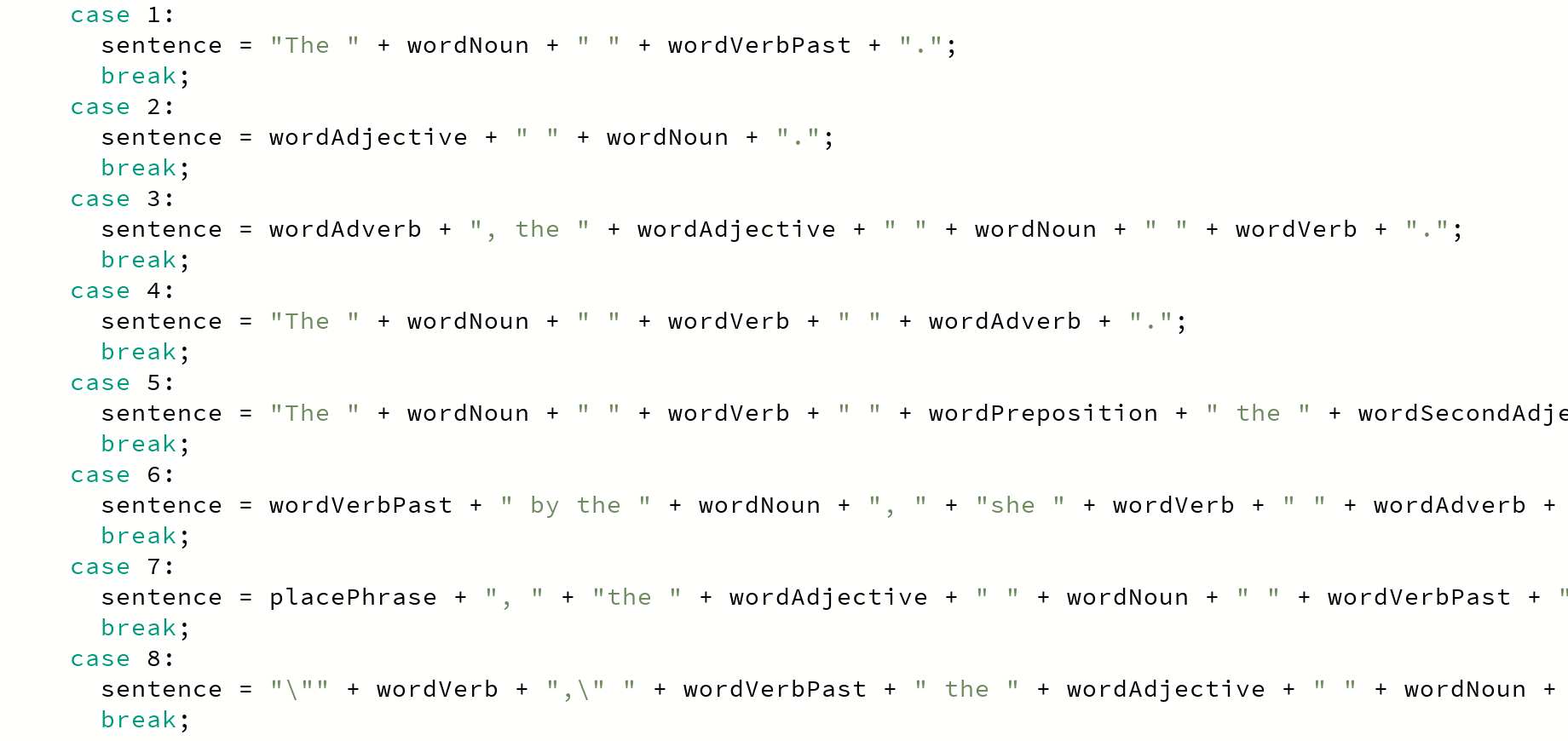
In terms of the software, I added more sentence structures so that the outcomes will have more variability. I also refined the mapping by using the o1 model of ChatGPT to order the word index from alert to calm.
I would also like to experiment with the layout of the text, but that is more secondary. For now, refining the physical interface is higher on the list of priorities for this prototype.
Printer Issues
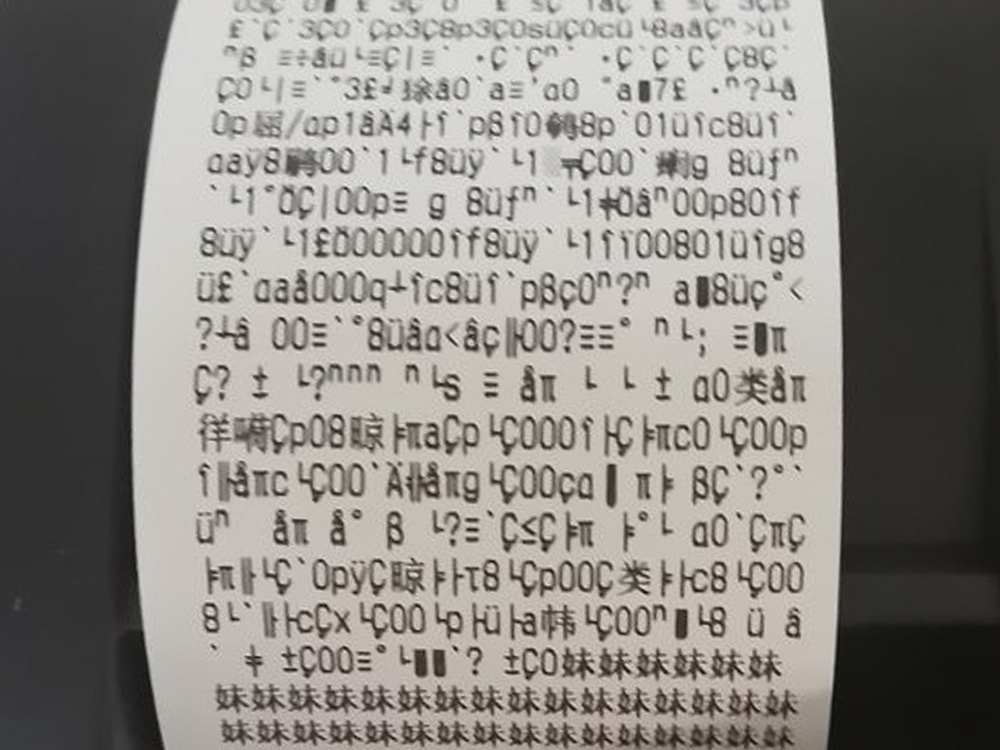
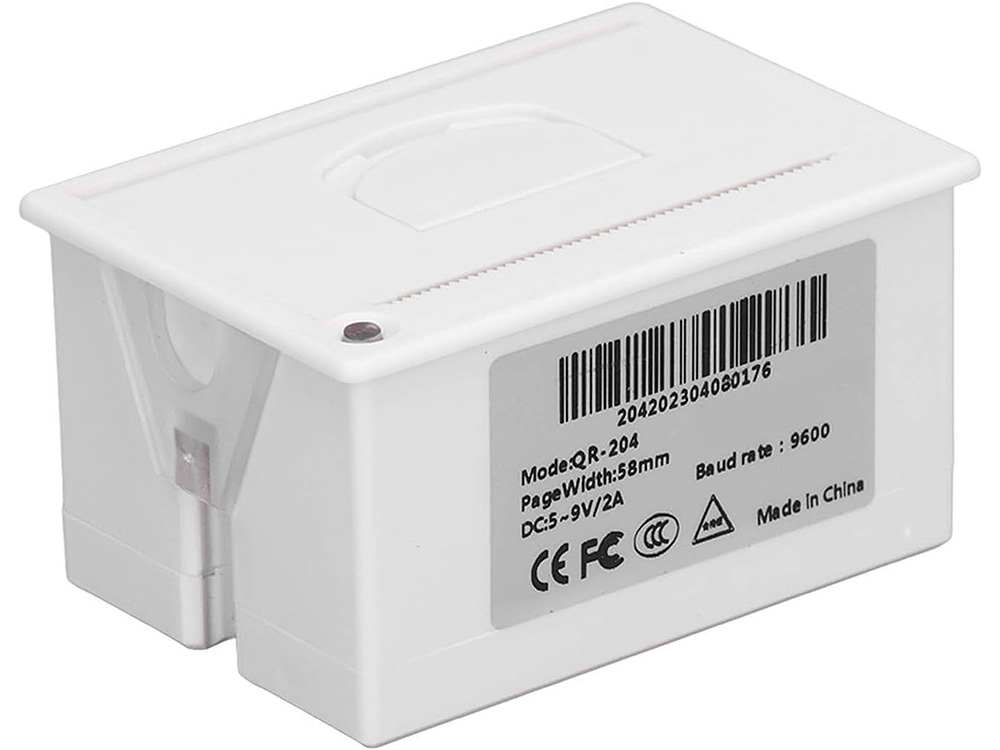
While I was finishing up the coding, a problem emerged. Both printers started to break down—one flickering on and off and the other printing only in Chinese. At first, I thought it was an issue with the serial communication or the Arduino, but after troubleshooting with other Arduinos and my previous printers (which are too big to fit into my current hardware), I discovered that the printers had just become wonky.
So, I ordered two new ones—this time, models that didn't look like fakes and that could arrive before Open Studios. The earliest one is expected to arrive around the weekend before Open Studios. Therefore, I will have to postpone the documentation until after that. Hopefully, I can get one of them to be interactive for Open Studios.
Re: Pepper's Box
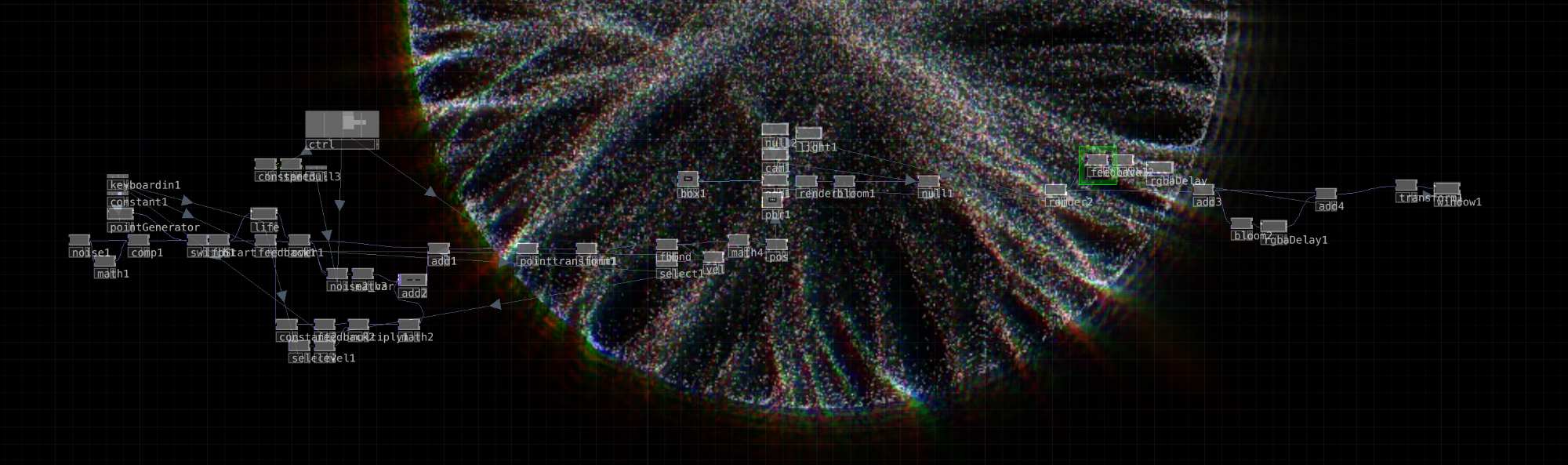
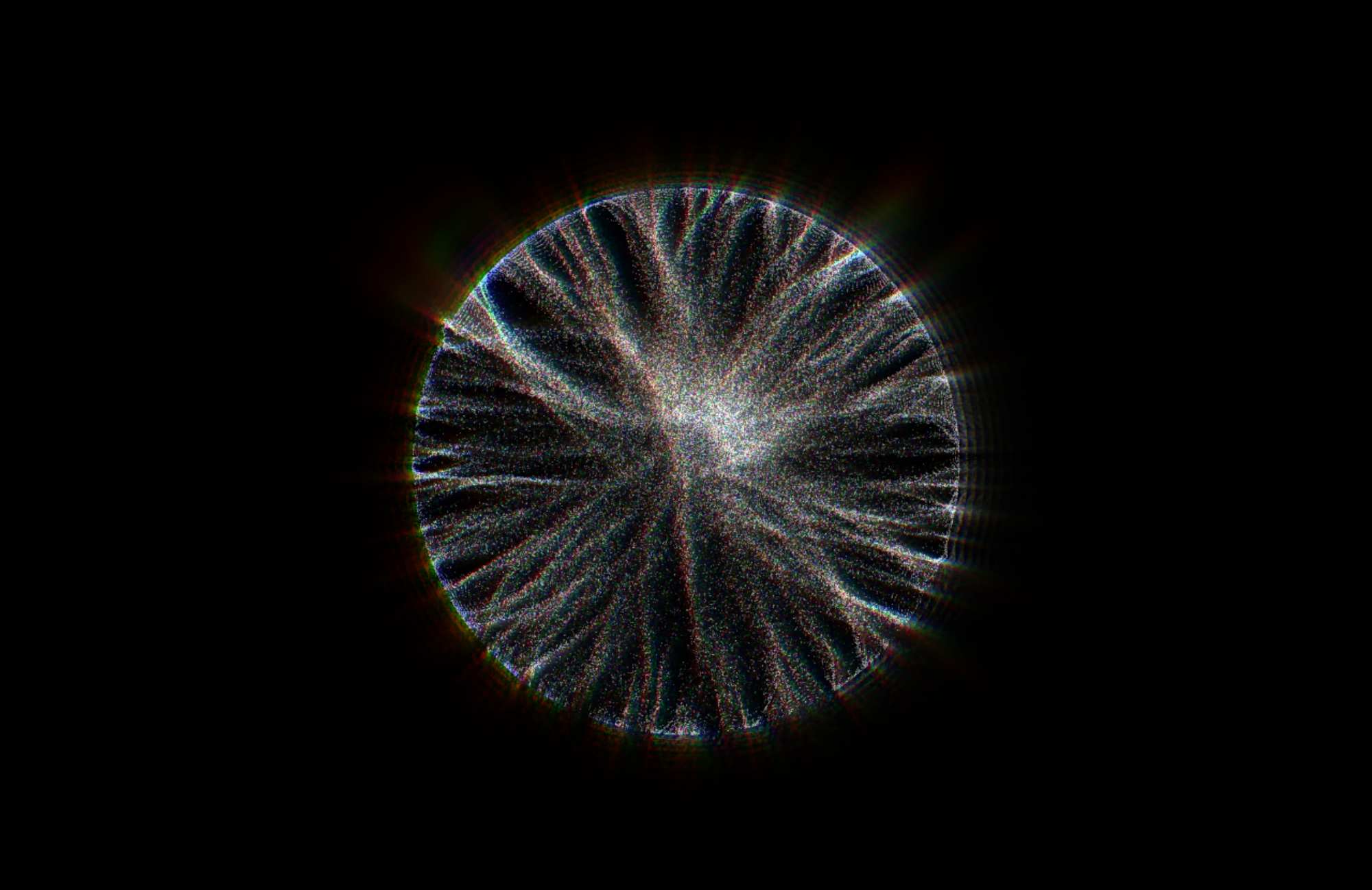
A change of plans: Since the pepper's box will no longer be part of the prototypes but will instead showcase an audiovisual experiment, I changed the size and material of the interface. I adjusted the size to fit an iPad. Now that I no longer need to use an old display, the outer casing is simpler because there's no need to add a hole for the ports. Additionally, the visuals don't have to be as cohesive with the other prototypes. Therefore, I switched to laser cutting for the structure and outer casing.