00
Beginnings:
Inspiration and Ideation
~ 11.08.2024
Prologue: The Apple
Before introducing my topic, I would like to document my most recent design, the apple poster—although the term ‘design’ might be inaccurate given its lack of functional consideration. It shows the interior of an apple, aligned in a modular grid and printed through a risograph machine. Although originally intended as a flipbook, I found it more effective to present the different slices collectively, rather than directly translating the narrative into a time-based viewing experience.
-
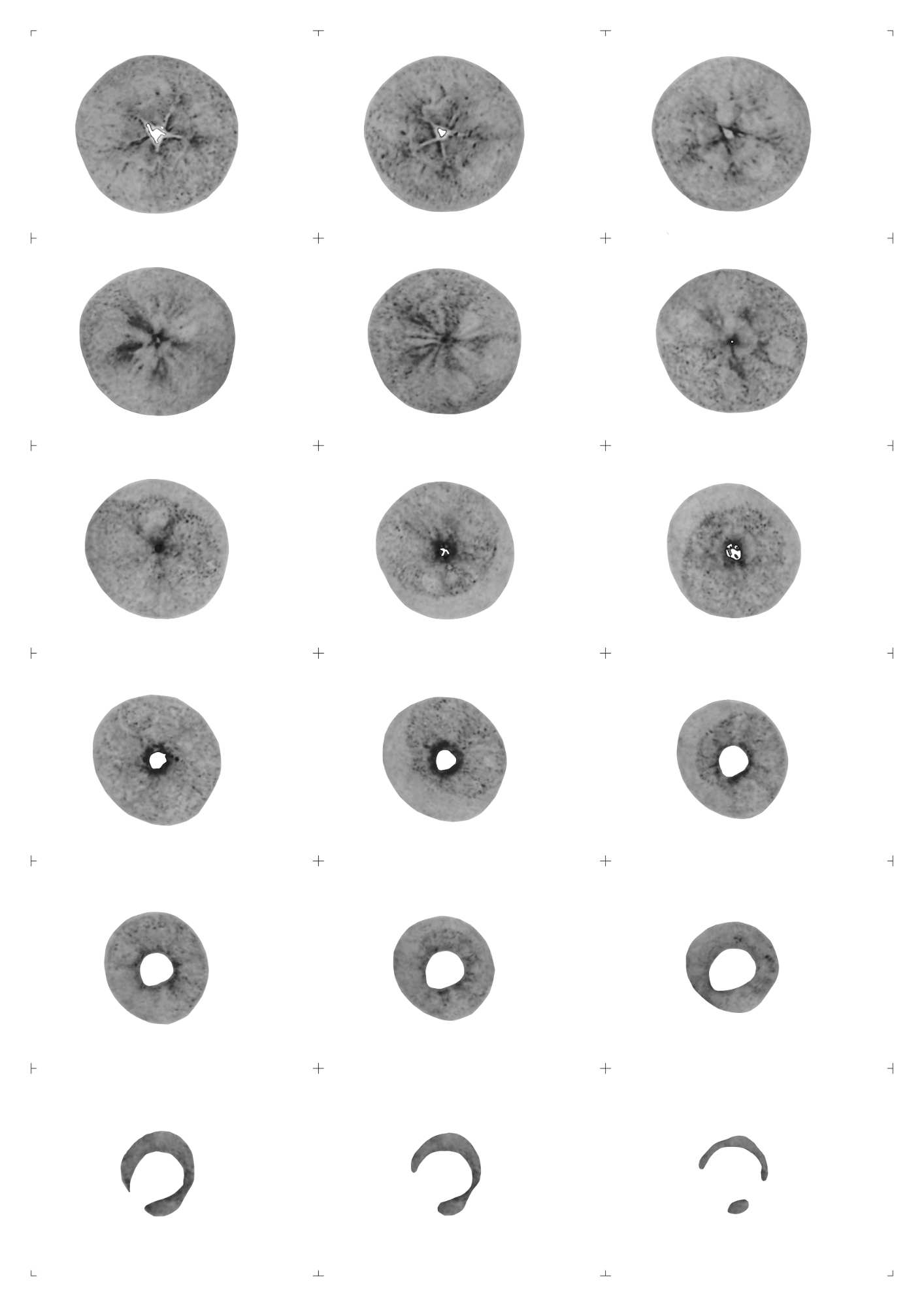
The Apple after colour separation, yellow
-
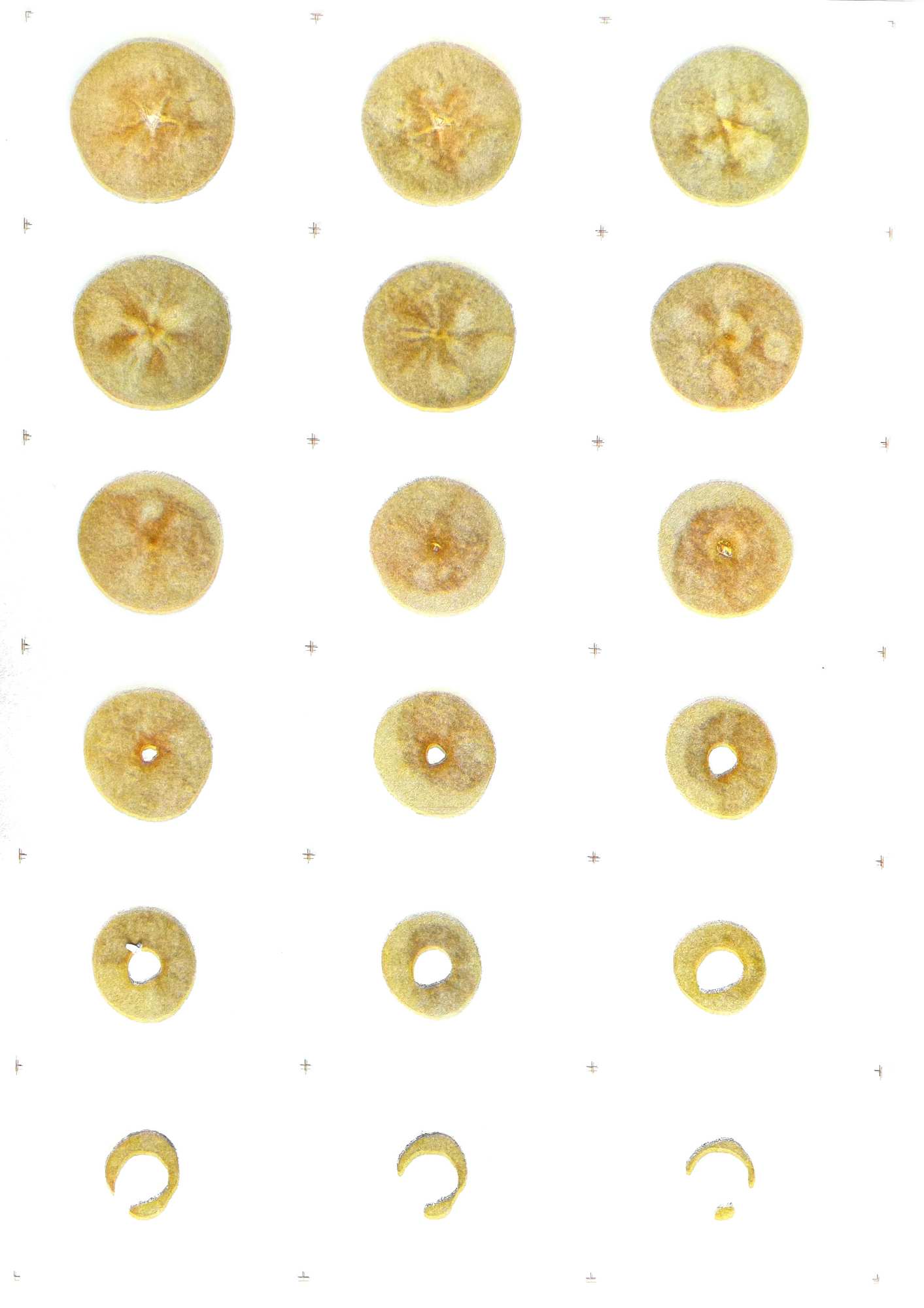
The Apple final print
-
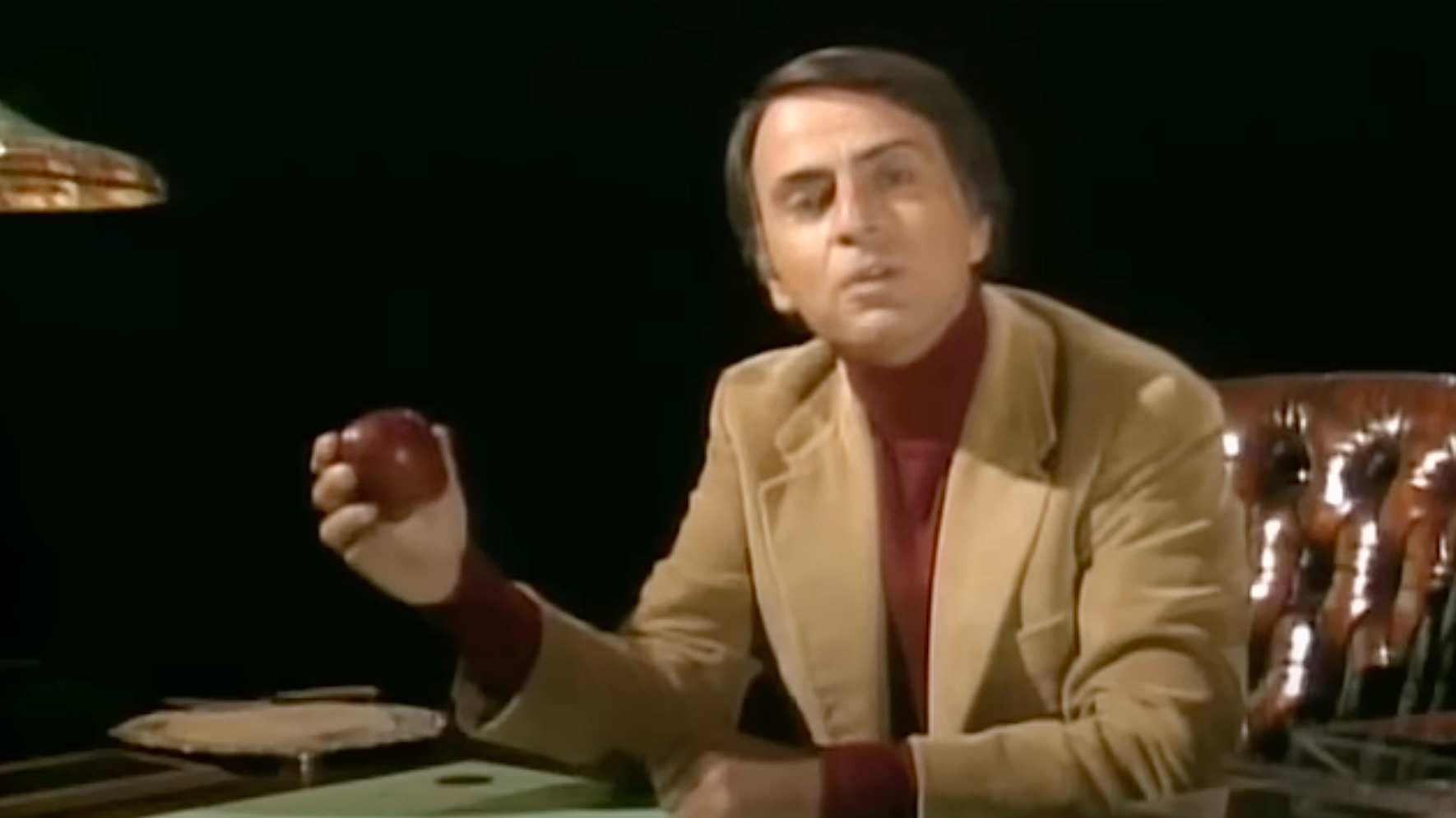
screenshot form Cosmos episode 10
-
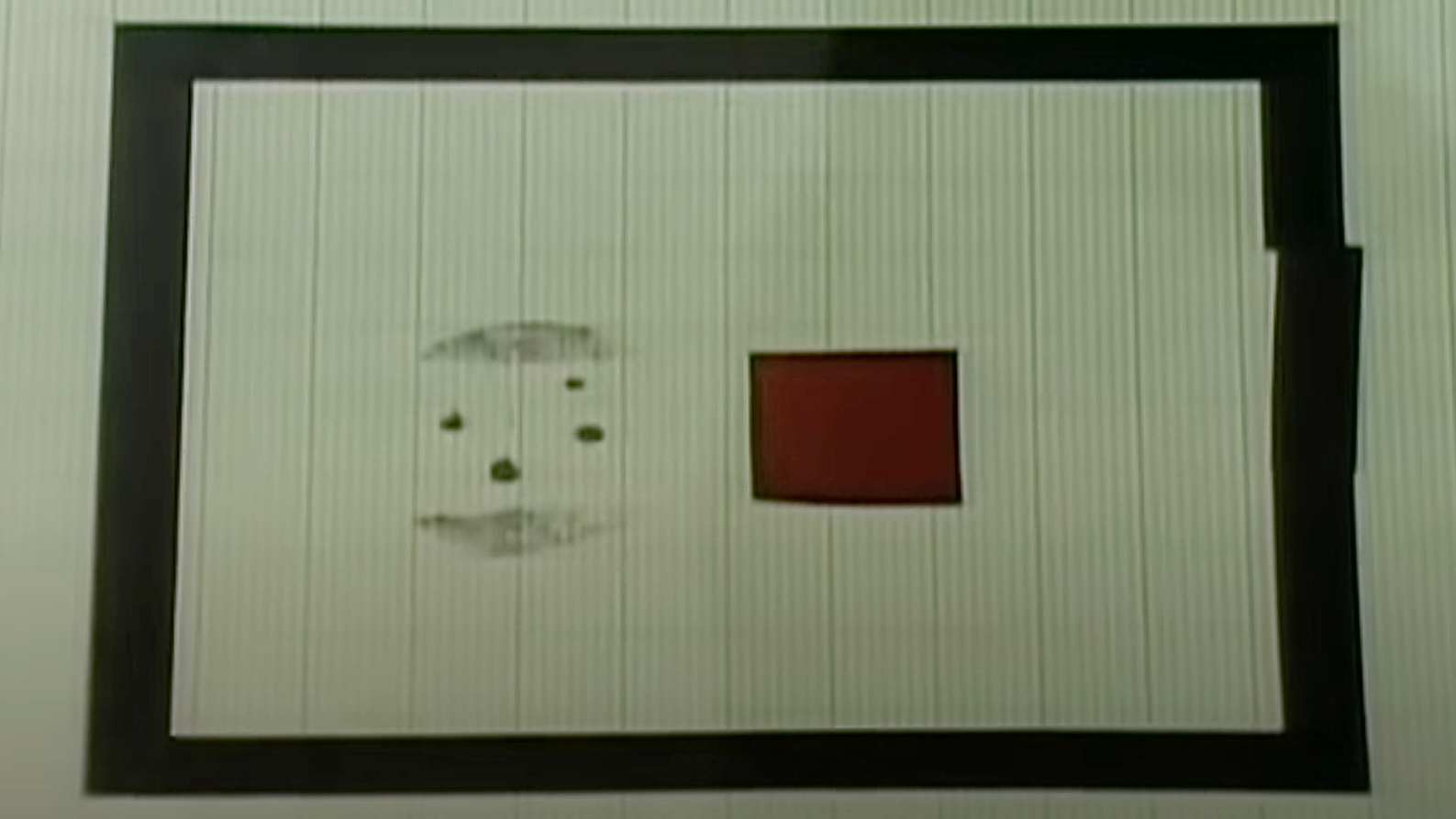
screenshot form Cosmos episode 10
The inspiration for this project came from a casual bingeing of Cosmos by Carl Sagan. In one scene in episode 10, Sagan uses an apple and Edwin A. Abbott’s book Flatland to explain the concept of the fourth dimension. In Flatland, there are two-dimensional beings who can only comprehend length and width. For them, height is incomprehensible.
In this scenario, if a three-dimensional object like an apple were to pass through, the inhabitants of this world would only perceive the surface of the apple as it intersected with their plane. The full shape and form of the apple would remain beyond their understanding, as they could only see the part that briefly touched their two-dimensional existence.
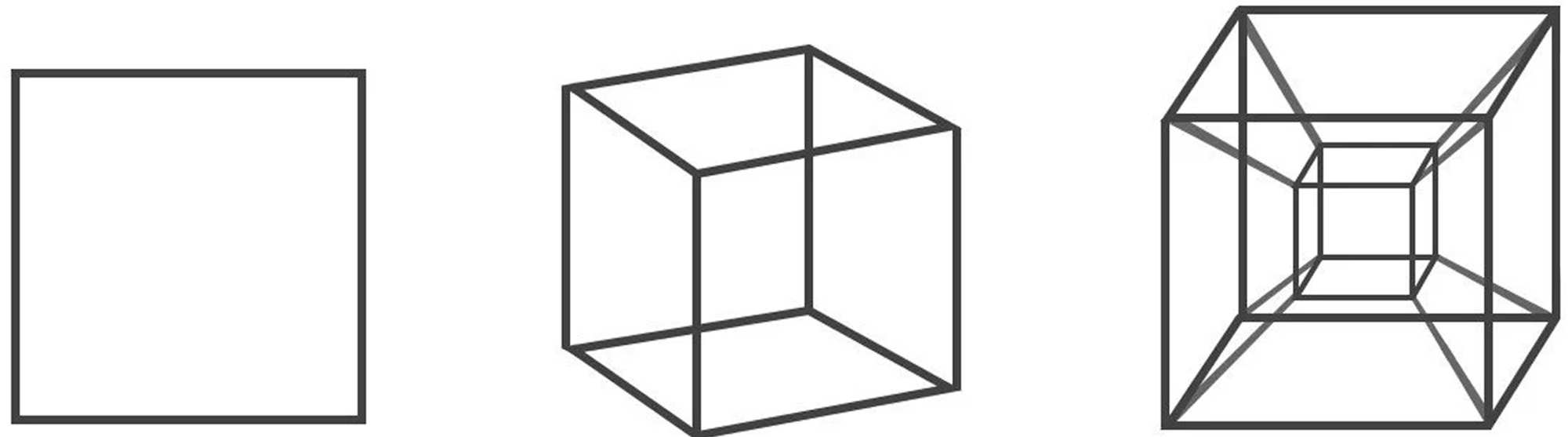
He then introduced the idea of a Tesseract, a four-dimensional cube, and used the analogy of the apple in Flatland to explain how we might still be able to get a rough idea of a shadow of a four dimensional object in a three dimensional space.
I have always loved this scene, because for me, it suggests that although reducing dimensionality is meant to simplify information, increasing dimensions can, paradoxically, help reveal patterns that aren't visible in lower dimensions.
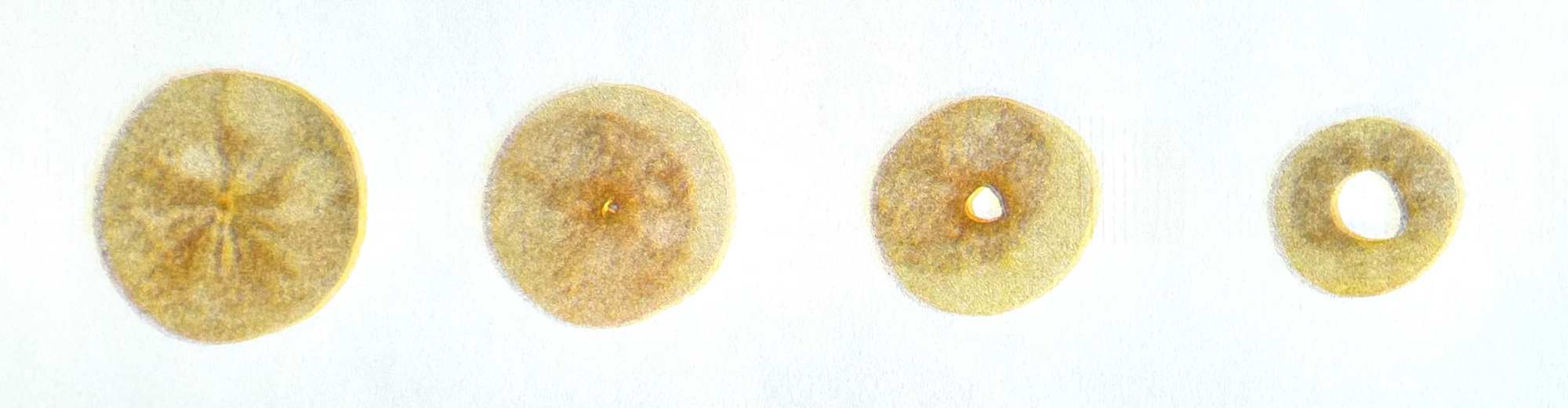
My poster pays homage to this apple that has made its presence known in Flatland. The choice to use risograph as the printing method connects with themes of imprints and ‘analogue programming,’ while also contributing to a distinct aesthetic quality.
Risograph printing involves colour separation and analogue mechanisms, which I believe adds to the serendipity in the production process. The result aligns with the vintage, painted aesthetic, capturing both the process and the visual style it references.
-
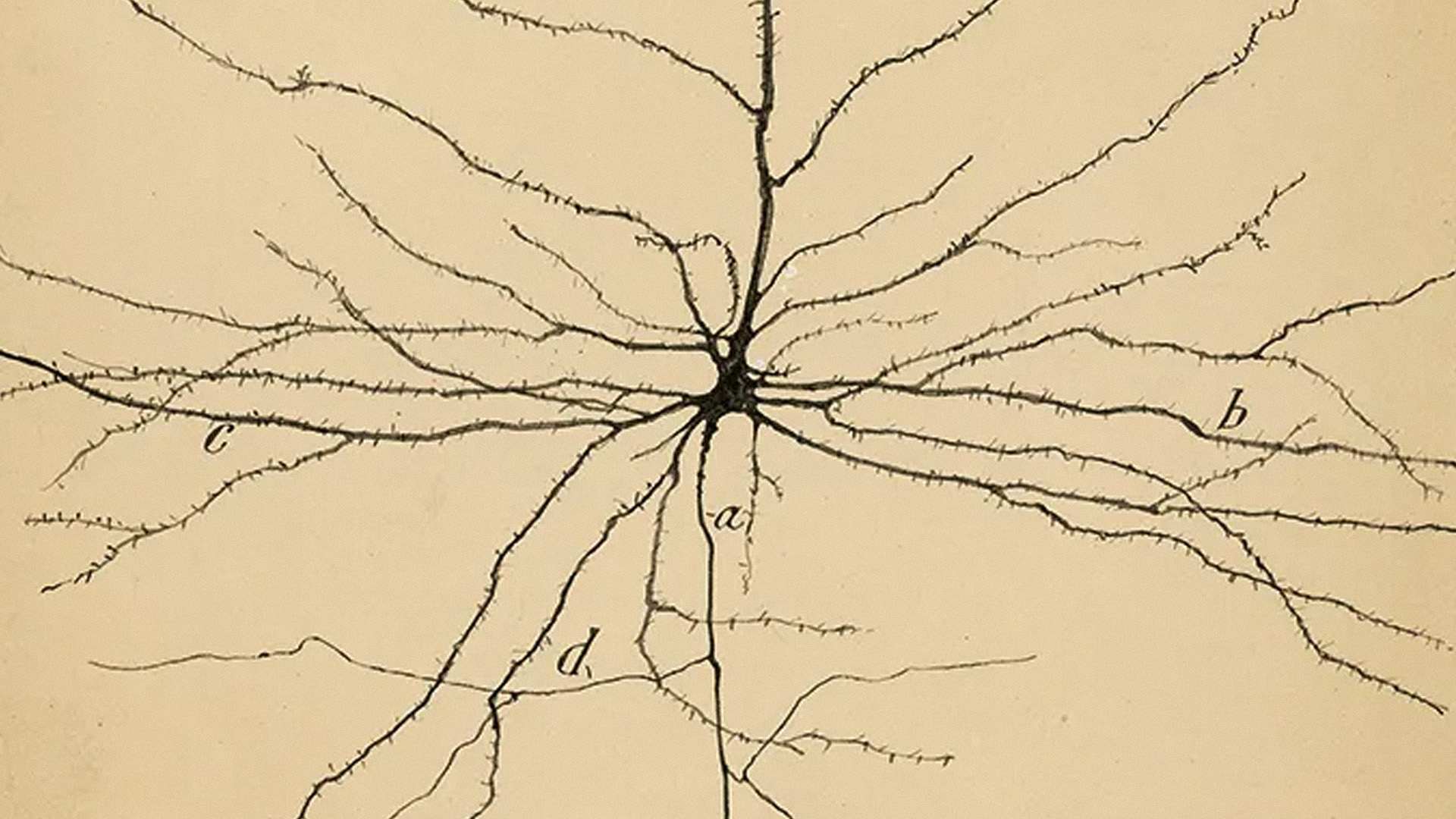
The Pyramidal Neuron of the Cerebral Cortex (1904), Santiago Ramón y Cajal
Cajal Institute, Cajal Legacy, Spanish National Research Council (CSIC), Madrid, Spain
Although the apple was more of a build up to explain the tesseract, there is a sense of wonder that has always stuck to me. Using art not merely as a visual representation, but as a form of speculation infused with a sort of whimsy that goes beyond pure rationality. I am fascinated by this intersection between subjectivity and objectivity that creates this somewhat synergistic effect.
And this brings me back to why I’ve brought up this simple apple poster as the intro to my atelier. Computational design represents both the more expressive, non-functional form of design(art?) with the objective, systematic processes of algorithms, and I’ve chosen this atelier because it is an opportunity to explore this synergy to its fullest.
A New Start
My initial research direction, which its ideation dates back to earlier this year, was dropped in advance before the start of the semester. After some consideration, I had concluded that ‘Mental Illness to Promote Creativity in Generative Art ’ would be riddled with drawn-out ethical considerations that might out-weight the actual contextual research, while also being overly specific for it to become a topic of speculation and interest that can span for an entire year.
In hopes of finding such an idea that could hold my attention span, here is a quick mind-map of my recent interests and possible directions. 2 branches of thought that stood out to me were: "Authenticity" and "Ego". These have always been an area of interest, but I hadn’t thought to make it a concept for my project due to its depth. But I suppose that whatever topic still requires an in-depth look into broader principles, and having a broader topic will give me more wiggle room in the future.
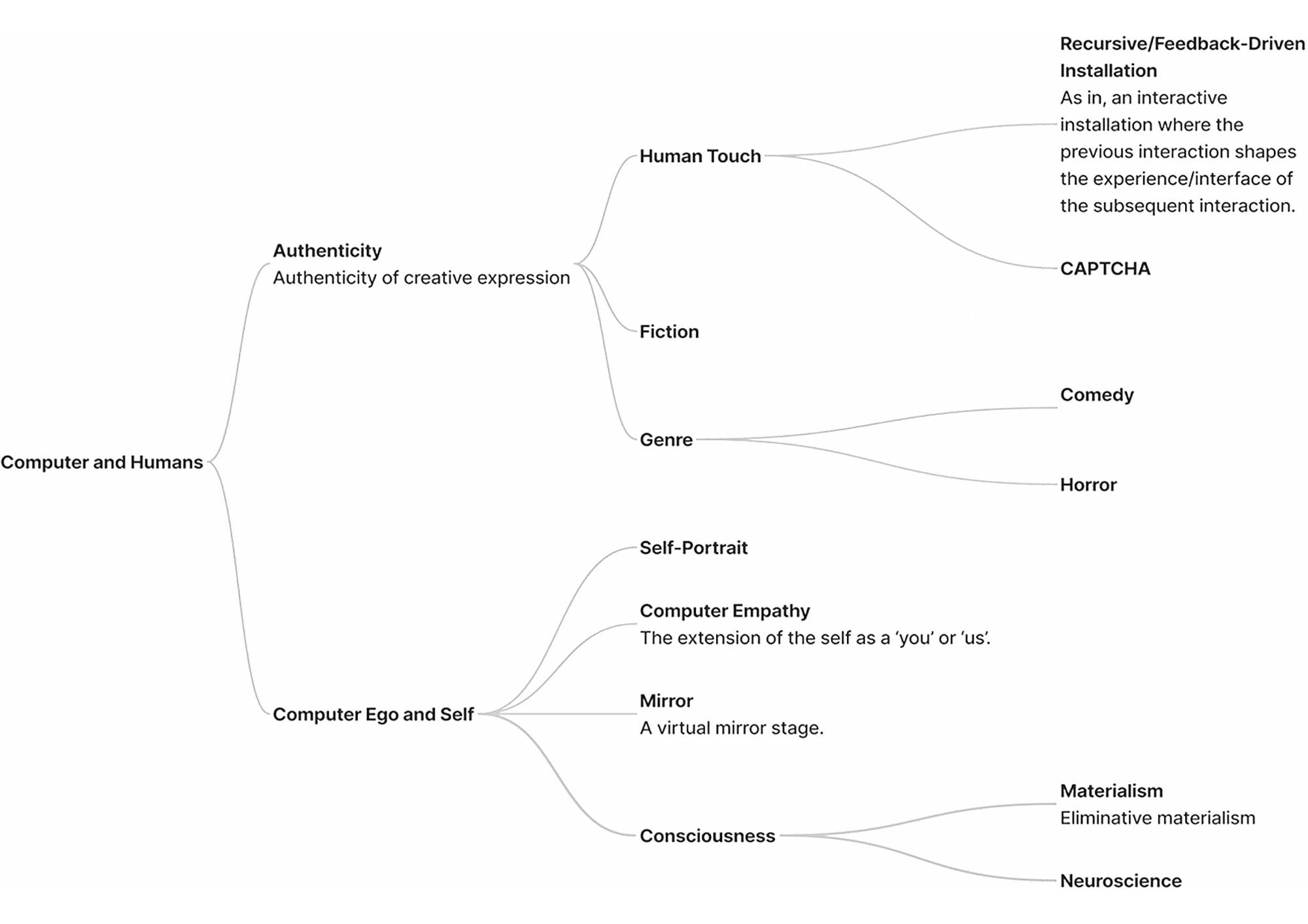
The first branch is about ‘authenticity’ in creative expression. As technology is often regarded as a medium to automate the creative process, rather than a means to enhance it, the role and agency of an artist has been a topic of discourse. I believe that rather than resisting technological advancements, we can embrace technology as a collaborator, using it to explore new forms of expression.
Meanwhile the second branch, ‘ego’, while also broad, is a concept that I have been churning in my mind for a while. For artists, the ego might drive the need of a distinctive artistic voice, affecting how artists interact with their work. However, as artists adopt technology in our work, traditional views of the ego are evolving, leading to a more fluid understanding of identity and authorship.
-
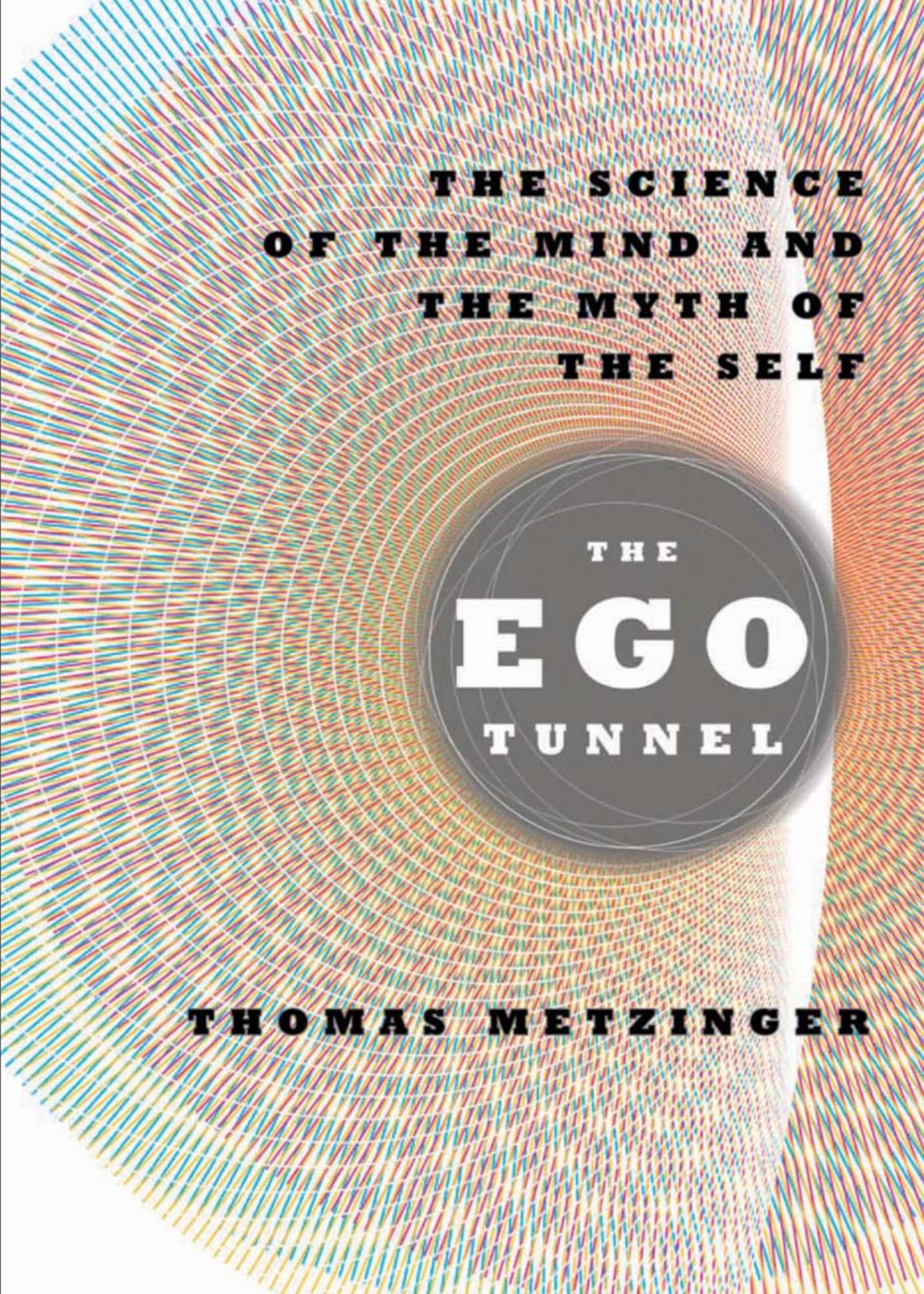
Ego Tunnel by Thomas Metzinger
-
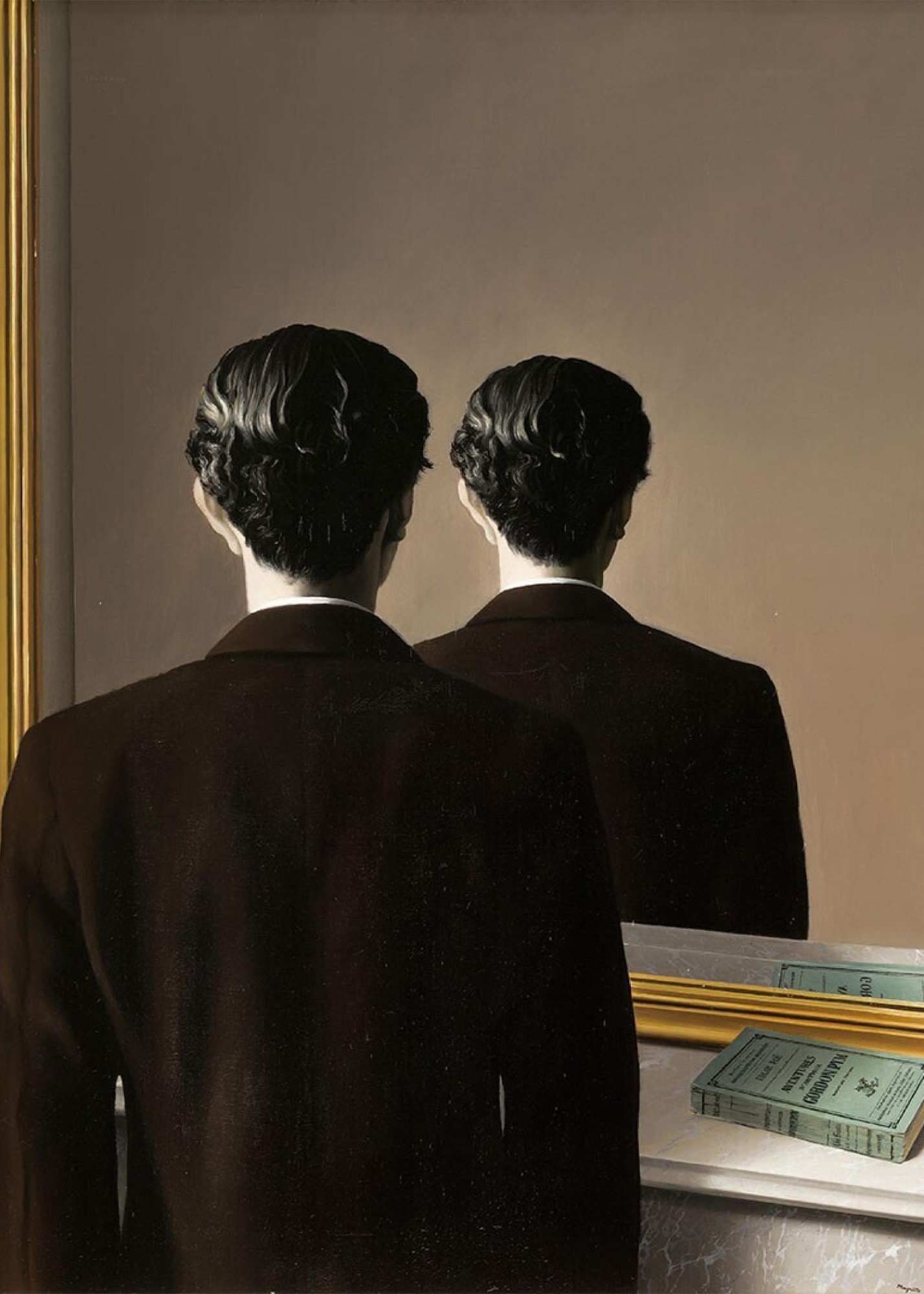
La Reproduction Interdite by Magritte
boijmans.nl/en/collection/artworks/4232/la-reproduction-interdite
As a combination of the two branches, the area I am most interested is the differentiation between human and computer creativity through the philosophical view of consciousness, while looking at qualities that both distinguish and connect humanity to the algorithmic nature of computers. The idea of consciousness has always interested me, particularly in how awareness can be understood through the concept of self-modeling.
I have often reflected on this idea that if we say consciousness is a state of self-awareness, then it hinges on whether the object in question—be it human or machine—has a form of self-representation. The philosophy of Thomas Metzinger and the Churchlands somewhat aligns with this idea, proposing that our brains construct a sort of internal model of ourselves and our surroundings through sensory information, forming a unified and continuous experience of existence.
-
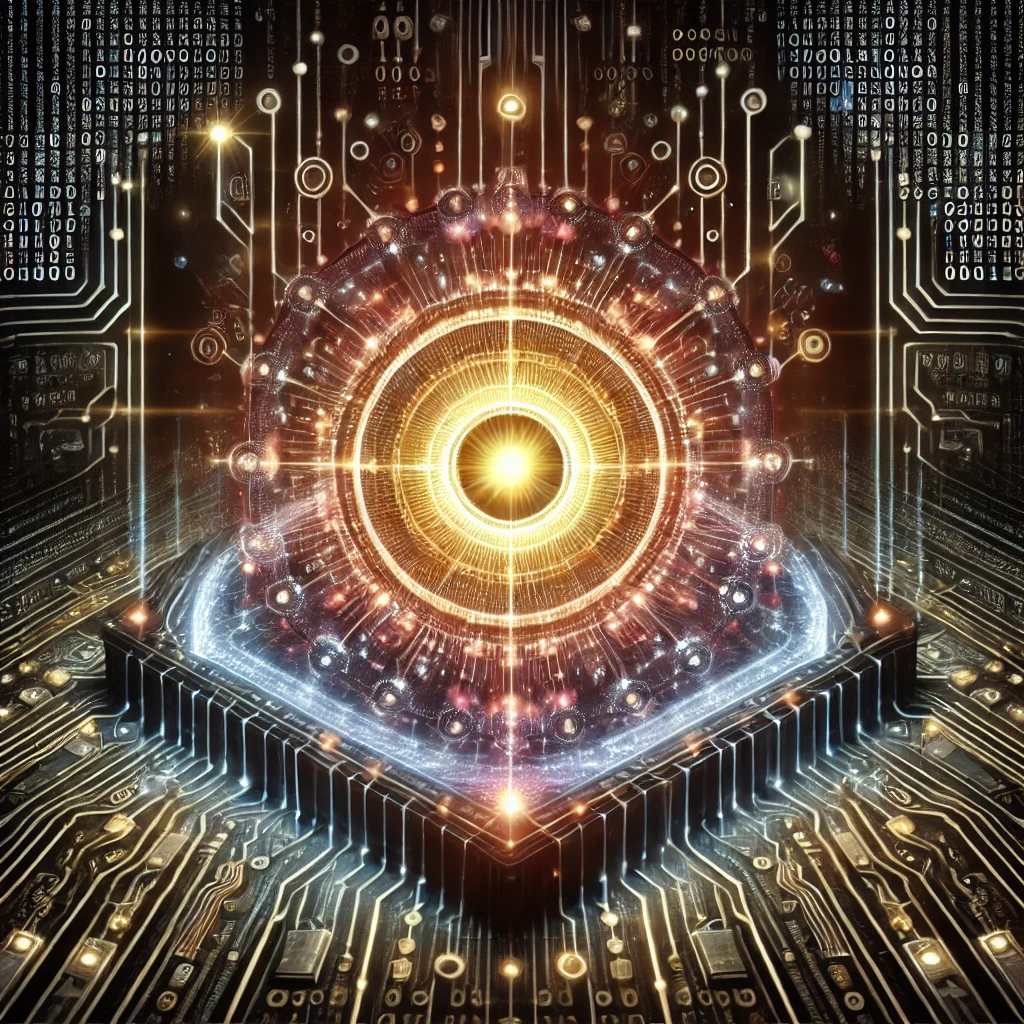
Human Ego
generated by ChatGPT when prompted to depict the Human ego
-
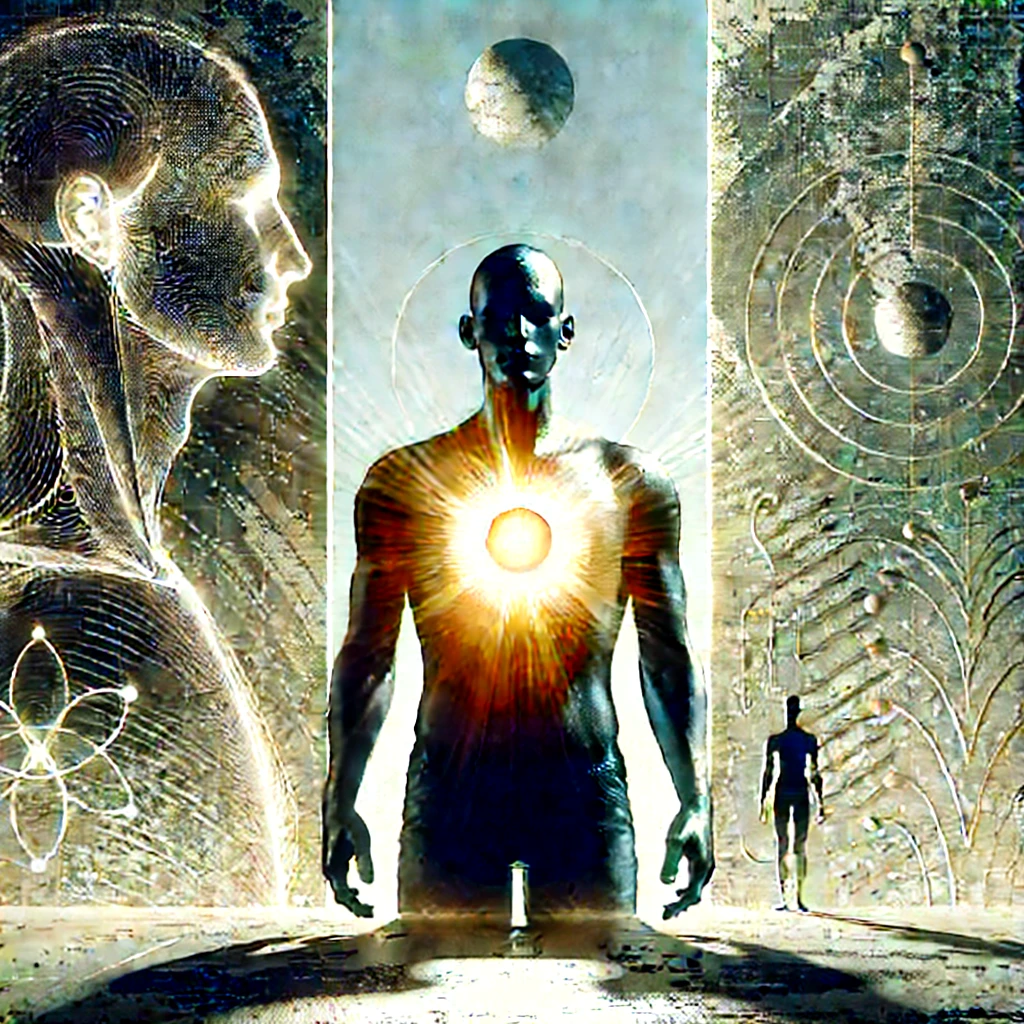
Machine Ego
generated by ChatGPT when prompted to depict the Machine ego
When I turn my thoughts to machines, the issue becomes apparent. Machines, as they stand, process information and perform tasks, but they lack a self-model or subjective experience. For a machine to mirror human awareness, it would need a comparable self-model—one that doesn't just process data but also internally represents its own processing. Machines, after all, operate on algorithms and data processing, devoid of the internal subjective experiences that define human consciousness.
Some possible directions include the concept of the computer's ego, its visualisation, and the understanding of 'fiction' and empathy within computational contexts. It could also challenge conventional ideas of authorship in art through looking at how AI's ability to simulate human-like cognition and generate creative ideas raises questions about human intentionality and creativity. This inquiry not only contributes to computational design but also provides critical reflections on the ethical and cultural dimensions of AI-driven creativity.
An Illusion of Agency
-
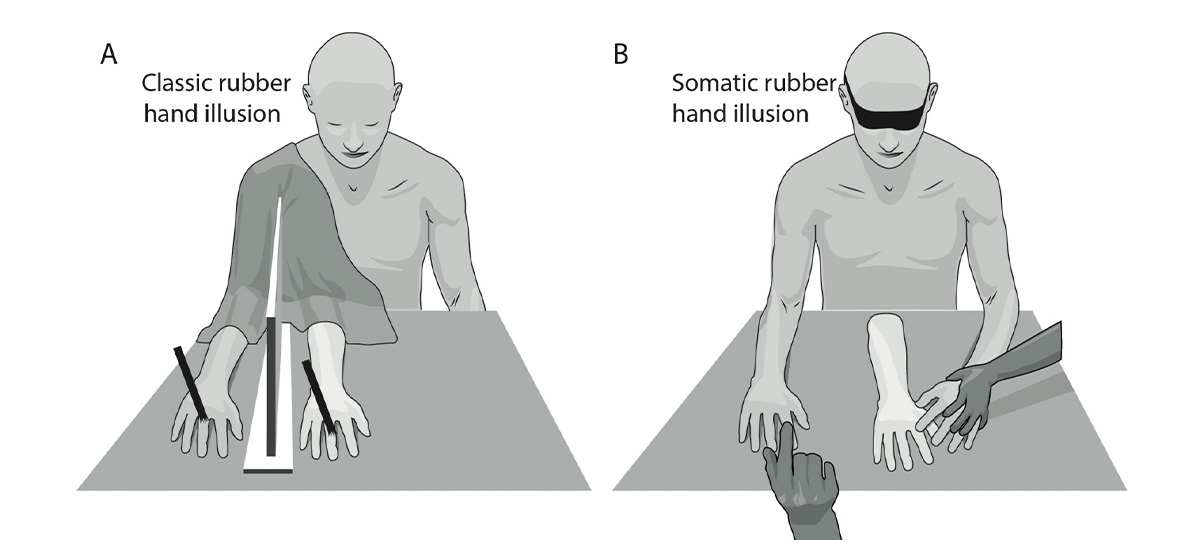
The Rubber Hand Experiment
Ehrsson, H. H. (2022). Bodily illusions. In A. J. T. Alsmith & M. R. Longo (Eds.), The Routledge Handbook of Bodily Awareness (pp. 201-229). New York: Routledge. https://doi.org/10.4324/9780429321542-20
I would like to share 3 case studies that I find that could relate to the idea of 'an illusion of agency'.
The first is the infamous Rubber Hand Illusion. In a 1998 study by researchers Botvinick and Cohen, people were shown a fake rubber hand while their own hand was hidden.
Both the real hand and the rubber hand were stroked at the same time, and after a short while, people began to feel that the rubber hand was their own. This experience shows how our brains can change what we consider part of ourselves based on sensory input, creating a flexible sense of ownership over body parts. Even artificial ones!
-
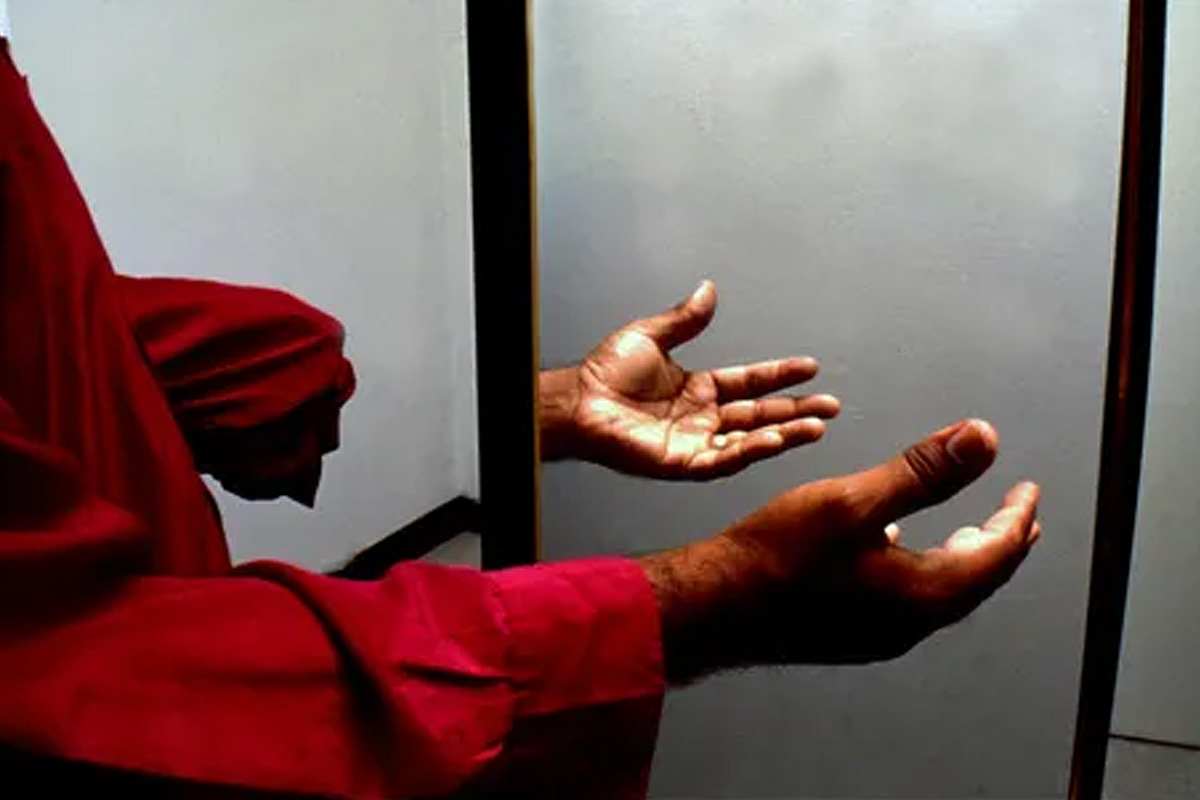
Ramachandran Mirror Therapy
newyorker.com/news/news-desk/john-colapinto-ramachandrans-mirror-trick
-
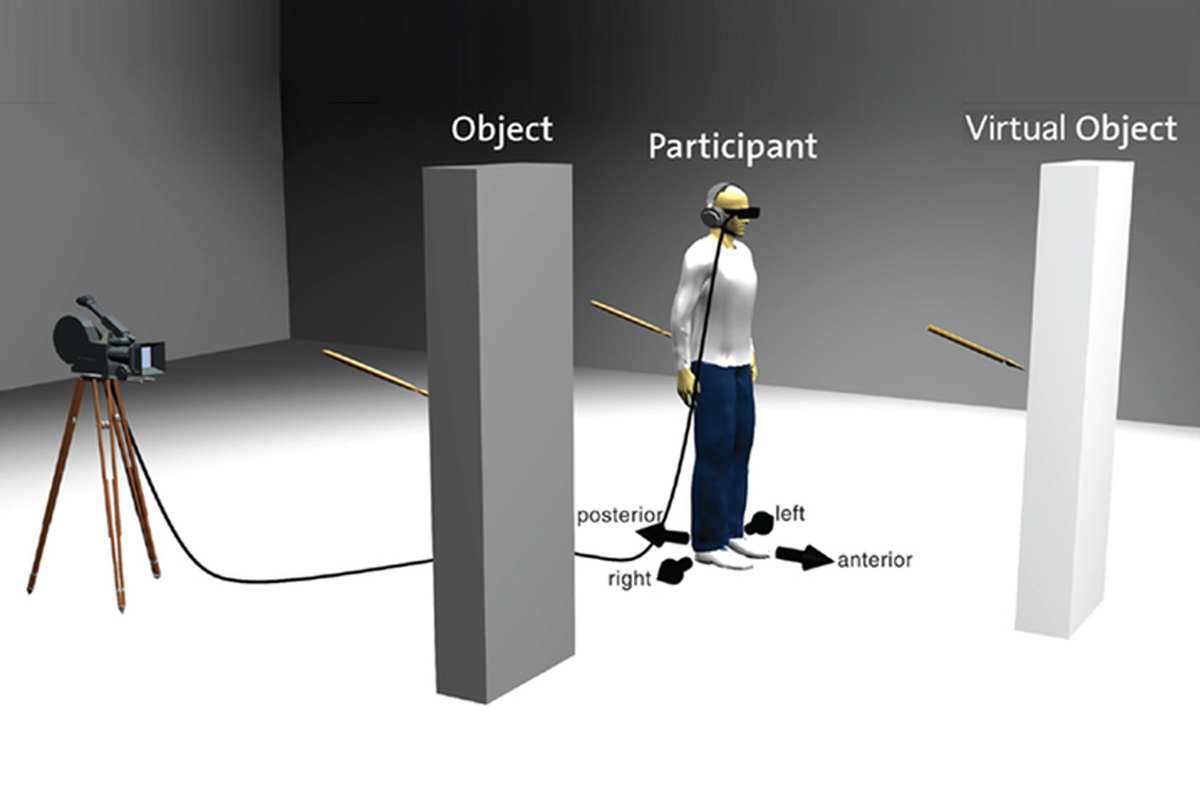
A Whole Body Rubber Hand Illusion
Madary, Michael & Metzinger, Thomas. (2016). Recommendations for Good Scientific Practice and the Consumers of VR-Technology. Frontiers in Robotics and AI. 3. 10.3389/frobt.2016.00003.
For a similar instance of changing visual feedback to alter out sense of control, there is Neuroscientist V. S. Ramachandran’s mirror therapy. This mirror therapy was for people with phantom limb pain, meaning pain in a limb that is no longer there, and was an example of how we can manipulate the brain's model of the body. By using a mirror to reflect their existing limb, patients see both "limbs" and feel as though they can move their missing limb, often reducing pain.
In another experiment described by Thomas Metzinger, subjects wore headsets showing a 3D view of their own backs in virtual reality. While they watched their virtual selves, someone touched their real backs, which created a strange sensation: they felt as if they were being pulled toward the virtual body or even became “one” with it. So do these experiments show that the brain’s construct of “self” is more of an adaptive tool than an absolute truth? There is something disturbing yet freeing about this thought.
Electroencephalogram (EEG)
-
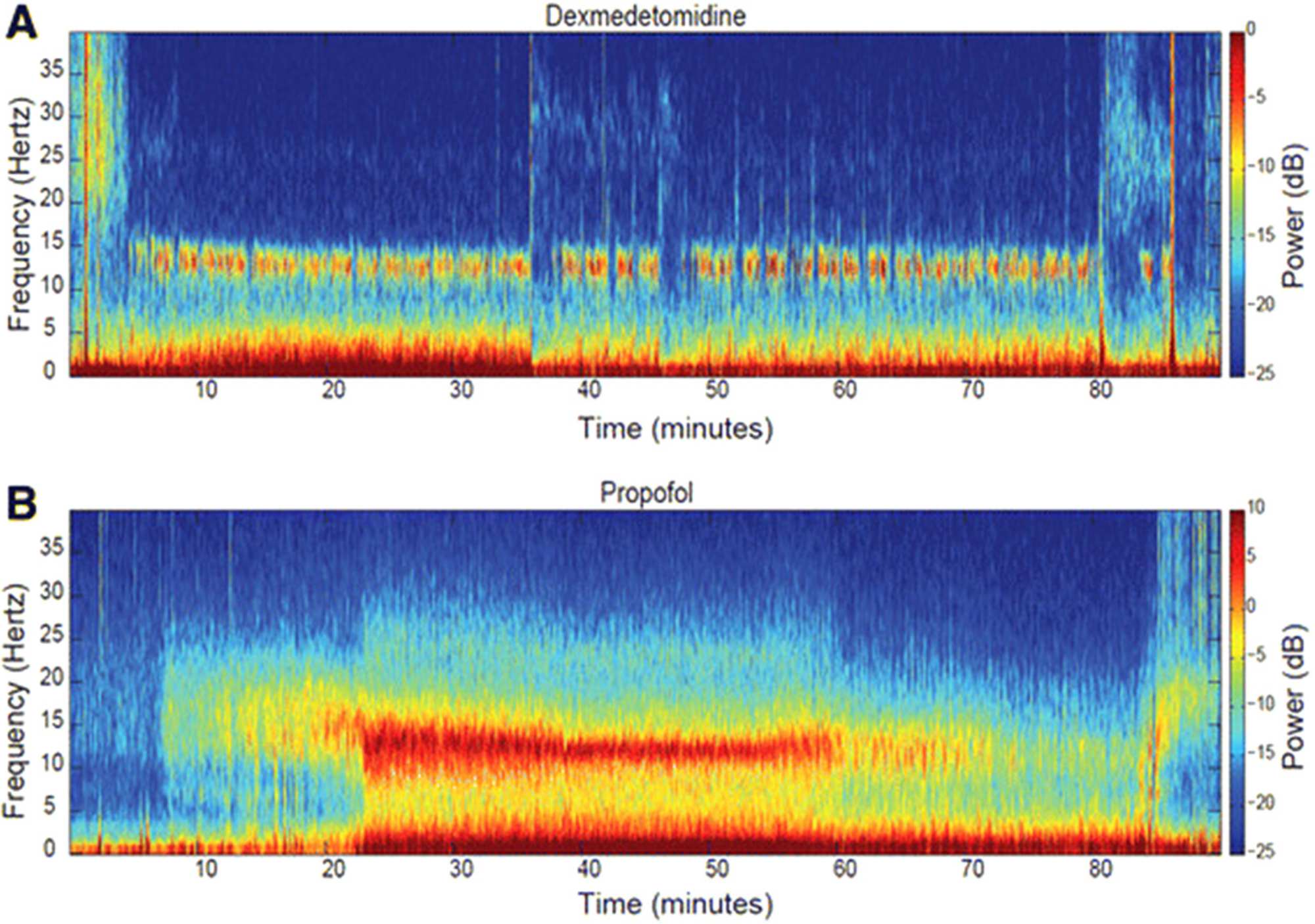
EEG-based tracking of propofol and dexmedetomidine administration
Valenza et al.(2014). Instantaneous monitoring of heart beat dynamics during anesthesia and sedation. Journal of Computational Surgery. 1. 10.1186/s40244-014-0013-2.
While reading different resources related to the human mind and consciousness, I came across an article on anesthesiology that argued that general anesthesia should be viewed as a sub-discipline of neuroscience rather than pharmacology. Dr. Emery Brown, an anesthesiologist and neuroscientist, says that understanding anesthesia requires insights into brain function, as demonstrated by his research using electroencephalogram (EEG) to track brain activity under the influence of anesthetics like propofol.
The part that piqued my interests was where he describes the spectrograms produced by EEG as not only informative, but also having the visual appeal of abstract art. Spectrograms seem like the ideal entry point for my project, as a visual medium that can provide a common ground where the quantitative data of neuroscience can be considered through the qualitative exploration of the arts. This gave me a rush of excitement. I might have stumbled upon an application that aligns with my genuine interests.
Drawing Connections
Brainwaves and other biofeedback inputs that fall under involuntary control, have the potential to amplify the creative process through unpredictable outcomes. This idea of serendipity connects directly to my initial focus, where I find the appeal of generative art in its departure from linear thought processes, different to conventional problem-solving. For creativity in generative art, an unpredictable interruption or divergence is key.
And biofeedback could be an element of disruption, and a fitting alternative to my past use of mental illness as a source. Also, authenticity, which is the main concept for the first branch of my mind map, can become the background for my research, as well as a possible direction for the philosophical underpinnings. It would be an interesting approach to consider biofeedback in the context of involuntary control and the sense of authorship in generative art.